By: Krishna Arya
Website: NetworkBharat.com
local language banking India
In an era when banking is becoming increasingly digital and impersonal, a crucial element of customer service is being lost: the human touch of communicating in one’s own language. Recently, India’s Finance Minister, Nirmala Sitharaman, called on banks to review their staffing strategies and ensure that branch-level employees are proficient in the regional languages of the areas they serve.
Language Gap in Banking
Imagine visiting your local branch and not being able to speak your mother tongue. You may know Hindi or English, but when employees can’t respond in your regional language, an invisible barrier arises. According to Minister Sitharaman, the biggest criticism she hears about public sector banks is that due to human resource policies, employees lack knowledge of the local language.
This isn’t just an inconvenience: it impacts trust, customer satisfaction, and ultimately, financial inclusion. For many customers—especially in rural and semi-urban India—banking isn’t just about products, but also about feeling heard and understood. A recent incident in Bengaluru, where a branch manager refused to speak in Kannada, caused a public uproar and highlighted how sensitive this issue is.
Why This Matters Now
Technology vs. Human Contact: Although digital banking has grown rapidly, Minister Sitharaman cautioned banks: “You can’t say you’ll do everything digitally and reach customers only online… Personal contact has been the strength of Indian banks.”
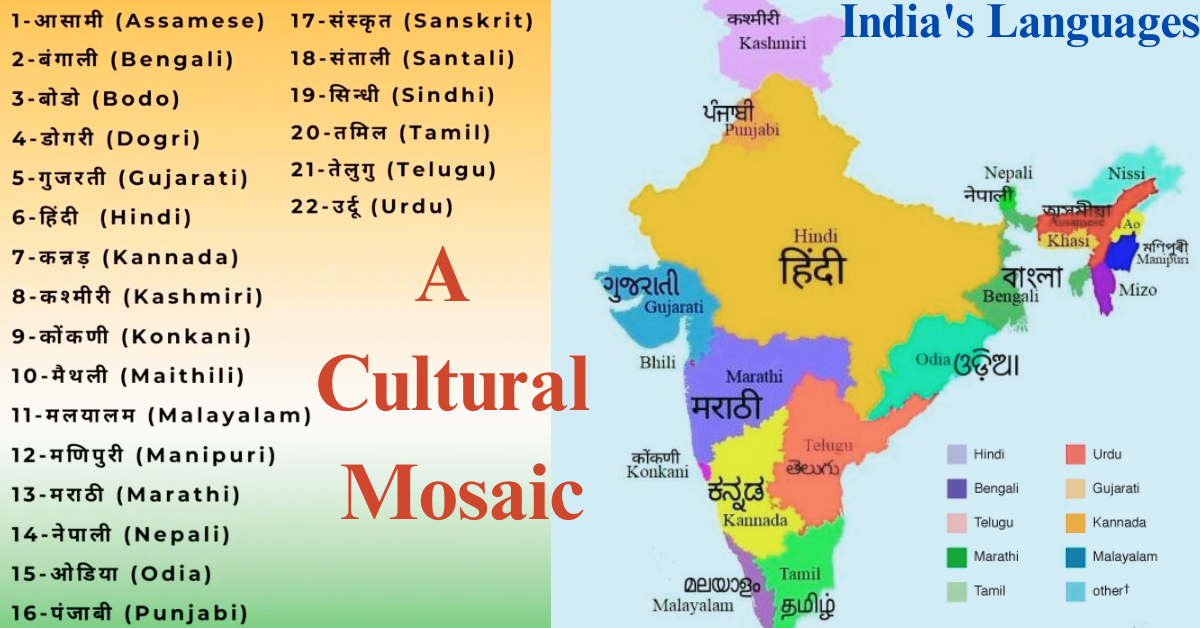
Linguistic Diversity in India: India’s official framework recognizes 22 scheduled languages, many of which are in active use, making language a powerful medium of communication.
Credit, Inclusion, and Trust: The Minister explained that in the past, branch staff knew local customers personally—who was creditworthy, trustworthy, and authentic. Now, there is an increased reliance on external credit rating agencies and remote processes. She argued that exposure to the local language helps restore that lost understanding.
What Banks Are Being Asked to Do
The key directives received by banks are as follows:
Deploy staff proficient in the local language at the branch level—especially in areas where customers predominantly speak regional languages.
Adjust human resource policies so that language proficiency becomes a key factor in evaluation and hiring. The Minister said she would “emphasize performance evaluation based on proficiency in the local language.”
Simplify processes and reduce paperwork, as many customer issues arise not only from language but also from bureaucratic burdens.
Balancing technology and empathy: High-tech tools are important, but high-touch human interaction should not be diminished. The Minister said, “High-tech is important, but high-touch is equally important.”
How banks will benefit from this:
Improved customer loyalty: When a customer is spoken to in their mother tongue, they feel respected and understood. This translates into stronger relationships and word-of-mouth.
Improved financial inclusion: In many parts of India, regional languages are the primary language. Providing services to customers in their own language removes a barrier to access.
Competitive differentiation: As banking (digitally) becomes more uniform, those who provide personalized service are standing out.
Functional efficiency: Employees who understand the community can sometimes resolve problems faster, gain a deeper understanding of creditworthiness, and reduce friction.
Challenges and Ways to Address Them
Recruitment and Training: Banks will need to recruit or train employees in local languages. This will require investment in language skills and possibly new hiring criteria.
Posting Strategy: Staff postings will need to be adjusted regardless of language dynamics. HR structures will need to consider linguistic compatibility.
Language Scale: India has hundreds of languages; banks should prioritize major regional languages in practically every state, focusing on the top 2-3 languages in each region.
Balance in Multilingual Branches: In states with multiple languages or frequented by migrant customers, banks should train employees in both local and migrant languages, and possibly provide visible signage in local languages.
Digital and Physical Synergy: While digital interfaces may support language options, branch-level employees will still need to work in the customer’s language to ensure inclusivity.
Measurement and evaluation: As the Minister emphasized, performance evaluation requires a language proficiency component – which means banks will have to set criteria: for example, customer satisfaction among local language speakers, hours of linguistic training completed, complaints resolved in the local language.
What this means for customers
If you’re a customer at a local bank branch in India, here’s what you should look for and expect:
- A branch where the staff can engage in your regional language (e.g., Kannada in Karnataka, Marathi in Maharashtra, Tamil in Tamil Nadu).
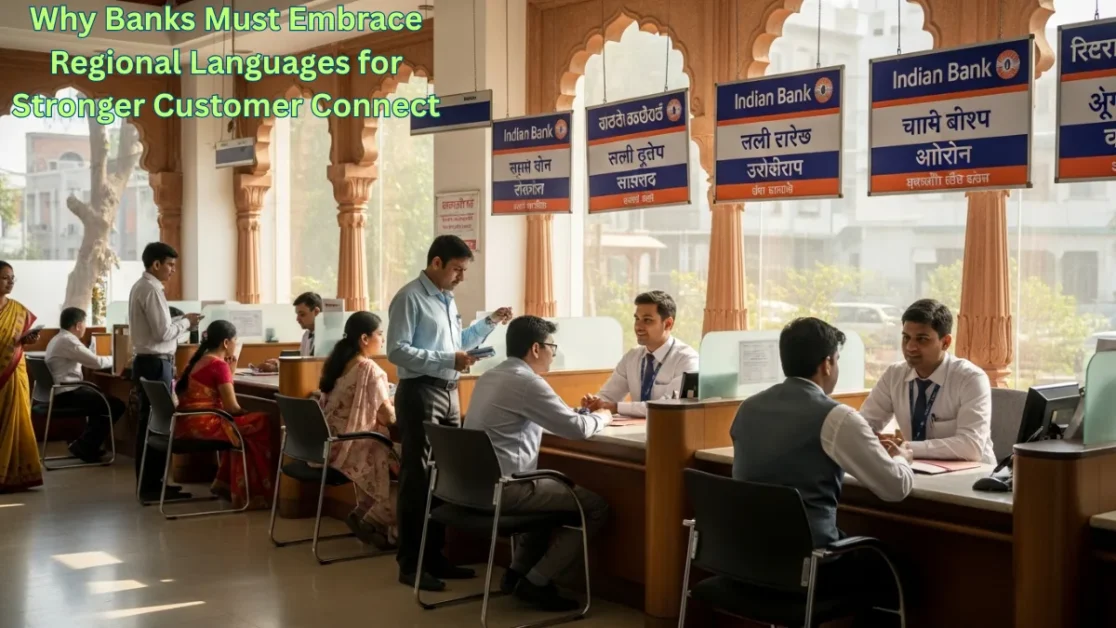
- Signboards, forms or help desks with regional language support — not just Hindi or English.
- A sense that your queries are understood—not just processed.
- Transparent redressal: if staff cannot assist in your language, you can ask for a translator or escalate to someone who can.
- Banks that are trying: ask your bank what their regional-language policy is; this could become a differentiator.
The wider implication
This push by the finance minister is more than a policy tweak: it signals a cultural shift in how banking should operate in India’s linguistically diverse society. By recognising language as a key vector of customer engagement, banks are being asked to re-humanise their branches even while expanding digitally.
The Indian banking sector stands at a cross-roads: on one hand, digitisation and consolidation; on the other, personalised service and regional relevance. Ultimately, the banks that embrace both—technology plus local language connect—will thrive.
Conclusion
Language is more than words—it is connection, identity and trust. When banks speak the customer’s language, they speak to their confidence. The directive by Finance Minister Sitharaman is clear: don’t lose sight of the person behind the account. As banking evolves, the ones who remember the human behind the screen—and the local language in which they think—will win.
LocalLanguageBanking #CustomerConnect #BankingIndia #RegionalLanguages #HumanTouch #HRReforms #NirmalaSitharaman #BankBranches #InclusiveBanking
Use local languages in banks: Sitharaman – Times of IndiaNirmala Sitharaman urges banks to post staff fluent in local languages to improve service – The Telegraph IndiaFM wants PSBs to prioritise local language skills for better customer connect – The New Indian ExpressSBI working on mechanism to help employees communicate with customers in local languages – NDTV ProfitLanguages with official recognition in India – Wikipedia