Turkish Yiha drone shot down Operation Sindoor
By Krishna Arya
Network Bharat
Turkish Yiha drone Operation Sindoor : On a day meant to honour courage, sacrifice, and decisive victory, the Indian Army chose to send a powerful message to the world.
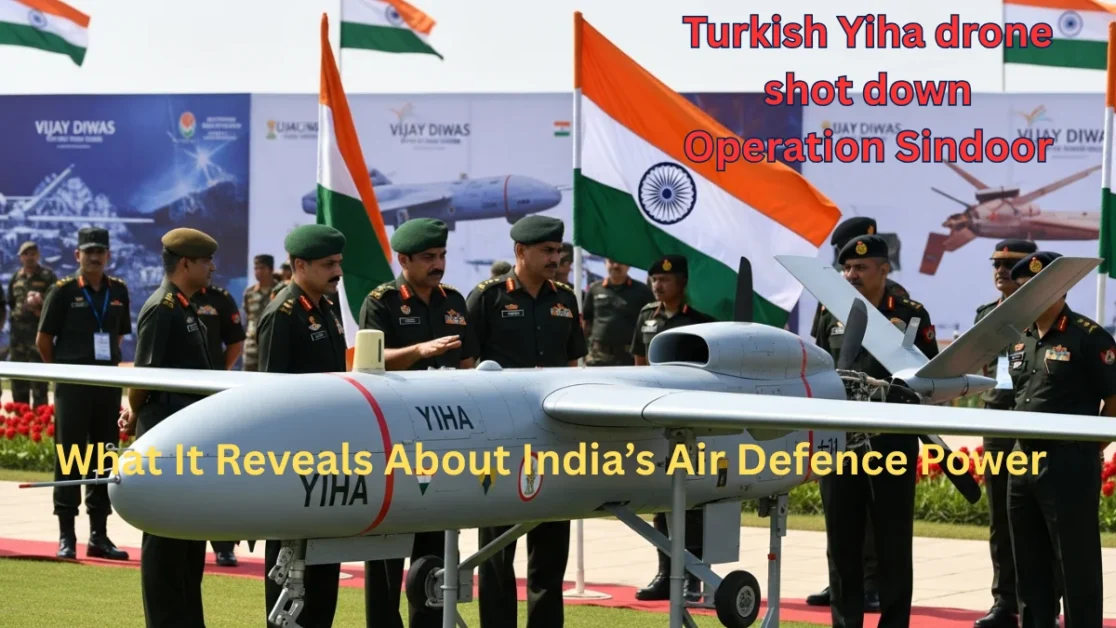
During a special Vijay Diwas event commemorating India’s historic triumph in the 1971 war, the Indian Army publicly displayed a reassembled Turkish-made Yiha kamikaze drone—a weapon that was shot down mid-air during Operation Sindoor in May this year. The drone, neutralised by India’s air defence systems before it could strike, stood as silent but compelling evidence of both Pakistan’s failed aggression and India’s growing dominance in modern warfare.
The display, organised under the leadership of Army Chief General Upendra Dwivedi, was more than a military exhibit. It was a strategic statement—calm, confident, and unmistakable.
Vijay Diwas and the Symbolism Behind the Display
India celebrates Vijay Diwas on December 16 to mark the surrender of Pakistani forces in 1971, a moment that led to the creation of Bangladesh and reshaped South Asia’s geopolitical landscape. Over five decades later, the nature of warfare has changed—from tank battles and trench lines to drones, cyber systems, and precision strikes.
Yet, the message remains the same: India will defend itself decisively.
By showcasing the Yiha drone on Vijay Diwas, the Indian Army bridged past and present—honouring the soldiers of 1971 while demonstrating preparedness for the wars of the future.
What Is the Yiha Kamikaze Drone?
The Yiha III is a single-use unmanned combat aerial vehicle (UCAV) belonging to the kamikaze or “suicide drone” category. Unlike conventional drones that return after reconnaissance or attack missions, kamikaze drones are designed to destroy themselves upon impact, delivering explosive payloads directly onto targets.
Key Technical Features of the Yiha Drone:
- Type: Kamikaze / Suicide UCAV
- Origin: Turkey
- Wingspan: Approximately 2 metres
- Engine: 170 cc two-stroke engine
- Payload Capacity: Around 10 kilograms of explosives
- Operational Altitude: Around 2,000 metres
- Mission Profile: Loiter, identify target, strike and self-destruct
Such drones are particularly dangerous because they can hover over target zones, evade radar detection for extended periods, and strike suddenly with precision.
How and When Was the Yiha Drone Shot Down?
During the tense days of May 7 to May 10, Pakistan attempted to retaliate against India’s precision strikes under Operation Sindoor by launching a coordinated swarm of drones and missiles aimed at Indian civilian and military installations.
One such drone—the Turkish-made Yiha—was launched from Lahore International Airport, with intelligence assessments indicating Jalandhar in Punjab as its probable target.
On May 10, Indian Army Air Defence (AAD) units detected the incoming drone at an altitude of approximately 2,000 metres. Within moments, India’s integrated air defence network tracked, locked, and neutralised the drone mid-air, preventing any damage on the ground.
When recovered and later reassembled, the drone was found to be carrying its full 10 kg explosive payload, confirming that it was intended for a lethal strike.
Operation Sindoor: Why India Launched It
Operation Sindoor was not an act of escalation—it was an act of retaliation and deterrence.
The operation was launched after the horrific Pahalgam terrorist attack, in which 26 innocent civilians—25 Indians and one Nepali national—were brutally killed. Investigations revealed that Pakistan-backed terrorists carried out the attack, deliberately identifying and targeting victims based on religion.
India’s response was swift and calculated.
Highlights of Operation Sindoor:
- Duration: 88 hours
- Start Date: May 7, 2025
- Nature: Anti-terrorism precision military operation
- Targets: Terror camps and military infrastructure in Pakistan and PoJK
The Indian Armed Forces struck:
- 9 major terrorist camps
- 11 Pakistani military bases, including:
- Noor Khan
- Chaklala
- Rafiqui
- Rahim Yar Khan
- Jacobabad airbases
Hangars, runways, radar installations, and terror launchpads were severely damaged.
Pakistan’s Drone and Missile Retaliation—And Its Failure
Following India’s strikes, Pakistan attempted to respond by launching multiple drones and missiles in a coordinated swarm attack. The aim was clear: overwhelm Indian air defences through numbers.
But the plan failed.
Between May 7 and May 10:
- Almost all incoming drones and missiles were intercepted
- None reached their intended targets
- Indian civilian and military infrastructure remained secure
The downing of the Yiha drone was part of this broader defensive success, showcasing the effectiveness of India’s layered air defence systems.
Why the Yiha Drone Matters Strategically
The Yiha drone is not just a piece of wreckage—it is evidence.
First, it highlights Pakistan’s increasing reliance on drone warfare, particularly suicide drones, as a low-cost, high-impact strategy.
Second, it brings attention to the Turkey–Pakistan defence collaboration, especially in unmanned systems. Turkey has emerged as a major exporter of combat drones, and Pakistan’s use of the Yiha underscores how such technology is being deployed in South Asia.
Third, and most importantly, it proves that India’s air defence ecosystem is capable of neutralising modern aerial threats, including low-flying, small radar-signature drones.
India’s Air Defence: A Silent Guardian
India’s air defence success during Operation Sindoor was not accidental. It was the result of years of investment, integration, and training.
The Indian Army and Air Force operate a multi-layered air defence grid, combining:
- Radar networks
- Electronic warfare systems
- Surface-to-air missile platforms
- Quick-reaction gun systems
- Real-time intelligence sharing
The interception of the Yiha drone demonstrated how seamlessly these systems work together—detecting, tracking, and destroying threats in seconds.
The Message Sent on Vijay Diwas
By displaying the reassembled Yiha drone, the Indian Army delivered multiple messages at once:
- To adversaries: India is alert, capable, and ready.
- To citizens: Your safety is protected by vigilant forces.
- To the world: India’s defence posture is modern, restrained, and effective.
There was no rhetoric, no chest-thumping—just facts, steel, and proof.
From 1971 to Today: Victory Redefined
In 1971, victory came through courage on the battlefield.
In 2025, victory also comes through technology, intelligence, and preparedness.
Vijay Diwas is no longer just about remembering the past—it is about reaffirming India’s resolve in the present and future.
The shattered Yiha drone, once meant to kill, now stands as a symbol of failed aggression and successful defence.
Conclusion: Strength Without Noise
Operation Sindoor and the downing of the Yiha kamikaze drone underline a crucial truth: India does not seek conflict, but it will not tolerate terror.
The Indian Army’s decision to reveal this intercepted weapon on Vijay Diwas was deliberate and dignified. It showed confidence without provocation and strength without aggression.
As warfare evolves, so does India’s ability to counter it—quietly, efficiently, and decisively.
Quick Q&A
Q: What drone did the Indian Army display on Vijay Diwas?
A: The Indian Army displayed a Turkish-made Yiha kamikaze drone that was shot down during Operation Sindoor in May 2025.
Q: Why is the Yiha drone significant?
A: The Yiha drone proves Pakistan’s failed attempt to target India using suicide drones and highlights India’s strong air defence capability.
Q: When was the Yiha drone intercepted?
A: The drone was intercepted on May 10, 2025, at around 2,000 metres altitude.
Q: Where was the Yiha drone launched from?
A: It was launched from Lahore International Airport in Pakistan.
Q: What was the likely target of the Yiha drone?
A: Intelligence inputs suggest the drone was headed towards Jalandhar in Punjab.
Q: What payload did the Yiha drone carry?
A: The drone carried approximately 10 kilograms of high-explosive material.
Q: What operation led to this interception?
A: The interception occurred during India’s anti-terrorism military campaign, Operation Sindoor.
🔹 FAQs “People Also Ask” (PAA)
What is a kamikaze or suicide drone?
A kamikaze or suicide drone is a weaponised unmanned aerial vehicle designed to crash into its target and explode, destroying both the target and itself.
Is the Yiha drone made in Turkey?
Yes. The Yiha III drone is a Turkish-manufactured unmanned combat aerial vehicle that has been exported to allied countries.
Did Pakistan use drones against India in 2025?
Yes. During Operation Sindoor, Pakistan attempted to launch a swarm of drones and missiles against Indian targets, but most were intercepted mid-air.
Why did India launch Operation Sindoor?
India launched Operation Sindoor in response to the Pahalgam terrorist attack, where 26 civilians were killed by Pakistan-backed terrorists.
How effective was India’s air defence during Operation Sindoor?
India’s air defence was highly effective, successfully neutralising nearly all incoming drones and missiles without allowing damage to civilian or military installations.
Why was the Yiha drone shown publicly?
The Indian Army showcased the Yiha drone to demonstrate transparency, deterrence, and confidence in its defensive capabilities.
What message does the Yiha drone display send to adversaries?
It signals that India can detect, intercept, and defeat modern aerial threats, including advanced suicide drones.
How does this incident affect India–Pakistan relations?
The incident reinforces India’s deterrence posture while exposing the failure of Pakistan’s drone-based retaliation strategy.
Why is Vijay Diwas strategically important for such displays?
Vijay Diwas symbolises India’s military victory and resolve, making it a powerful occasion to demonstrate present-day defence readiness.
#OperationSindoor, #YihaDrone, #IndianArmy, #VijayDiwas2025, #KamikazeDrone, #PakistanDroneAttack, #IndiaDefence, #AirDefenceIndia, #TurkeyPakistan, #NationalSecurity, #IndianMilitary, #BreakingDefenceNews
Also Read This
Vijay Diwas 2025: Why India Celebrates December 16India’s Fight Against Terrorism: Key Military Operations
Global Defence Alliances and Strategic Power Shifts
External Sources
Indian Army Official WebsiteDefence Research and Development Organisation (DRDO)
Observer Research Foundation – Defence Analysis
From Network Bharat to Our Armed Forces
When the nation sleeps, you stand guard.
Your courage, discipline, and sacrifice keep India safe—on the borders and beyond.
Network Bharat salutes the unwavering bravery of our Army, Navy, and Air Force.
Your service is our strength. Your sacrifice is our freedom.
!! Jai Hind Jai Bharat !!