Bangladesh Extremism Rise?
Writer: Krishna Arya | https://networkbharat.com
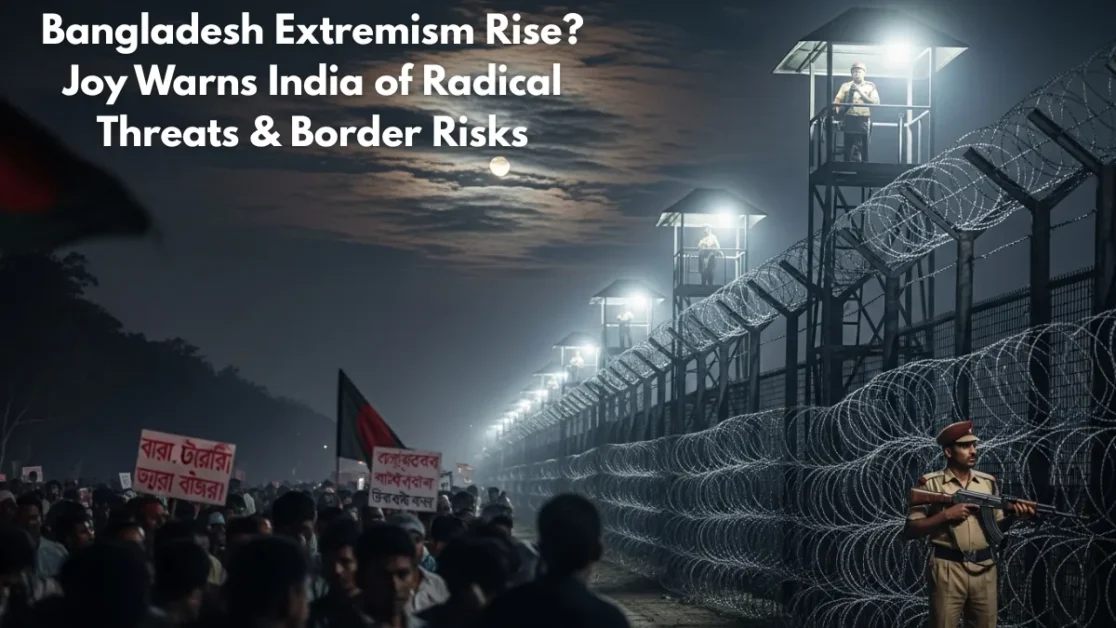
Bangladesh Extremism Rise? : Bangladesh’s political landscape is shaking again—and this time, India is watching closely. Sajeeb Wazed Joy, son of former Prime Minister Sheikh Hasina and a major voice in Bangladeshi politics, has issued a strong caution: India must prepare for a new wave of Islamic extremism emerging from Dhaka.
According to Wazed, Bangladesh has entered a dangerous ideological phase. The interim Yunus government, he alleges, is systematically excluding secular and democratic forces, replacing them with radical networks and controlled power structures. For India, this isn’t just another diplomatic statement—it is a warning rooted in history.
Bangladesh Drifts Toward Extremism?
🔴 A Deepening Political Vacuum
The fall of Sheikh Hasina’s government left Bangladesh with a political void. Wazed claims that instead of allowing free democracy to rebuild, the interim administration under Muhammad Yunus is pushing the country toward a one-sided, pre-planned electoral framework.
This, he warns, is empowering extremist groups that once defined Bangladesh’s dark past.
For India, the concern is simple: a destabilized Bangladesh means a destabilized border region—especially across the Northeast.
Sajeeb Wazed Joy Warns India of a Growing Security Storm
🔥 Extremism Reawakens: “Pakistan Networks Active Again”
Wazed alleges that:
- terrorist camps have begun resurfacing,
- Pakistan-backed elements are reorganizing,
- radical clerical groups are gaining political space,
- and anti-India propaganda is spreading on the streets and online.
These patterns strongly resemble the situation Bangladesh faced decades ago—when militancy spilled across borders and India battled infiltration.
🇮🇳 India Suddenly at the Center
What started as a domestic reconfiguration in Bangladesh has turned into a direct strategic challenge for New Delhi.
Recent incidents show the shift clearly:
- Anti-India slogans dominating protests
- Online campaigns targeting the Indian government
- Violent demonstrations near the High Commission
- Security alerts forcing India to halt visa services in Dhaka
These developments mark a shift from political disagreement to ideological hostility.
Bangladesh political extremism
🧭 Why India Cannot Ignore This
Bangladesh has always been a crucial neighbour:
- It protects India’s Northeast flank
- It acts as a counterweight to Pakistan’s influence
- It is central to India’s Act East policy
- It stabilizes Bay of Bengal maritime security
A radicalized Bangladesh would not only threaten India’s borders but can jeopardize trade corridors, cultural bridges, and intelligence partnerships.
🌍 A Changing South Asian Reality
South Asia is entering a new geopolitical phase:
- Pakistan struggling economically
- Afghanistan under Taliban
- Sri Lanka coming out of financial collapse
If Bangladesh also turns unstable, the region could be pulled into a cycle of ideological extremism—giving terror groups space to breathe again.
📌 What This Means for India’s Future Strategy
New Delhi may now face decisions such as:
1️⃣ boosting border troop presence,
2️⃣ strengthening intelligence networks,
3️⃣ monitoring radical digital networks,
4️⃣ recalibrating Bangladesh diplomacy,
5️⃣ and increasing engagement with secular Bangladeshi voices.
As Wazed puts it, this is no longer about elections—it is about the future identity of Bangladesh.
📝 Conclusion
Joy’s warning is more than a political message; it reflects the fear of a nation sliding away from democratic peace into extremist control.
For India, ignoring this shift is not an option. The stakes involve national security, border peace, and regional stability.
Bangladesh’s trajectory will define whether South Asia chooses coexistence—or chaos.
#BangladeshPolitics #SajeebWazedJoy #IndiaBangladesh #IslamicExtremism #DhakaProtests #PakistanBackedTerror #BorderSecurity #SouthAsiaNews #YunusGovernment #AntiIndiaCampaign #BangladeshElections #SecurityThreat
FAQs
Q1. Why did Sajeeb Wazed Joy warn India about Bangladesh’s political condition?
Joy believes the interim government is enabling extremist networks and weakening secular forces, which may threaten India’s border security.
Q2. How is Bangladesh’s political shift affecting India?
Anti-India protests, border threats, rising extremism, and Pakistan-linked terrorism could impact Northeast stability and diplomatic relations.
Q3. What role does the Yunus-led interim government play?
It is accused of controlling elections, excluding opposition leaders, and failing to contain radical organizations.
Q4. Why are Indian visa services in Bangladesh suspended?
Due to security threats and repeated protests against Indian diplomatic offices in Dhaka, forcing India to temporarily stop operations.
Q5. What risks does increasing extremism pose for South Asia?
It may create cross-border terrorism, intelligence challenges, ideological polarization, and a regional instability loop.