By Krishna Arya
Website: https://networkbharat.com
Cigarette price hike India 2026
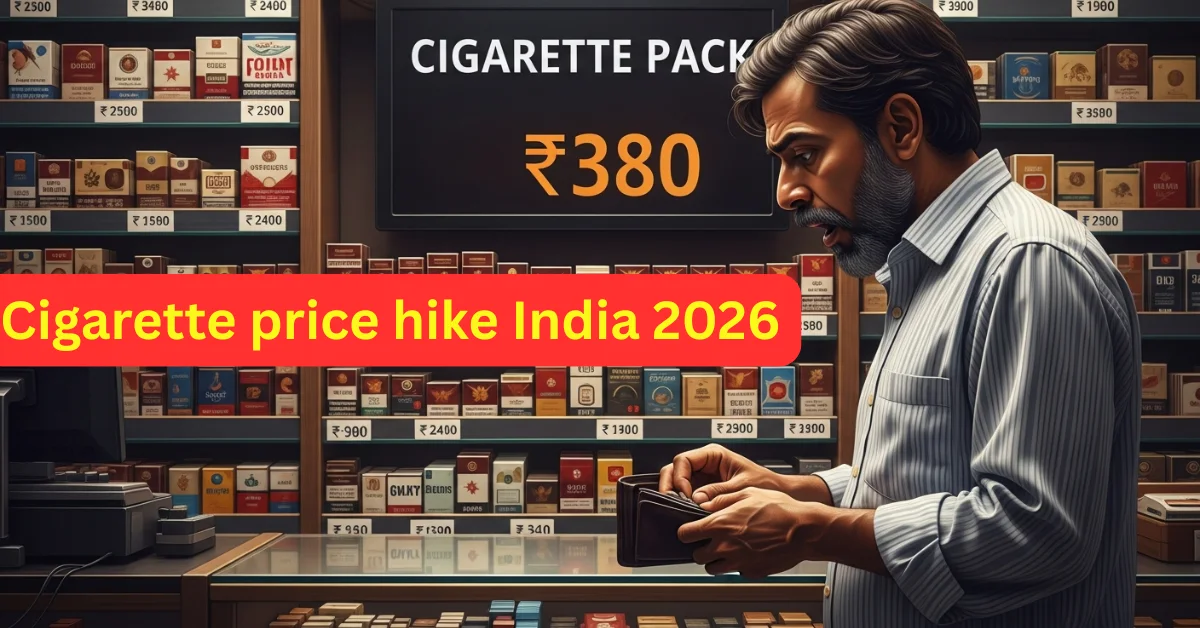
Cigarette price hike India 2026 : Smokers across India are feeling the heat after Union Budget 2026–27 delivered a sharp jolt to cigarette prices. From small towns to metro cities, the shock is the same: cigarettes have suddenly become a much more expensive habit.
The most dramatic example is Stellar Define Paan. A pack of 20 cigarettes that earlier carried a maximum retail price (MRP) of ₹200 is now being sold for ₹380, marking a massive 90 percent increase almost overnight. Other popular brands have followed the same path, leaving consumers stunned at retail counters.
This steep rise comes after major changes in the taxation of cigarettes and tobacco products announced by Finance Minister Nirmala Sitharaman, effective from February 1, 2026.
Popular Cigarette Brands See Sharp Price Jump
The price hike is not limited to a single brand. Several commonly consumed cigarette packs have become significantly costlier:
- Stellar Define Paan (20 cigarettes): ₹200 → ₹380
- Gold Flake Small (10 cigarettes): ₹95 → ₹140
- Per cigarette cost in many brands has risen from ₹10 to ₹12–13
For regular smokers, this translates into a noticeable increase in monthly spending, especially for those consuming multiple packs a week.
What Changed in the Cigarette Tax Structure?
Until now, cigarettes in India were taxed under a system introduced in 2017, which included 28 percent GST along with a compensation cess. Budget 2026–27 has replaced this framework with a new three-layer tax model.
Under the revised system, cigarettes are now subject to:
- Fresh excise duty
- Health and national security cess
- 40 percent GST
Government officials have described this as a “tax triangle”, aimed at simplifying tax collection while substantially increasing the overall tax burden on tobacco products.
The foundation for this change was laid with the Central Excise (Amendment) Bill, 2025, passed by Parliament in December last year. The bill removed older ad-hoc levies and introduced fixed excise duties based on cigarette length.
How Much Extra Are Smokers Paying Now?
According to the Finance Ministry, excise duty ranging from ₹2,050 to ₹8,500 per 1,000 cigarettes, depending on size, has come into force from February 1.
Market analysts estimate:
- ₹2–3 extra tax per cigarette
- 22–28 percent cost increase for standard 75–85 mm cigarettes
For daily smokers, this means hundreds of rupees more in expenses every month, making cigarettes one of the hardest-hit consumer products after Budget 2026.
Why Has the Government Increased Cigarette Taxes?
The government says the move is driven by public health concerns rather than revenue alone.
Officials argue that:
- Higher prices discourage young and first-time smokers
- Reduced affordability can lead to lower tobacco consumption
- Increased tax revenue supports healthcare and national security spending
Public health experts have long supported higher tobacco taxation, calling it one of the most effective ways to reduce smoking-related diseases.
Tobacco Stocks Rise Despite Price Shock
Interestingly, while smokers are unhappy, tobacco company stocks have reacted positively in the market. Investors expect companies to protect margins by passing costs to consumers, leading to stable or even improved earnings.
This contrasting reaction highlights the complex balance between public health policy, consumer behavior, and corporate profitability.
What Lies Ahead for Smokers?
Budget 2026–27 has clearly made smoking a costlier choice in India. Whether this sharp price hike actually leads to reduced consumption or simply adds to government revenue will become clearer in the coming months.
For now, one thing is certain: lighting up has never been this expensive.
#CigarettePriceHike #Budget2026 #SmokingCosts #TobaccoTax #StellarDefinePaan #GoldFlake #UnionBudgetImpact #IndiaNews #GSTUpdate #HealthCess #BreakingNews #GoogleDiscover
Stay informed with the latest policy updates and real-world impacts—follow NetworkBharat.com for trusted news and insights.