By Krishna Arya | Network Bharat
Strait of Hormuz LNG Crisis India Qatar
Strait of Hormuz LNG Crisis India Qatar
🌍 Rising Tensions in the Gulf Spark Global Concern
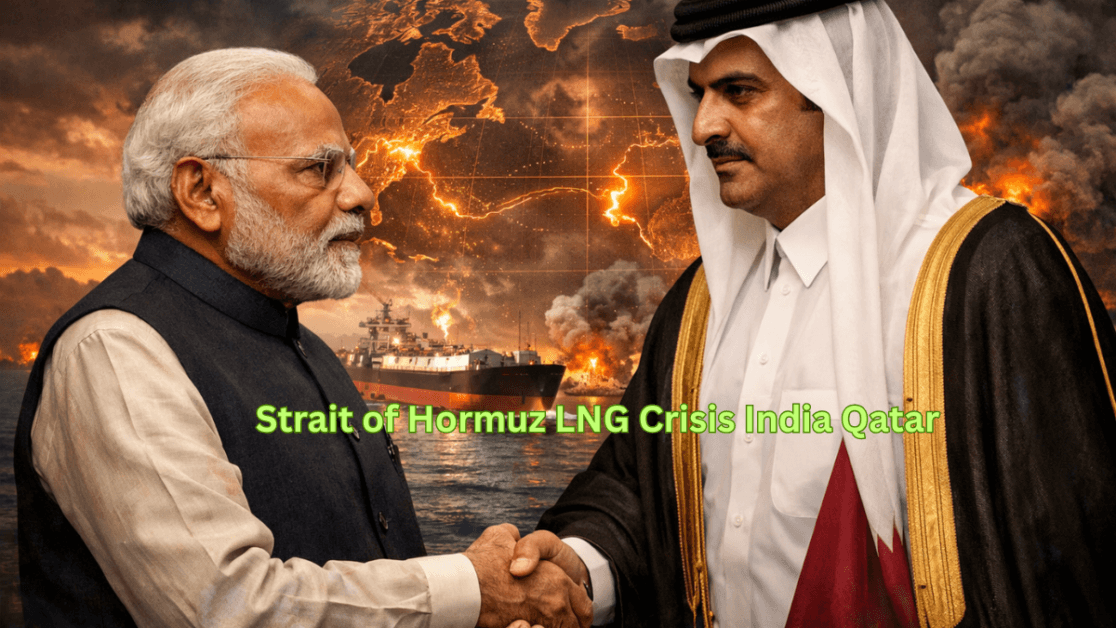
In a significant diplomatic move amid escalating tensions in West Asia, Prime Minister Narendra Modi held a crucial conversation with Qatar’s Emir, Sheikh Tamim bin Hamad Al Thani. The discussion comes at a time when the region is witnessing growing instability following attacks on key energy infrastructure.
During the call, PM Modi extended warm Eid greetings while also addressing serious concerns over regional security. His message was clear — India stands firmly with Qatar and strongly condemns any attacks targeting vital energy facilities.
⚡ Energy Infrastructure Under Attack
Strait of Hormuz Tensions Rise After Qatar LNG Damage
The situation has become increasingly alarming after recent strikes damaged a substantial portion of Qatar’s LNG infrastructure. According to official statements, nearly 17% of Qatar’s liquefied natural gas export capacity has been impacted.
Two major LNG production units and a gas-to-liquids facility were hit, leading to a massive disruption in output. Experts estimate that around 12.8 million tonnes of annual LNG production could be affected — a loss that may take years to recover from.
This is not just a regional issue — it’s a global energy shock in the making.
🚢 Why the Strait of Hormuz Matters More Than Ever

The Strait of Hormuz, a narrow but extremely vital maritime route, has once again come into focus. A significant portion of the world’s oil and gas shipments pass through this corridor every day.
PM Modi and the Qatari Emir emphasized the importance of safe and uninterrupted navigation through this strategic waterway. Any disruption here can ripple across global markets, affecting fuel prices, supply chains, and economic stability worldwide.
🇮🇳 India’s Strategic Stakes in the Crisis
India, being one of the largest importers of LNG, has a lot at stake. Qatar is a key energy partner, supplying a major share of India’s natural gas needs.
Even though India has not been directly named in the recent supply disruptions, the global impact is unavoidable. Reduced LNG output from Qatar could tighten supply, increase prices, and put pressure on India’s energy security.
This makes India’s diplomatic engagement with Qatar not just symbolic — but strategically essential.
💬 Modi’s Message: Stability, Solidarity, and Security
PM Modi took to social media to reaffirm India’s position. He emphasized solidarity with Qatar and strongly condemned the attacks on energy infrastructure.
He also appreciated the care extended to the Indian community in Qatar — a gesture that highlights the strong people-to-people ties between the two nations.
More importantly, both leaders aligned on a shared vision:
👉 Ensuring peace in the region
👉 Protecting critical energy routes
👉 Preventing further escalation
🌐 Global Energy Markets on Edge
The damage to Qatar’s LNG facilities comes at a time when global energy systems are already under strain. With long-term contracts now under “force majeure,” several countries could face prolonged supply disruptions.
Europe and Asia — heavily dependent on LNG imports — may see price volatility and supply uncertainty in the coming months.
This crisis is a reminder of how interconnected the world’s energy systems truly are — and how quickly disruptions in one region can affect the entire globe.
🔎 What Lies Ahead?
While diplomatic efforts are underway, the road ahead remains uncertain. Repairs to damaged infrastructure could take years, and geopolitical tensions continue to simmer.
For India and other major economies, the focus will now be on:
- Diversifying energy sources
- Strengthening strategic reserves
- Enhancing diplomatic ties in the Gulf
🧭 Final Thoughts
The conversation between PM Modi and the Emir of Qatar is more than just a diplomatic exchange — it reflects a broader commitment to stability in a volatile region.
As the Strait of Hormuz becomes a focal point of global attention once again, the world watches closely. For India, balancing energy security with geopolitical realities will be key in the days ahead.
#Modi, #Qatar, #HormuzCrisis, #LNGCrisis, #EnergyCrisis, #IndiaNews, #GlobalNews, #BreakingNews, #OilGas, #MiddleEast, #Geopolitics, #EnergySecurity, #FuelPrices, #WorldUpdates, #CrisisAlert