By Krishna Arya | Network Bharat
China Taiwan Strategy Iran War
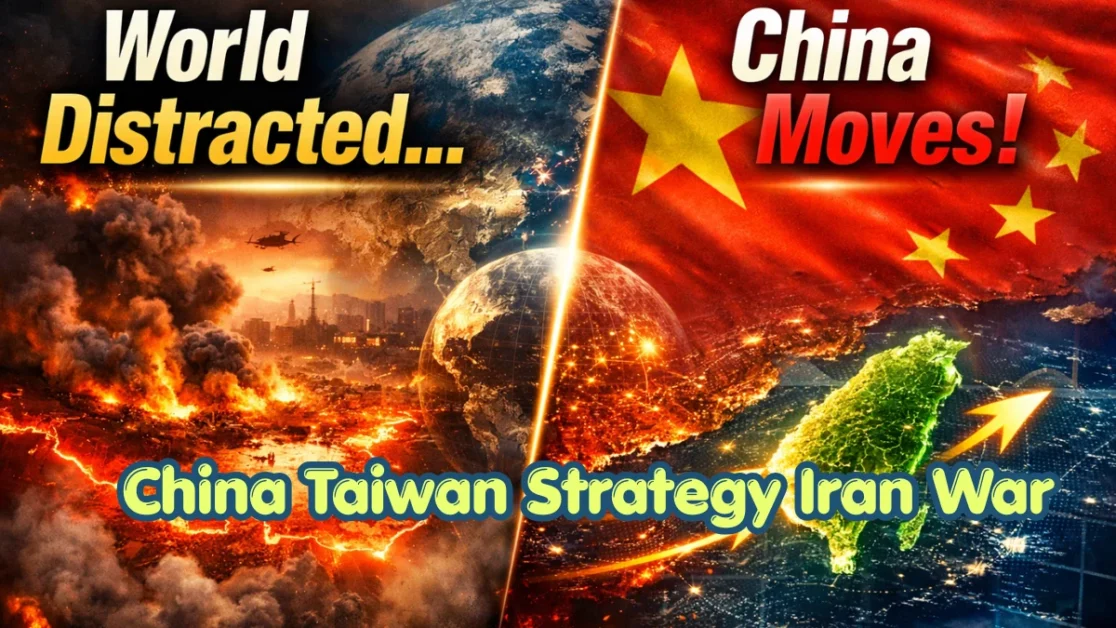
🌍 A World Distracted, A Strategy in Motion
As global headlines remain dominated by the ongoing Iran war, a quieter yet highly significant geopolitical shift is unfolding in East Asia. While the United States and its allies focus heavily on Middle Eastern tensions, China is steadily advancing its engagement strategy toward Taiwan, signaling a long-term recalibration of global power dynamics.
This dual-track global scenario—conflict in one region and strategic maneuvering in another—is shaping what experts describe as a new era of geopolitical competition.
⚔️ Iran War Grabs Attention, Shifts Global Priorities
The 2026 Iran conflict has triggered widespread instability, impacting oil supply chains, global markets, and military deployments. Major powers, especially the United States, are deeply engaged in managing the crisis, from military positioning to diplomatic negotiations.
China, however, has chosen a different path.
Instead of direct involvement, Beijing has adopted a calculated diplomatic stance, calling for peace while quietly expanding its influence. Reports suggest China has been actively engaging in mediation efforts, positioning itself as a stabilizing force in the region.
At the same time, analysts believe that this global distraction is giving China strategic breathing room to focus on its long-term priorities—chief among them, Taiwan.
China’s Taiwan Strategy Gains Momentum
While the world watches Iran, China is intensifying its Taiwan engagement through a mix of political, economic, and strategic efforts.
Recent developments indicate:
- Increased cross-strait dialogue initiatives
- Strategic signaling without direct military escalation
- Long-term planning focused on influence rather than immediate conflict
Taiwan’s internal political dynamics are also playing a role, with renewed engagement discussions emerging between key stakeholders.
Experts argue that China is playing the long game, focusing on gradual influence rather than sudden confrontation.
🧠 A Calculated “Distraction Advantage”
One of the most striking aspects of this situation is what analysts call a “distraction advantage.”
With global attention diverted:
- The US is allocating military and diplomatic resources toward the Middle East
- Media coverage is heavily centered on Iran
- International pressure on China’s Taiwan actions appears relatively muted
This creates an environment where China can advance its strategic objectives with minimal resistance or scrutiny.
⚡ Taiwan’s Growing Vulnerability
The Iran war has also exposed vulnerabilities in global supply chains—especially those linked to Taiwan’s critical semiconductor industry.
Taiwan relies heavily on energy imports and global trade routes, many of which have been disrupted due to the conflict. Concerns are rising over shortages of key resources like LNG and helium, which are essential for chip manufacturing.
This economic pressure adds another layer of complexity, potentially making Taiwan more susceptible to external influence.
🌐 China’s Bigger Global Play
China’s approach goes beyond Taiwan. It is simultaneously:
- Expanding its image as a global mediator
- Strengthening economic dominance in renewable energy and supply chains
- Leveraging geopolitical crises to reshape global narratives
In fact, some analysts suggest China could emerge as a strategic winner of the Iran conflict, gaining influence without direct military involvement.
This reflects a broader strategy: win influence, avoid direct conflict, and expand quietly.
What This Means for the United States
For the United States, this evolving situation presents a complex challenge.
While Washington remains committed to supporting Taiwan, including continued arms supplies and strategic backing, the reality is that managing multiple global crises simultaneously stretches resources and focus.
This raises critical questions:
- Can the US effectively balance Middle East conflicts and Indo-Pacific tensions?
- Will China’s gradual strategy outpace reactive global policies?
🔮 The Road Ahead: A Silent Power Shift?
The current global landscape suggests that the real story may not just be the Iran war—but what is happening alongside it.
China’s steady, calculated moves toward Taiwan highlight a shift from reactive geopolitics to proactive strategy. Instead of dramatic actions, Beijing is relying on patience, timing, and global distraction.
As the world remains focused on immediate conflicts, a deeper transformation is underway—one that could redefine the balance of power in the years ahead.
📌 Final Takeaway
The Iran war may dominate headlines, but China’s evolving Taiwan strategy could have far more lasting global consequences.
In geopolitics, what happens quietly often matters the most.
#ChinaTaiwan #IranWar #Geopolitics #WorldNews #BreakingNews #GlobalTensions #ChinaStrategy #TaiwanCrisis #USChina #AsiaPacific #PowerShift #InternationalNews
External Sources
According to global reports, China is closely observing geopolitical shifts during the Iran conflict. Read full international coverage on Reuters
Experts suggest that the Iran war is influencing global power dynamics and military focus. Explore detailed analysis on BBC World News
Strategic analysts highlight Taiwan’s importance in global semiconductor supply chains. Learn more from Council on Foreign Relations