Table of Contents
Daruma Doll Gifted to PM Modi
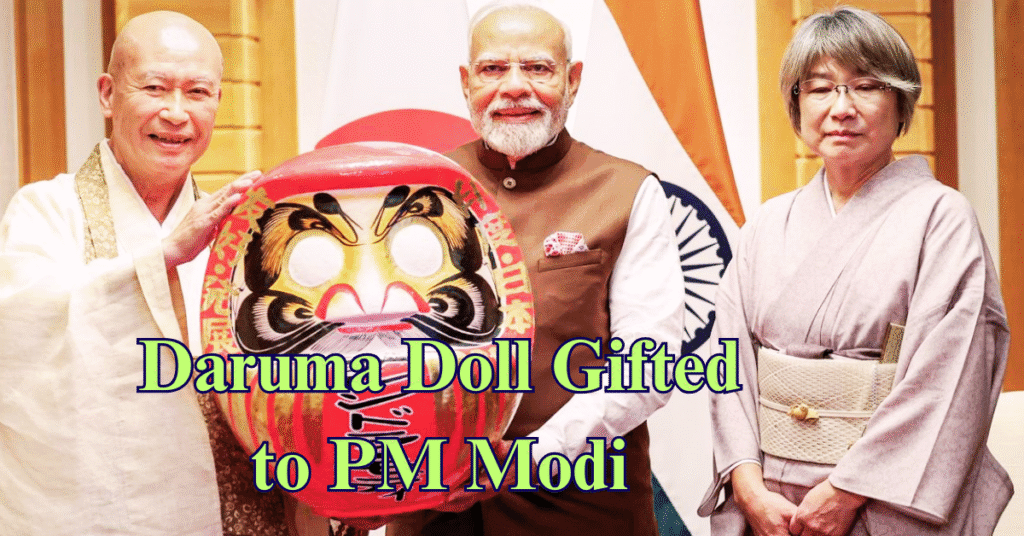
Daruma Doll Gifted to PM Modi : In the intricate world of diplomatic engagements, gifts are never merely objects; they are carefully chosen vessels of meaning, conveying respect, shared values, and aspirations for the future. A prime example of this nuanced communication was the presentation of a traditional Daruma Doll gifted to PM Modi during his visit to Japan. This wasn’t just a souvenir; it was a powerful symbolic gesture from Japan to India’s leader, rich with cultural significance and a profound wish for mutual success. This article delves deep into the story behind this unique gift, unraveling the ancient legend of the Daruma, decoding the specific message embedded in this particular doll, and exploring what it reveals about the evolving and strategic partnership between the world’s largest democracy and one of its most technologically advanced nations. The act of gifting this doll transforms it from a folk artifact into a token of international friendship and shared ambition.
What is a Daruma Doll? Unpacking the Legend
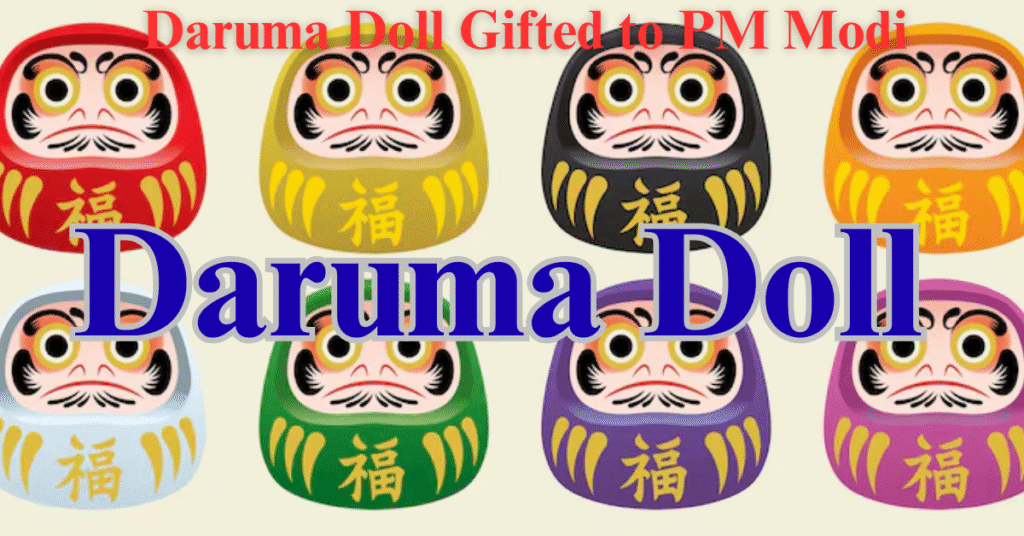
To truly appreciate the significance of the Daruma Doll gifted to PM Modi, one must first understand its origins. The doll is a representation of Bodhidharma, a revered 5th or 6th-century Buddhist monk who traveled from India to China and later became a foundational figure for Zen Buddhism in Japan. The Japanese name “Daruma” is derived from the Sanskrit “Dharma.”
The doll’s distinctive design is not arbitrary; every feature is steeped in legend and symbolism:
- Round, Rounded Shape: It is designed as a roly-poly doll, weighted at the bottom so that it always returns to an upright position when knocked over. This embodies the core Japanese principle of resilience—nanakorobi yaoki—which translates to “fall down seven times, get up eight.” It represents perseverance, determination, and an indomitable spirit in the face of adversity.
- Blank Eyes: Traditionally, Daruma dolls are sold with both eyes blank. The owner paints in one eye (usually the left) while setting a significant goal or wish. The second eye is left blank until the goal is achieved. This physical act serves as a constant visual reminder of one’s commitment, making the goal-setting process tangible.
- Lack of Arms and Legs: Legend states that Bodhidharma meditated for nine years in a cave, facing a wall. His intense dedication was so profound that his arms and legs eventually atrophied from lack of use. The doll’s form is a direct reference to this story of unwavering focus and sacrifice for enlightenment.
- Facial Hair: The often-fierce eyebrows are shaped like cranes, and the beard is shaped like a turtle. In Japanese culture, both animals are symbols of longevity and good fortune.
This rich history makes the Daruma a potent symbol of goal-setting, resilience, and good luck, commonly used by individuals, students, politicians, and business leaders in Japan, especially at the start of a new venture or at the beginning of the year.
The Specific Gift to PM Modi: A Gesture Steeped in Meaning
The presentation of the Daruma Doll gifted to PM Modi was a deliberate and thoughtful act. While the exact moment has been documented in several bilateral meetings, the context is crucial. This gift is typically presented during times of new beginnings or important challenges.
The specific doll presented to the Indian Prime Minister was likely a high-quality, meticulously crafted piece, signifying the utmost respect. The act of gifting it carried several layered messages:
- Acknowledgment of Shared Buddhist Heritage: By gifting an effigy of Bodhidharma, a figure who originated from Indian soil, Japan was gracefully acknowledging the deep historical and cultural roots that India shares with Japan. It was a nod to the ancient civilizational links that form the bedrock of the modern relationship.
- A Wish for Success and Resilience: The gift was a symbolic wish for Prime Minister Modi’s personal success and resilience in governing the nation. More broadly, it was a wish for the success of the ambitious goals and projects undertaken by the Indian government, particularly those involving Japanese collaboration, such as the high-speed rail project.
- A Metaphor for Bilateral Relations: The core characteristic of the Daruma—its ability to always right itself—is a powerful metaphor for the India-Japan relationship. It signifies a wish for the partnership to remain steadfast, resilient, and unshaken by global geopolitical turbulence or challenges. It symbolizes a partnership that will persevere and “get back up,” no matter the obstacles.
This gesture transcends formal diplomacy, entering the realm of cultural empathy and a deep understanding of symbolic communication.
The Diplomatic Context: More Than Just a Doll
The Daruma Doll gifted to PM Modi cannot be viewed in isolation. It is a piece in the larger mosaic of the India-Japan Special Strategic and Global Partnership. This relationship has been consistently strengthened under Prime Minister Modi and successive Japanese leaders, most notably the late Shinzo Abe.
The doll symbolizes the shared goals and challenges both nations are tackling together:
- Infrastructure and Development: The monumental Mumbai-Ahmedabad High-Speed Rail (bullet train) project, aided by Japanese funding and technology, is a prime example of a long-term “goal” that requires immense perseverance—perfectly mirroring the Daruma’s spirit.
- The Free and Open Indo-Pacific (FOIP): Both India and Japan are key pillars of the FOIP vision, which aims to ensure a secure, stable, and prosperous region based on a rules-based order. This strategic alignment is a massive shared objective facing significant challenges, requiring the very resilience the Daruma embodies.
- Economic and Defense Ties: From Japanese investments in India’s infrastructure to deepening defense cooperation and joint military exercises, the bilateral relationship is multi-faceted. The Daruma serves as a talisman for the success of all these interconnected endeavors.
The gift, therefore, is a symbolic encapsulation of these complex strategic initiatives into a single, culturally resonant object. It reinforces trust and mutual commitment at the highest levels.
The Ritual and the Future: The Second Eye
A crucial aspect of the Daruma tradition is the painting of the eyes. When a Daruma Doll is gifted to PM Modi, the unspoken question is about the eyes. While typically a personal ritual, in a diplomatic context, the meaning is projected onto collective goals.
It is plausible that the doll was gifted with both eyes blank, representing the ongoing nature of the India-Japan partnership. The first eye, symbolizing the setting of the shared goals (the bullet train, FOIP, etc.), is already painted. The second eye will be painted upon the successful achievement of these goals.
This creates a powerful narrative of shared destiny. The completion of major joint projects would symbolically be the moment to “paint the second eye,” fulfilling the wish and completing the Daruma’s purpose. It represents a journey that both nations are committed to finishing together.
Conclusion
The Daruma Doll gifted to PM Modi is a masterclass in diplomatic symbolism. Far from being a mere curio, it is a dense concentrate of Japanese culture, a tribute to shared history, and a bold statement of optimistic ambition for the future of India-Japan relations. It perfectly captures the spirit of nanakorobi yaoki—the resilience both nations aspire to in their individual journeys and their collaborative endeavors. As the two democracies continue to navigate the complexities of the 21st century, this doll stands as a silent, powerful reminder of their commitment to persevere, focus on their shared goals, and ultimately, achieve success together. The story of this gift illustrates how ancient traditions can beautifully inform and enrich modern statecraft, creating a deeper, more meaningful dialogue between nations.
#DarumaDoll #PMModi #JapanIndia #Diplomacy #IndianPrimeMinister #Japan #CulturalSymbolism #IndiaJapanRelations #Resilience #Bodhidharma