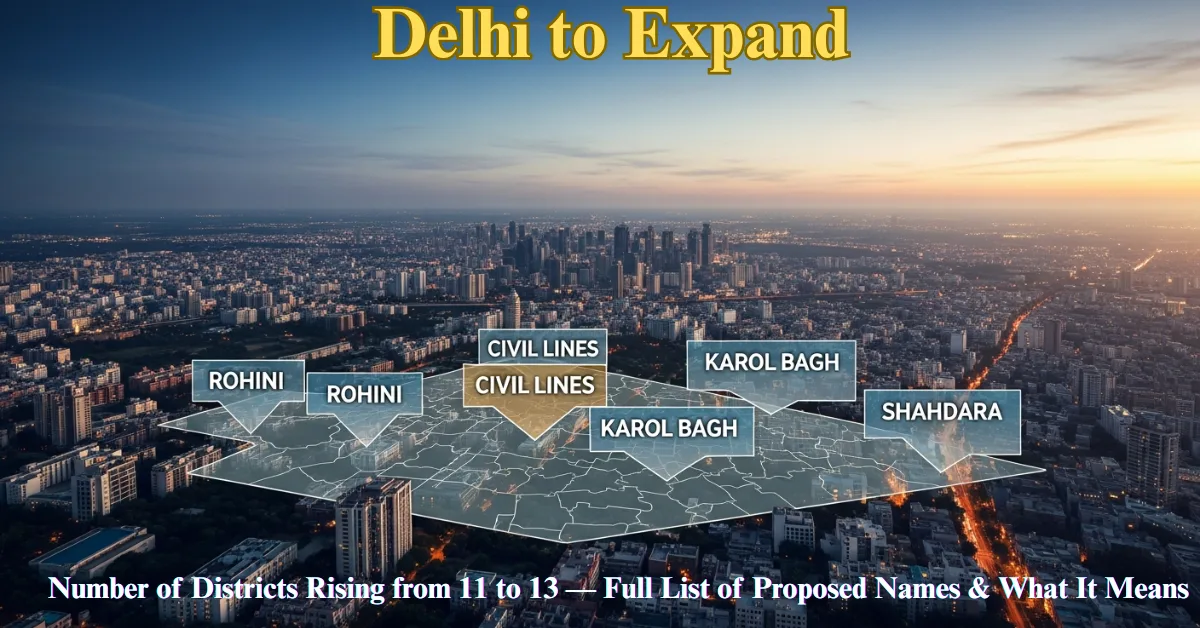
Delhi to Expand🚨
By Krishna Arya | Network Bharat – https://networkbharat.com
Delhi to Expand : Delhi is set for a major administrative shake-up that could reshape how the national capital is governed. In a move aimed at improving efficiency and public service delivery, the Delhi government has proposed expanding the number of revenue districts from 11 to 13 along with renaming and reorganizing several existing zones.
This restructuring is expected to bring governance closer to people, reduce crowding in district offices, and offer faster access to essential government services.
🏙️ Why Is Delhi Increasing Its Districts?
Delhi’s population has crossed 2 crore, and many existing districts handle far more residents than originally planned. Long lines at government offices, delayed document processing, and overburdened administrative staff highlighted the need for reform.
The government’s proposal focuses on:
✅ Decentralizing administration
✅ Cutting citizen wait times
✅ Improving document clearance and verification
✅ Better law-and-order coordination
✅ More focused disaster and civic management
Smaller districts mean officers can better monitor local issues — from land records and registrations to disaster response and urban planning.
🗂️ Current vs Proposed District Structure
✅ Current System:
- 11 revenue districts oversee all civic and land-related administrative work across Delhi.
➡️ Proposed System:
- 13 revenue districts with new boundaries and updated naming formats, accounting for population density and geographic expansion.
This upgrade is largely inspired by the need to offer faster, more transparent governance during Delhi’s rapid urban growth.
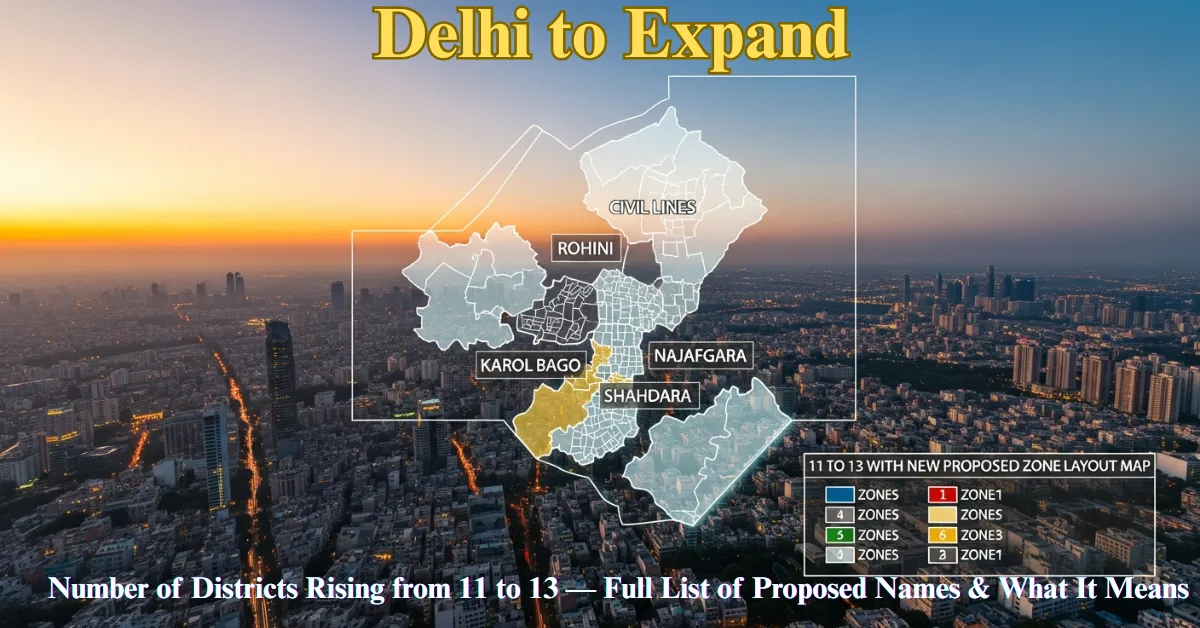
📋 Full List of Proposed Revenue Districts in Delhi
Here are the districts proposed under the new restructuring plan:
🔹 Civil Lines
🔹 Karol Bagh
🔹 Darya Ganj
🔹 Rohini
🔹 Narela
🔹 Najafgarh
🔹 Punjabi Bagh
🔹 Shahdara North
🔹 Shahdara South
🔹 Seelampur
🔹 Saket
🔹 Kalkaji
🔹 Vasant Vihar
Several districts have either been renamed for clarity or carved out from high-density zones to ensure smoother day-to-day governance.
👥 How Will Citizens Benefit?
The most noticeable changes will be experienced by common residents seeking government services:
✅ Faster Work
Processing times for:
- Aadhaar address updates
- Caste, income & domicile certificates
- Property registrations
- Land-record verifications
will reduce significantly.
✅ Less Crowd, More Convenience
Instead of visiting far-off district offices, residents can approach local centers closer to their neighborhoods.
✅ Improved Law & Order Control
Smaller jurisdictions enable district magistrates and police administration to quickly address:
- Local disputes
- Emergency responses
- Disaster management
✅ Stronger Civic Monitoring
Water supply issues, sanitation bottlenecks, illegal construction, and encroachments can be dealt with faster and more effectively.
🛠️ When Will the New Districts Come into Effect?
The plan has already been submitted to senior administrative committees for approval. Once final clearance is provided:
➡️ Creation of new district offices
➡️ Appointment of district officials
➡️ Public notification on boundary mapping
will follow swiftly.
Citizens are expected to start seeing official implementation within the ongoing administrative cycle.
🗺️ What Will Not Change?
Despite restructuring, police districts and municipal ward boundaries are expected to remain unchanged for now. The revamp focuses only on the revenue administration layer—which handles land records, documentation, and civic oversight.
🏛️ Political Reactions
Political leaders cutting across party lines have welcomed the reform as a long-pending necessity. Experts have stated that expanding districts aligns with global urban governance best practices as megacities grow.
However, some voices have urged:
⚠️ Adequate infrastructure funding
⚠️ Sufficient staffing
⚠️ Transparent citizen outreach
to ensure the changes benefit residents on the ground and do not remain merely structural.
📌 Why This Is Important for Delhi Residents
This may look like a bureaucratic adjustment, but for millions of Delhiites, the change could deliver:
- Shorter queues
- Faster documentation
- Improved service delivery
- Personal attention at district offices
In simple words — less running around government corridors and more efficient civic support.
✅ Final Thoughts
The proposal to expand Delhi’s districts from 11 to 13 is not just an administrative tweak—it is part of a wider push toward people-centric governance in one of India’s fastest-growing urban centers.
Once implemented, it could significantly ease bureaucratic pressure while boosting the efficiency of public services for every household across the capital.
✅ FAQ SECTION
❓ Why did Delhi increase its number of districts?
To reduce administrative pressure caused by population growth and improve delivery of government services to residents.
❓ How many districts does Delhi now have?
Delhi is moving from 11 to 13 revenue districts under the proposed restructuring.
❓ What are the new district zones?
New and reorganized districts include Rohini, Narela, Civil Lines, Karol Bagh, Punjabi Bagh, Najafgarh, Saket, Shahdara North & South, and Vasant Vihar among others.
❓ When will the new districts start functioning?
Official implementation will occur once administrative approvals, office setups, and boundary notifications are completed — expected within the current administrative year.
❓ Will police zones also change?
No. The changes affect revenue districts only — municipal and police jurisdictions remain unchanged for now.
#Delhi #DelhiDistricts #AdministrativeOverhaul #NewDistricts #DelhiNews #UrbanGovernance #CityRestructure #IndianCities