Delhi’s PM2.5 Crisis Peaks
Author: Krishna Arya
Published on: NetworkBharat.com
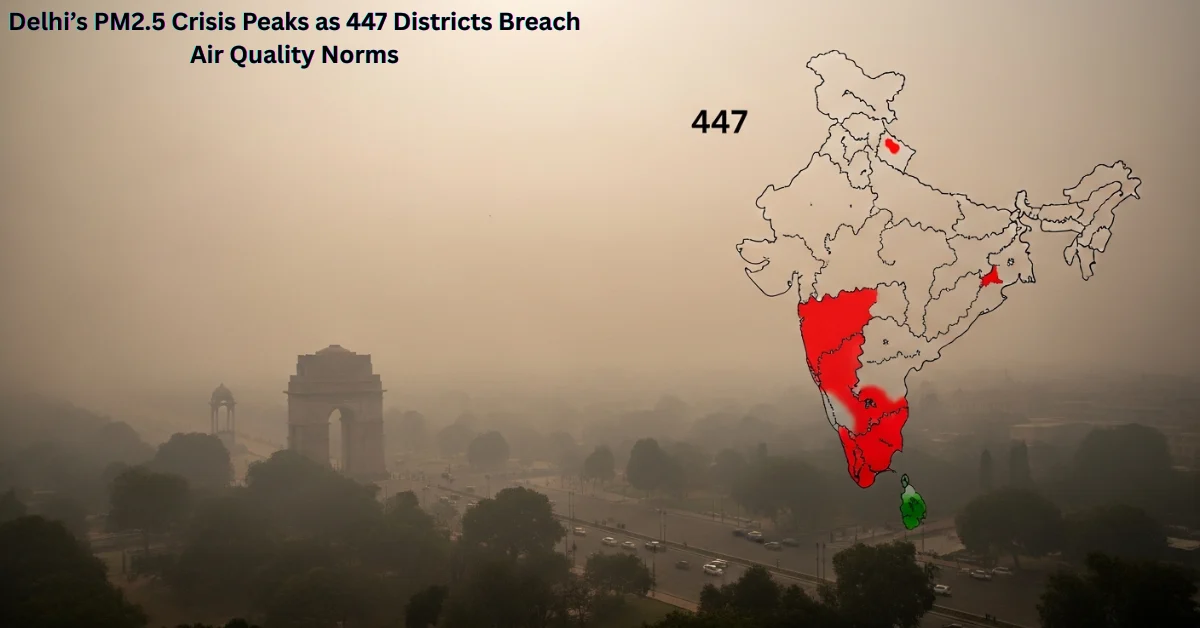
India is facing one of its gravest environmental emergencies—an air pollution crisis so widespread that nearly 447 out of 749 districts now fail to meet the National Ambient Air Quality Standard (NAAQS) for PM2.5. At the epicentre of this growing threat stands Delhi, recording the worst annual PM2.5 levels in the country and struggling to breathe through toxic smog year after year.
This isn’t just a seasonal problem—it’s a national red alert.
Why Delhi’s PM2.5 Crisis Remains Unchecked as 447 Districts Flout National Air Quality Norms
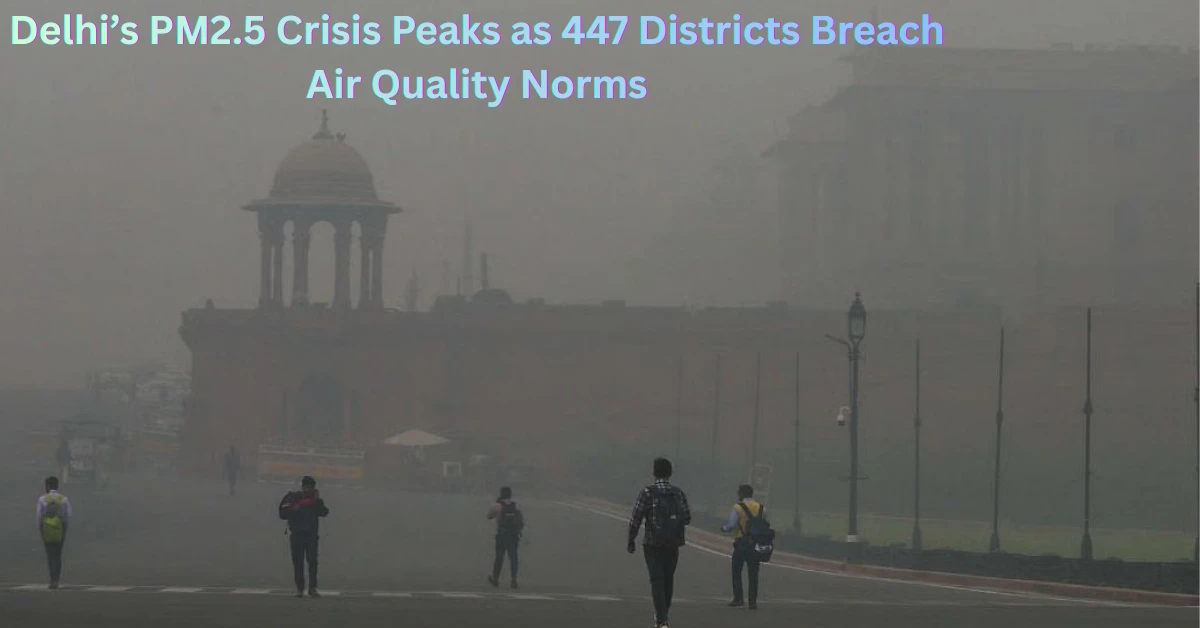
🌫️ Delhi Tops the Pollution Chart: PM2.5 Levels at a Dangerous High
According to recent analysis, Delhi’s average annual PM2.5 concentration hovers around 101 µg/m³, four times the national safe limit of 40 µg/m³.
This makes the capital the most polluted region in India, far ahead of other urban hotspots.
Why Delhi is choking:
- Persistent vehicular emissions
- Crop stubble burning in neighbouring states
- Industrial clusters surrounding NCR
- Construction dust and rapid urbanisation
- Weak dispersal of pollutants due to winter inversion
Despite yearly discussions and policy proposals, the numbers show one truth: the crisis is deepening, not declining.
🗺️ 447 Districts Breach Pollution Norms — A National Emergency
What makes this crisis truly alarming is its geographical spread.
Pollution is no longer confined to big cities like Delhi, Mumbai, or Kolkata. Rural districts, hilly regions, and smaller towns are now registering PM2.5 levels beyond the national standard.
Regions with major breaches include:
- Indo-Gangetic Plains
- Eastern India (Bihar, Jharkhand, West Bengal)
- Central India (Madhya Pradesh, Chhattisgarh)
- Industrial belts in Maharashtra, Gujarat, Odisha
- Rapidly urbanising districts across South India
The data paints a stark picture—air pollution is now a pan-India phenomenon.
📉 Why PM2.5 Is the Most Dangerous Pollutant
PM2.5 particles are microscopic pollutants that can travel deep into the lungs and bloodstream.
They are linked with:
- Chronic respiratory diseases
- Asthma and bronchitis
- Heart diseases
- Premature deaths
- Developmental issues in children
WHO calls PM2.5 the deadliest form of air pollution—and India is seeing some of the world’s highest exposures.
🏭 What’s Driving India’s Uncontrolled Rise in PM2.5?
A mix of structural and seasonal factors contribute to India’s deteriorating air quality:
🔹 Rapid industrial expansion
Thermal power plants, manufacturing units, brick kilns, and metal processing industries emit massive quantities of particulate matter.
🔹 Fuel combustion
Diesel generators, biomass burning, and outdated engines make the situation worse.
🔹 Urban construction boom
Dust from construction sites across Indian cities raises PM2.5 levels dramatically.
🔹 Agricultural burning
Seasonal stubble burning continues to push pollution spikes in North India.
🔹 Weak enforcement
Lack of consistent monitoring and enforcement means pollution norms remain largely on paper.
🌍 Delhi’s Battle: Are Policies Working?
Over the years, Delhi has tried several interventions:
- Odd-even vehicle scheme
- Bans on firecrackers
- Shifting industries to cleaner fuel
- Smog towers
- GRAP (Graded Response Action Plan)
- Electric vehicle promotion
Yet, the results remain limited. The capital continues to rank among the most polluted cities globally.
Why? Because Delhi’s problem isn’t just Delhi’s.
It’s regional, tied to the air shed of Haryana, Punjab, UP, Rajasthan, and NCR industries that share the same air.
A local solution cannot fix a regional system.
🧪 What the Data Tells Us: A Larger Pattern
The latest analysis does more than highlight pollution—it reveals a systemic national failure in air quality management.
- Only 18–20% of Indian districts meet PM2.5 standards.
- Many districts lack real-time monitoring stations.
- Air quality plans exist but are weakly implemented.
- Climate change is worsening pollutant stagnation.
This means India needs coordinated, long-term, nationwide mitigation strategies, not seasonal firefighting.
✅ What Needs to Change NOW
Experts recommend seven urgent interventions:
1️⃣ Strengthen national monitoring
Expand real-time air stations across all districts.
2️⃣ Transition to clean energy
Accelerate renewable energy and phase out coal-dependent clusters.
3️⃣ Enforce pollution control norms
Industries and construction must follow strict emission regulations.
4️⃣ Modernize transport systems
Promote EVs, improve public transport, and reduce diesel vehicular load.
5️⃣ Support farmers with alternatives
Provide machinery and incentives to eliminate stubble burning.
6️⃣ Improve waste management
Ban open waste burning across rural and urban areas.
7️⃣ Promote citizen awareness
People must recognize air pollution as a health emergency.
🌱 A Breath of Hope — If India Acts Today
India stands at a critical juncture. Delhi’s severe PM2.5 level may be the warning signal, but the crisis spans districts from Kashmir to Kanyakumari.
The good news?
With powerful policy action, technological support, and public participation, the country can reverse this trend.
A clean-air future is possible—but the first step is acknowledging the urgency.
#DelhiAirPollution #PM25Crisis #IndiaAirQuality #447Districts #SmogAlert #CleanAirIndia #AirPollutionIndia #DelhiSmog
📌 Final Word
As Delhi struggles with the worst PM2.5 levels in the country and 447 districts breach national air quality norms, the scale of India’s air pollution crisis is impossible to ignore.
This is not just an environmental issue—
it’s a national health emergency demanding immediate action.