Elon Musk Starlink Venezuela internet
By Krishna Arya | NetworkBharat.com
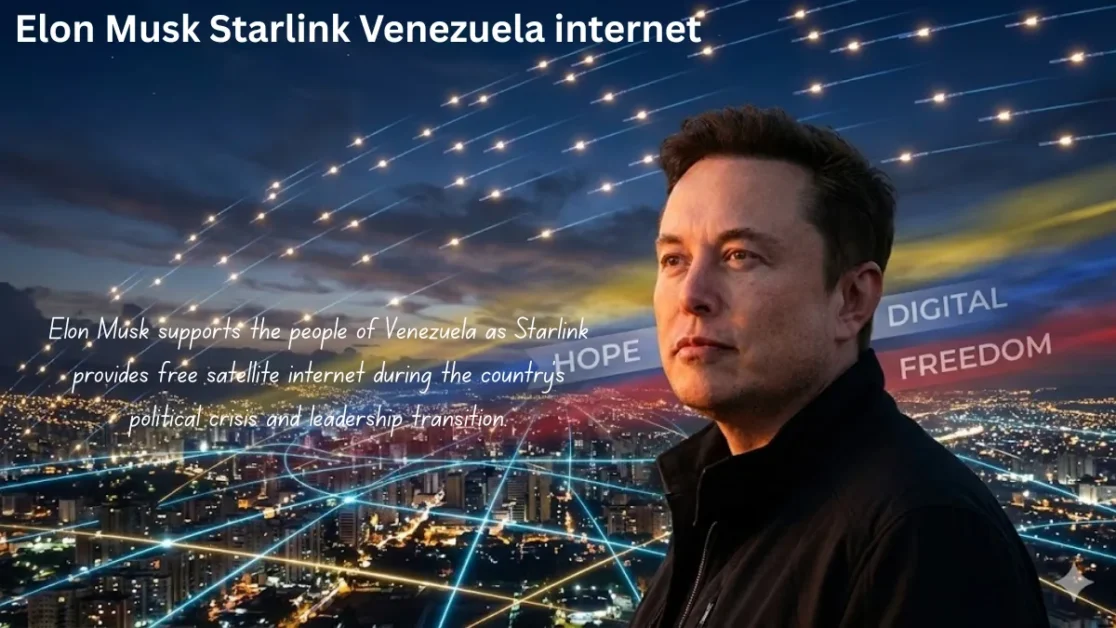
Elon Musk Starlink Venezuela internet : In a dramatic moment that blends global politics with cutting-edge technology, billionaire entrepreneur Elon Musk has publicly expressed support for the people of Venezuela, as Starlink announced free broadband internet access across the country for a limited period.
The move comes at a time when Venezuela is witnessing one of its most turbulent political transitions in recent history—making digital connectivity not just a convenience, but a lifeline.
Starlink’s Free Internet Announcement: What Was Said?
Taking to X (formerly Twitter), Elon Musk reposted an official message from Starlink with a short but powerful line:
“In support of the people of Venezuela.”
Starlink confirmed that it would provide free broadband internet service in Venezuela until February 3, aiming to ensure uninterrupted connectivity during a rapidly evolving national crisis. For millions of Venezuelans, where internet access has often been unreliable or restricted, the announcement was seen as a rare moment of relief and empowerment.
Starlink, operated by Musk’s aerospace company SpaceX, uses low-Earth orbit satellites to deliver high-speed internet even in regions where traditional infrastructure is weak or disrupted.
A Nation in Flux: What’s Happening in Venezuela?
The internet announcement coincided with shocking developments on the political front. According to widely circulated reports and official US-released footage, Venezuelan leader Nicolás Maduro was taken into custody following an American-led operation.
Videos showed Maduro in handcuffs during what officials described as a controlled and symbolic public moment. He was seen greeting reporters and US DEA agents with “Happy New Year” and “Good night” remarks as he was escorted away—scenes that quickly went viral and sent shockwaves through Latin America.
Supreme Court Steps In, Delcy Rodríguez Named Acting President
With Maduro removed from power, Venezuela faced an immediate leadership vacuum. The country’s Supreme Court intervened swiftly, invoking constitutional provisions to maintain administrative continuity.
In a televised ruling read by Justice Tania D’Amelio on state broadcaster VTV, the court declared that Maduro was “physically and temporarily unable to perform his functions.” As a result, Vice President Delcy Rodríguez was ordered to assume the powers and duties of acting president.
The court emphasized that the constitution mandates such a transfer of authority to ensure national stability, governance, and defense during extraordinary circumstances.
Why Internet Access Matters During Political Turmoil
In moments of political uncertainty, control over information can shape public perception, civic participation, and even personal safety. Free and open internet access allows citizens to:
- Stay informed through multiple news sources
- Communicate with family and loved ones
- Document events on the ground
- Access emergency and humanitarian information
By opening its network at no cost, Starlink has positioned itself not just as a tech provider, but as a facilitator of digital freedom during crisis.
Elon Musk’s Reaction: A Message of Hope
Elon Musk did not hide his optimism about Venezuela’s future. Earlier, he reacted to the developments by posting in Spanish:
“Venezuela can now achieve the prosperity it deserves.”
The statement resonated widely, drawing both praise and debate. Supporters viewed it as a message of hope for a country long affected by economic collapse, sanctions, and political instability. Critics, meanwhile, questioned the broader geopolitical implications of private tech companies engaging during regime transitions.
The US Angle: What John Bolton Revealed
Adding another layer to the story, former US National Security Advisor John Bolton revealed details of earlier plans involving Venezuela. Speaking to CNN, Bolton said that a proposal to remove Maduro had been presented to former US President Donald Trump during his first term.
However, the plan never moved forward at the time. According to Bolton, officials struggled to keep the president “focused” on the issue long enough for decisive action.
Technology Meets Geopolitics
The Venezuela episode highlights a growing global reality: technology companies now play an influential role during political crises. Satellite internet, social media platforms, and private space infrastructure can impact how information flows—sometimes faster than governments can respond.
Starlink’s intervention raises important questions:
- Can private tech ensure neutrality during political upheaval?
- Where does humanitarian support end and political influence begin?
- Should internet access be considered a basic human right in crises?
Regardless of perspective, one thing is clear—connectivity has become power.
What Happens Next for Venezuela?
As Delcy Rodríguez steps in as acting president and international attention remains fixed on Caracas, Venezuela stands at a crossroads. The coming weeks will determine whether the country moves toward stability, reform, and recovery—or enters another phase of uncertainty.
For now, millions of Venezuelans remain connected to the world, thanks to satellites orbiting hundreds of kilometers above Earth—an extraordinary reminder of how technology and human lives are increasingly intertwined.
#ElonMusk,#Starlink,#VenezuelaCrisis,#FreeInternet,#VenezuelaNews,#Maduro,#SpaceX,#GlobalPolitics,#BreakingNews,#InternetFreedom,#LatinAmerica,#USVenezuela
📌 Final Note from NetworkBharat
At NetworkBharat.com, we continue to closely monitor global developments that shape the future of democracy, technology, and people’s lives. This story from Venezuela is not just about power—it’s about access, voice, and hope in the digital age.