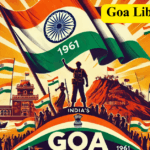
Goa Mukti Diwas History
✍️ Writer: Krishna Arya
🌐 Website: https://networkbharat.com
Goa Mukti Diwas History stands as one of the most powerful chapters in India’s post-independence journey. While the rest of India celebrated freedom on 15 August 1947, Goa remained under Portuguese control for more than fourteen additional years. On 19 December 1961, India finally liberated the region and restored dignity, identity, and sovereignty to Goans. Today, Goa Mukti Diwas is not just a date—it is an emotion stitched into India’s democratic soul.
At a time when India shaped its identity as an independent republic, Goa Mukti Diwas History shows how liberation did not arrive easily or peacefully. It required decades of civil resistance, international negotiations, satyagraha movements, and finally, a military operation. The end result was not just the geographical union of India—it was the completion of national destiny.
The Long Portuguese Era: A Silent Century of Struggle
The story of Goa Mukti Diwas History begins with a brutal fact—Goa remained under Portuguese rule for 451 years. Long before the British, the Portuguese arrived in 1510, taking Goa from the Bijapur Sultanate and establishing one of the longest foreign empires in world history.
Unlike the British Raj, Portuguese control was rigid and ruthlessly authoritarian. Over the centuries, Goans faced:
- Religious persecution
- Cultural suppression
- Forced conversions
- Land control
- Tax exploitation
- Restrictions on Indian identity
For generations, Goans waited to breathe the air of freedom.
Even after the Indian independence movement exploded across the subcontinent, Portugal repeatedly refused to leave Goa. They ignored diplomatic requests, United Nations pressure, and peaceful Indian proposals. Lisbon believed Goa was “not a colony, but Portuguese national territory.” This stubborn mindset pushed the Indian government to reconsider strategies.
The First Spark: Rise of Resistance Movements
Long before 1961, Goans began shaping Goa Mukti Diwas History from inside.
From the early 20th century onward, Goan leaders formed resistance groups demanding freedom:
- Goa Congress Committee
- Azad Gomantak Dal
- Goa Liberation Council
- Jai Hind Movement
These groups used underground networks, slogans and public demonstrations.
However, peaceful protests often ended in imprisonment, torture, and exile. The outside world did not react strongly, but the fire kept growing.
Impact of India’s Independence: A New Wave Begins
In 1947, when the Indian flag rose for the first time, hope exploded across Goa.
The keyword Goa Mukti Diwas History is deeply connected with how India’s own independence reshaped the region. Young Goans travelled to Bombay, Karnataka and Pune, returning with ideas of nationalism, secularism, and democracy.
The Indian government initially believed diplomacy could solve the situation. Pandit Jawaharlal Nehru sent repeated messages to Portugal urging peaceful withdrawal. Yet Portugal refused. Instead, they tightened military presence, banned public gatherings, and banned Indian newspapers from entering Goa.
The conflict was no longer regional—it became global politics.
From Diplomacy to Decision: Why India Chose Action
What ultimately pushed India toward military intervention?
Three huge triggers built pressure:
1️⃣ Rising attacks on freedom fighters
Dozens were shot at the Goa border or jailed.
2️⃣ Portugal sought NATO help
India realised European powers might militarise Goa.
3️⃣ Global decolonisation momentum
Asia and Africa were demanding independence—Goa could not be left behind.
After 14 years of patience, India drafted a liberation plan.
Operation Vijay was born.
Operation Vijay: 36 Hours That Changed History
Goa Mukti Diwas History cannot be complete without Operation Vijay.
On 18 December 1961, the Indian Army, Navy and Air Force launched a coordinated strike:
- Troops crossed Goan territory
- INS Delhi shelled Portuguese positions
- Indian Air Force destroyed command network
- Paratroopers captured strategic points
Within 36 hours, Portugal surrendered.
No other liberation movement in the world ended so quickly after centuries of rule.
India lost brave soldiers, but the operation avoided large-scale civilian casualties.
On 19 December 1961, the Indian flag was raised over Panaji. Goa was free.
Why Goa Mukti Diwas Matters Today
Goa Mukti Diwas History is not just a flashback—it carries deep meaning in modern India.
1️⃣ Completes India’s geographical vision
The last piece of colonial control disappeared.
2️⃣ Symbol of people’s unity
Goans and Indians fought side by side.
3️⃣ Cultural revival
Traditional Goan identity resurfaced after decades.
4️⃣ Tourism & economic boom
A liberated Goa grew into India’s coastal powerhouse.
5️⃣ Message to the world
India proved diplomacy + moral strength worked before force.
The Legacy of Heroes: Unforgotten Freedom Fighters
The keyword Goa Mukti Diwas History celebrates names that shaped liberation:
- Tristão de Bragança Cunha – Father of Goan nationalism
- Dr. Ram Manohar Lohia – Sparked civil protest
- T.B. Cunha – United Goan voices
- Pandit Jawaharlal Nehru – Strategic architect
- Indian Armed Forces – Final protectors
Their sacrifices demand national honour.
How Goa Changed After 1961
After liberation, Goa was placed under Indian administration.
In 1987, Goa gained full statehood—becoming India’s 25th state.
Today, Goa is known for:
- Highest literacy rates
- Global tourism appeal
- Rich art & culture
- Top per capita income
- Unique Indo-Portuguese architecture
Goa Mukti Diwas History shows how a region once oppressed now stands globally admired.
Why Indians Should Remember Goa Mukti Diwas
In fast modern media culture, the memory of liberation should not fade. Goa Mukti Diwas History teaches:
- Freedom is never accidental—it’s earned
- Foreign rule always damages identity
- National unity builds strength
- Armed forces deserve timeless respect
- Democracy thrives through courage
For India’s youth, Goa Mukti Diwas is not a textbook date.
It is a reminder of who we are.
Goa Mukti Diwas and Modern Politics
Today, Goa Mukti Diwas History continues to shape public narratives. Leaders pay tributes, governments organise programs, and Goans celebrate cultural festivals.
The day also influences:
- tourism messaging
- regional pride
- international relations
- state planning
As India moves deeper into global influence, Goa’s story becomes a soft-power symbol.
Conclusion: Goa Mukti Diwas History Will Forever Live in Indian Blood
Goa Mukti Diwas History is not a museum chapter.
It is an ongoing heartbeat of Indian patriotism.
The liberation of Goa shows that:
- resistance works
- truth wins
- identity survives
- courage is contagious
From colonial darkness to national unity, Goa’s journey stands as one of independent India’s most defining victories.
As long as India breathes, 19 December will never be forgotten.
ALSO READ
- Tamil Nadu SIR Voter List Released: Check Your Name Today & Fix Errors
- MNREGA Replace! क्या Workers को मिलेगा ज्यादा पैसा? Reality Check!
- VB-G RAM G Bill 2025: India’s New Rural Employment Guarantee Explained
- Vijay Diwas 2025: The Historic 1971 Indian Army Victory That Changed South Asia Forever
- PM Modi’s Historic Jordan Visit: 75 Years of India-Jordan Ties Enter a New Era
- Delhi CM Rekha Gupta Gives Jobs to 1984 Anti-Sikh Riot Victims’ Families
- Parliament Winter Session 2025 Begins Amid SIR Controversy & Major Bills
- Putin to Visit India Dec 4–5 After Four Years – Modi Summit Ahead
- Delhi to Expand: Number of Districts Rising from 11 to 13 — What It Means
EXTERNAL SOURCES
“Happy Goa Mukti Diwas! Celebrating the historic freedom of Goa and honouring every hero who fought to end 451 years of rule.”