By Krishna Arya | NetworkBharat.com
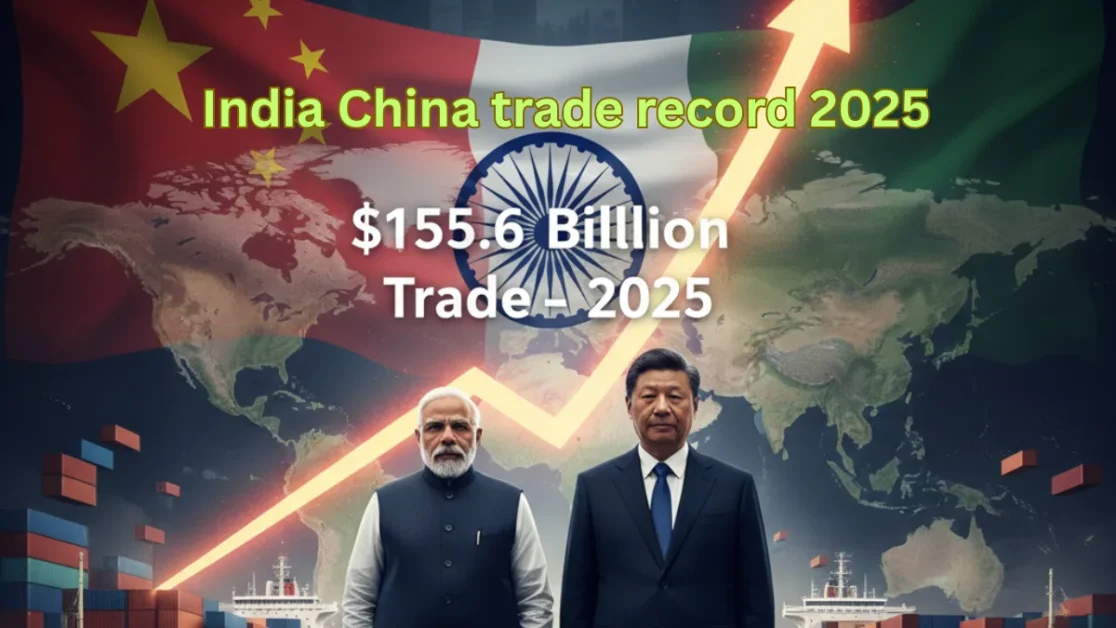
India China trade record 2025
India China trade record 2025 After years of diplomatic strain, border tensions, and global uncertainty, India and China’s economic relationship has quietly crossed a historic milestone. Bilateral trade between Asia’s two largest economies touched an unprecedented US$155.6 billion in 2025, marking the highest level ever recorded between the two neighbours.
This development, highlighted by Chinese Ambassador to India Xu Feihong, is being widely interpreted as a sign that India-China relations are stabilising and entering a new, more pragmatic phase—one where economic cooperation is being prioritised despite ongoing strategic rivalry.
Trade Growth Amid Strategic Tensions
The surge in trade is particularly striking because it comes after years of military standoffs and heightened tensions along the Line of Actual Control (LAC). While political trust between New Delhi and Beijing remains fragile, economic engagement has shown surprising resilience.
According to diplomatic sources, both sides now appear to recognise that economic decoupling is neither practical nor desirable in an interconnected global economy. For India, China remains a major trading partner across sectors such as electronics, pharmaceuticals, machinery, and renewable energy components. For China, India continues to be one of the fastest-growing large markets in the world.
The record trade figures suggest that economic stability is being placed above political friction, at least for now.
Modi-Xi Meeting: A Turning Point
Observers trace the current thaw to the Modi-Xi meeting in Tianjin, which helped ease diplomatic tensions and reopened communication channels at the highest level. While no dramatic announcements followed the meeting, it created space for dialogue, de-escalation, and renewed engagement.
Since then, working-level talks, business exchanges, and multilateral coordination have quietly gained momentum, contributing to the stabilisation of ties.
Rather than grand gestures, both sides seem to be embracing incremental confidence-building, especially in trade and diplomacy.
Atmanirbhar Bharat and China’s Self-Reliance: Competition with Convergence
Interestingly, Ambassador Xu pointed out the parallel visions driving both economies—India’s Atmanirbhar Bharat and China’s own self-reliance campaign.
At first glance, these initiatives appear competitive. Both aim to reduce external dependence, strengthen domestic manufacturing, and secure supply chains. Yet in practice, they also reveal areas of convergence.
- India seeks technology, scale, and investment
- China seeks markets, partnerships, and stability
This overlap has created space for selective cooperation, particularly in areas where mutual benefit outweighs political risk.
Cultural Philosophy Meets Modern Diplomacy
Beyond economics, Beijing has also highlighted shared philosophical values. China’s concept of Harmony has been linked with India’s ancient idea of Vasudhaiva Kutumbakam—the belief that the world is one family.
While such cultural references may seem symbolic, diplomats argue that they play a role in softening narratives, especially at a time when Asia’s geopolitical balance is rapidly shifting.
In a multipolar world, symbolism often complements strategy.
BRICS and the Global South Factor
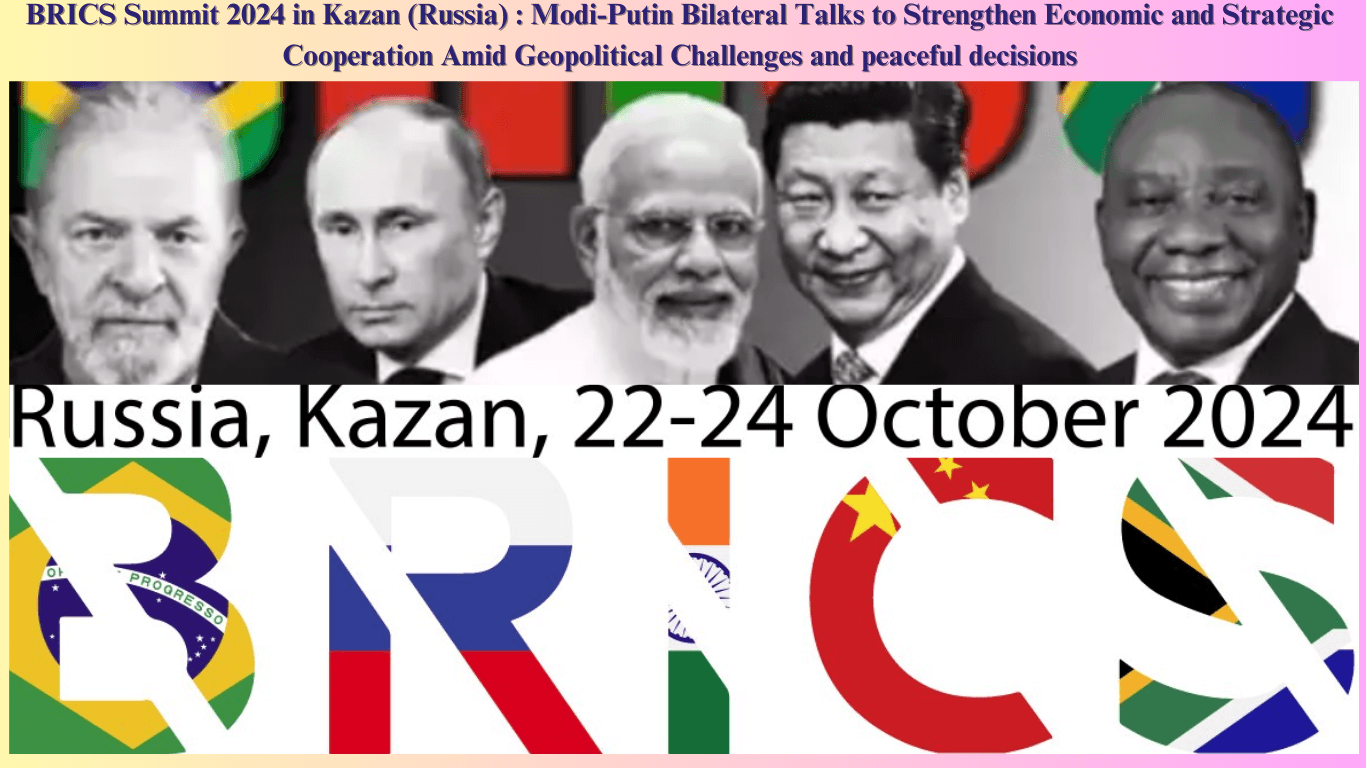
Another significant signal has been China’s support for India’s leadership role within BRICS. As the grouping expands and positions itself as a voice of the Global South, cooperation between New Delhi and Beijing becomes strategically important.
For emerging economies, a united stance on issues like:
- Development financing
- Trade reform
- Global governance
- Supply chain resilience
could significantly reshape international power structures.
China’s endorsement suggests a recognition that India’s rising influence is no longer optional—it is inevitable.
Cooperation and Competition: Asia’s New Reality
The evolving India-China relationship reflects a broader truth about Asia’s future: cooperation and competition will coexist.
While differences over borders, alliances, and influence remain unresolved, both nations understand that economic confrontation would be costly, not just for themselves but for global supply chains already under stress.
The record trade figure of $155.6 billion is not just a number—it is a signal. A signal that realpolitik, economic necessity, and global responsibility are shaping a new phase of engagement.
What Lies Ahead?
Despite the positive momentum, challenges remain:
- Trade imbalances continue to concern India
- Strategic mistrust has not disappeared
- Border issues still lack a permanent resolution
Yet the current trajectory suggests that dialogue is replacing deadlock, and pragmatism is slowly overtaking confrontation.
As Asia’s power dynamics evolve, India and China are learning to manage rivalry without derailing cooperation—a delicate balance that could define regional geopolitics for decades.
Final Thought
In a world increasingly shaped by economic interdependence, the India-China trade milestone of 2025 underscores a simple truth: even rivals must find ways to work together.
For now, trade has become the bridge—one that both sides seem unwilling to burn.
#IndiaChinaTrade, #IndiaChinaRelations, #ModiXiTalks, #BRICS, #GlobalSouth, #AtmanirbharBharat, #AsianGeopolitics, #GlobalSupplyChains, #IndiaDiplomacy, #ChinaIndia