India’s New SIM-Binding Rule
By Krishna Arya | NetworkBharat.com
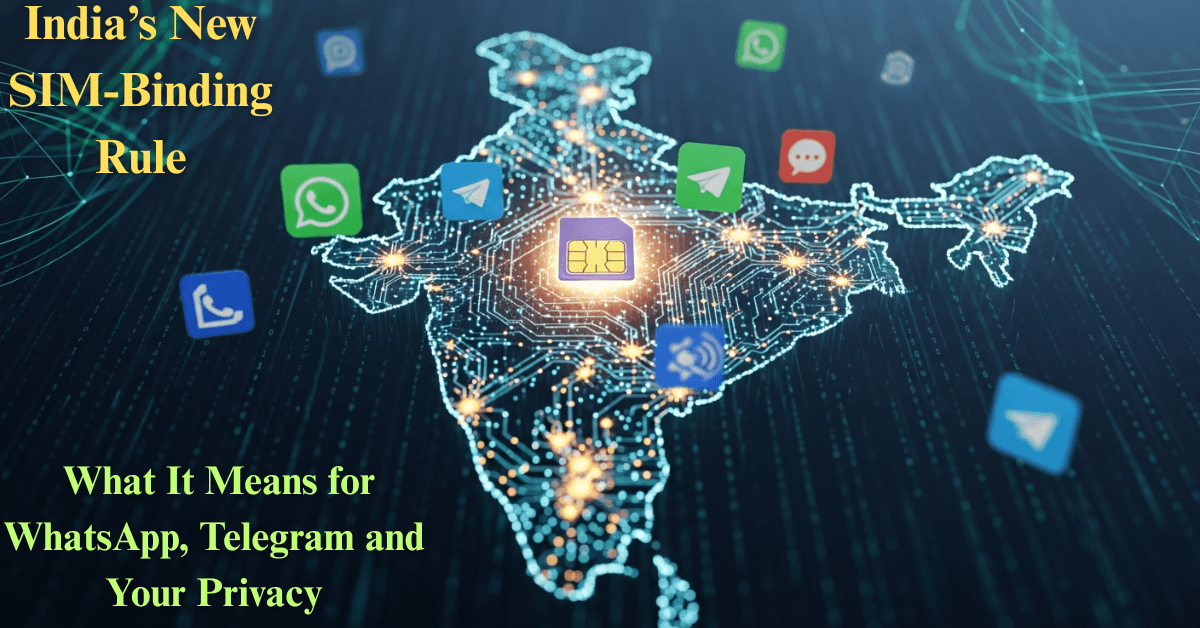
India’s New SIM-Binding Rule : The Government of India is rolling out a new digital safety regulation that is set to change how millions of people use popular messaging platforms like WhatsApp and Telegram. Known as the SIM-Binding Rule, this updated telecom policy aims to strengthen online security, curb cybercrime, and stop the misuse of anonymous accounts.
But what exactly does this mean for everyday users? Will apps stop working without your SIM card? Is your privacy at risk?
Let’s break it down in a simple, no-jargon way.
🔹 What Is the SIM-Binding Rule?
Under the new guidelines issued by the Department of Telecommunications (DoT), OTT messaging platforms must keep user accounts linked to the SIM number used during registration.
In simple terms:
- Your WhatsApp or Telegram account stays active only if the registered SIM remains valid and connected.
- If the SIM is permanently disconnected or reissued to someone else, the linked account will be automatically deactivated after a grace period.
This prevents criminal networks from operating ghost accounts using expired or illegally obtained SIM numbers.
🔹 Why Did the Government Implement This Rule?
The primary goal is cybercrime prevention.
Indian agencies have reported growing misuse of messaging platforms for:
✅ Financial fraud
✅ Fake recruitment scams
✅ OTP theft and identity cloning
✅ Terror funding communication
✅ Mass misinformation campaigns
Since OTP-based registration allows old SIM numbers to be recycled and reused, criminals can hijack dormant accounts. SIM-binding ensures only verified SIM owners control the accounts tied to their numbers.
🔹 How Will It Affect WhatsApp Users?
For most users — there will be no disruption at all.
You will only notice a problem if:
- Your SIM expires and gets reassigned.
- You deactivate a number and later try accessing WhatsApp without updating it.
- Someone attempts to take over your account using an old SIM.
This rule effectively makes your WhatsApp account more secure than before. Anyone trying unauthorized access will fail without the original SIM.
🔹 And What About Telegram?
Telegram users will experience similar changes.
Accounts tied to inactive or recycled SIM numbers may:
- Get logged out permanently.
- Require re-verification through the original mobile number.
Telegram’s anonymous aura won’t disappear completely — usernames and privacy features remain intact — but account identity will be more strictly controlled behind the scenes.
🔹 Will Multi-Device Use Stop?
No — your multi-device functionality stays exactly the same.
You can still:
✅ Use WhatsApp or Telegram on multiple phones
✅ Access your chats on web and desktop
✅ Use tablet-linked devices
As long as your primary SIM number remains active and verified during setup.
🔹 What Happens If I Change My Number?
No stress here either.
All platforms already allow number change inside app settings. Under the new rule:
- Open your messaging app.
- Go to Settings → Account → Change Number.
- Re-verify using OTP from your new SIM.
Your chats, groups, and contacts stay intact.
🔹 Is User Privacy at Risk?
This is a major concern — but the official answer is NO.
DoT has clarified:
- Messages remain end-to-end encrypted.
- Content monitoring is not part of this policy.
- Only number-verification compliance is being strengthened.
In short:
Your messages remain private. Your identity becomes safer.
🔹 Benefits of SIM-Binding Rule for Users
Here’s why this policy is actually good news:
✅ Better protection against SIM recycling scams
✅ Reduced account hijacking cases
✅ More fraud prevention
✅ Improved trust in digital platforms
✅ Cleaner messaging environment
It’s a rare regulation that strengthens safety without invading personal privacy.
🔹 Who Needs to Be Careful?
Although regular users won’t be affected, extra caution should be taken by:
- People who switch SIM cards frequently
- Businesses managing shared WhatsApp numbers
- Users with old SIMs nearing deactivation
Always update your number inside apps before discontinuing any SIM.
🔹 When Will The Rule Come Into Effect?
The implementation is expected to begin in phases through 2025, with full enforcement likely before early 2026 as per compliance schedules for OTT platforms.
Users don’t need to take immediate action yet — updates will automatically roll out via WhatsApp and Telegram application updates.
🔹 What Should You Do Right Now?
Here’s the simple checklist:
✅ Ensure your registered SIM is active
✅ Update your messaging apps regularly
✅ Perform number change inside app settings when switching SIMs
✅ Avoid using unofficial or secondary numbers
No panic — just basic digital hygiene.
#SIMBinding #WhatsAppUpdate #TelegramIndia #CyberSecurity #DigitalIndia #SIMRule2025 #OnlineSafety #TechNewsIndia #NetworkBharat
🔹 Final Thoughts
The new SIM-binding rule isn’t about restrictions — it’s about protection.
At a time when cyber fraud and digital impersonation are rising quickly across India, this move is a smart step toward a more secure online ecosystem without compromising freedom or privacy.
For everyday WhatsApp and Telegram users, this change will mostly work silently in the background — making your accounts safer without interrupting your daily conversations.
📌 FAQ
❓ What is SIM-binding rule in India?
SIM-binding links messaging accounts like WhatsApp or Telegram to the mobile number used to register. Accounts stop working if the SIM becomes inactive or is reissued, preventing fraud.
❓ Will WhatsApp stop working if I remove my SIM card?
No. WhatsApp continues working on WiFi devices as long as your registered number remains active and verified.
❓ Is SIM-binding breaking WhatsApp encryption?
No. All chats remain end-to-end encrypted. The rule only verifies phone number ownership.
❓ Do I need to take action?
No immediate action needed unless you change SIM numbers—just update your number in the app.
❓ When will SIM-binding take effect in India?
Full implementation is expected during 2025–2026 after phased rollout.
Also Read This :
Telegram OTP Scam Alert in India — How to Stay Safe OnlineHow to Secure Your WhatsApp Account From Hackers in 2025Cyber Crime Helpline 1930 – Step-by-Step Guide to Report Online FraudLatest Digital India Policies & Technology UpdatesSources
Department of Telecommunications (DoT), Government of IndiaWhatsApp Security & Privacy InformationTelegram Official FAQ PageMinistry of Electronics & IT (MeitY) IndiaStay informed with NetworkBharat.com for the latest updates on India’s digital policy changes.
Written by: Krishna Arya