By Krishna Arya | NetworkBharat.com
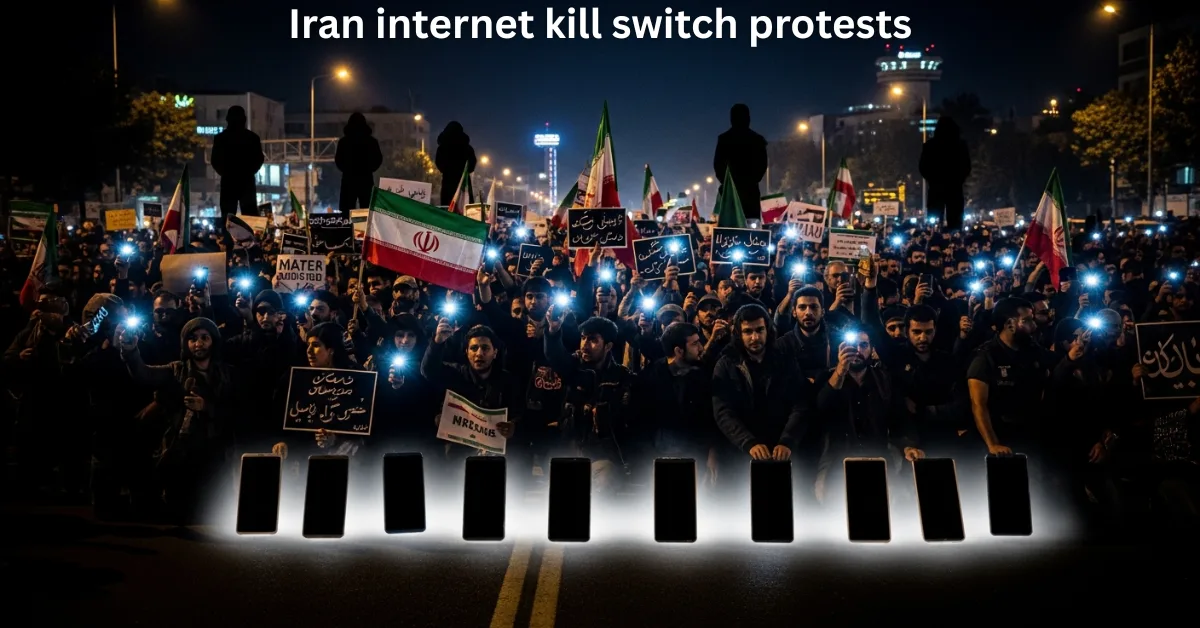
Iran internet kill switch protests As anti-government demonstrations enter their second week, Iran has plunged into one of the most severe internet blackouts in its history. According to cybersecurity experts and global internet monitoring groups, authorities have activated a centralized “internet kill switch,” reducing national connectivity to a fraction of normal levels as protests intensify against Supreme Leader Ayatollah Ali Khamenei.
The move comes amid mounting unrest across multiple Iranian cities, where demonstrations that began over economic hardship have evolved into direct political challenges to the Islamic Republic.
Internet Access Cut to Less Than 2%
Global internet watchdog NetBlocks reports that Iran’s online connectivity has dropped to below 2% of usual levels—an unprecedented shutdown affecting not just social media but essential services nationwide.
NetBlocks CEO Alp Toker described the blackout as a top-down censorship mechanism, designed to operate through a single, centrally controlled command.
“This is a one-step operation with no legal process and no way for citizens to object,” Toker said, adding that such systems allow governments to quickly silence communication during crises.
The shutdown has disrupted banks, emergency services, businesses, and hospitals, leaving millions unable to contact relatives or access critical information.
Why the Kill Switch Matters
Experts warn that large-scale internet shutdowns are often used to limit the flow of information, particularly during periods of civil unrest. By restricting online access, authorities can curb the spread of videos, images, and real-time reports that might otherwise reach the international community.
Cybersecurity analysts note that such kill switches have been developed over decades and can even interfere with satellite communications, making it extremely difficult for citizens to bypass restrictions.
Protests Spread, Rhetoric Hardens
Protests have now continued for 14 consecutive days, spreading from major urban centers to smaller towns. While officials initially referred to demonstrators as “rioters,” state rhetoric has escalated, with protesters increasingly labeled as “terrorists.”
Iranian state media has accused the United States of fueling the unrest, claiming that what began as peaceful demonstrations was deliberately turned violent through foreign interference—an allegation Washington denies.
Global Reactions and Political Pressure
Former U.S. President Donald Trump has publicly voiced support for the protesters, stating that Iran is witnessing a renewed struggle for freedom and that Washington is prepared to help.
Meanwhile, Iran’s exiled former crown prince, Reza Pahlavi, has broken years of silence to praise the nationwide demonstrations. In a public appeal, he urged the international community to deploy technical, financial, and diplomatic resources to help restore internet access so that the voices of Iranians can be heard globally.
Economic Collapse at the Heart of the Unrest
The current wave of protests began on December 28, triggered by the rapid collapse of Iran’s currency. The Iranian rial has reportedly fallen to over 1.4 million per U.S. dollar, driven by years of international sanctions, inflation, and economic mismanagement.
What started as protests over rising prices and unemployment has since transformed into a broader movement questioning the legitimacy of the ruling system itself.
Rising Death Toll and Detentions
According to the U.S.-based Human Rights Activists News Agency, at least 72 people have been killed and more than 2,300 detained since the demonstrations began. Human rights groups warn that the true figures may be higher due to restricted reporting and the ongoing communications blackout.
A Nation Cut Off From the World
With internet access nearly erased, Iran now finds itself largely isolated from the outside world. For millions of ordinary citizens, the blackout has turned daily life into a struggle—blocking access to money, medical help, education, and family communication.
As protests continue despite the digital silence, the situation raises urgent questions about freedom of expression, state power, and the role of technology in modern authoritarian control. Iranian protesters gather as internet access is shut down nationwide during escalating protests against the Khamenei government.
#IranProtests #InternetShutdown #IranBlackout #KillSwitch #Khamenei #MiddleEastNews #FreeIran #DigitalCensorship #HumanRights #BreakingNews #GlobalPolitics #NetworkBharat
Stay informed with the full story and expert insights.
For continuous updates, visit 👉 https://networkbharat.com