Lindsey Halligan’s Legal Setback
By Krishna Arya | NetworkBharat.com
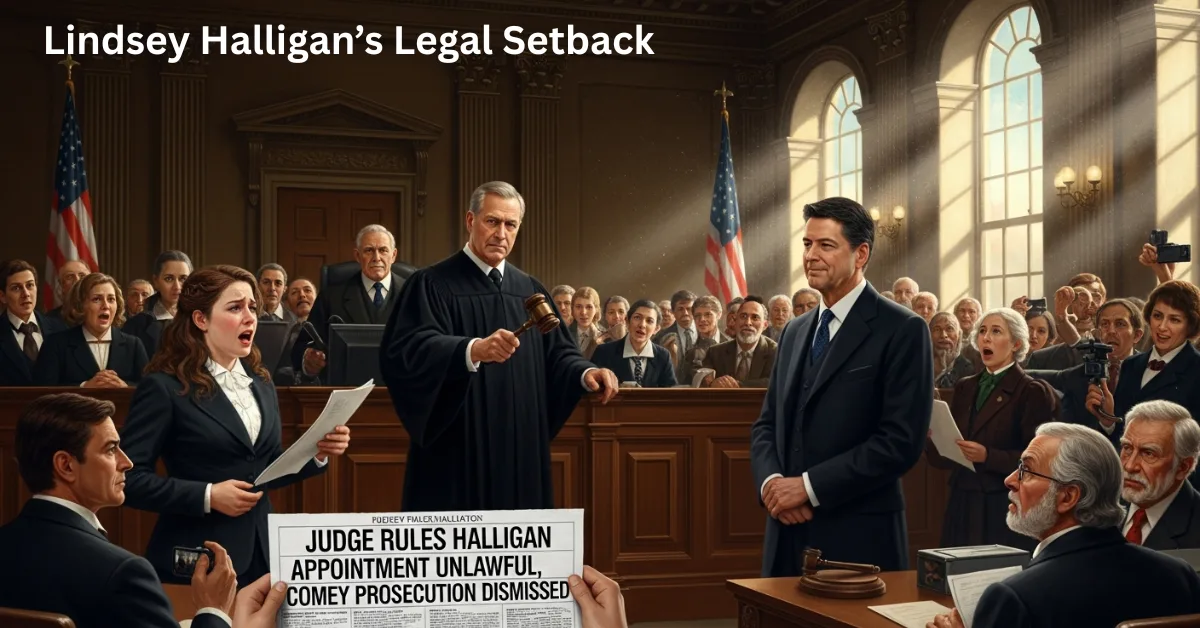
Lindsey Halligan’s Legal Setback : A dramatic turn in U.S. legal circles has once again pulled national attention toward the intersection of politics, power, and prosecution. Lindsey Halligan — a former Miss Colorado finalist turned attorney — has been officially disqualified after a federal judge ruled that her appointment as a special prosecutor was unlawful.
The ruling didn’t just end her involvement in the cases she pursued. It also invalidated the high-profile legal actions she attempted against former FBI Director James Comey and New York Attorney General Letitia James, sparking a fresh wave of political and legal debate across the country.
⭐ What Triggered the Judge’s Decision?
According to the court, Halligan’s appointment violated the Appointments Clause — a key constitutional safeguard that determines who is authorized to hold significant federal offices.
The judge clarified that only congressionally approved “inferior officers” can carry out prosecutorial functions without Senate approval. Halligan did not meet those requirements.
This constitutional violation made her appointment void, leading the judge to throw out her filings in their entirety.
⭐ Why Lindsey Halligan Was Appointed in the First Place
Halligan was part of a legal team widely associated with figures close to former President Donald Trump. Her filing against James Comey alleged misconduct and abuse of power — claims that have resurfaced periodically over the years but remain legally unproven.
However, the judge emphasized that even if the allegations were serious, Halligan was simply not authorized to bring these prosecutions.
⭐ What the Dismissal Means for the Comey Case
With the disqualification order, the entire prosecution attempt collapsed.
- The case cannot proceed in its current form.
- Any evidence submitted under Halligan’s authority is considered invalid.
- The Justice Department is not obligated to reopen or review the matter.
This makes it highly unlikely that Comey will face any renewed legal challenges stemming from this filing.
⭐ The Bigger Picture: Politics and Prosecutions
The case has revived questions that Americans have debated for years:
- Are legal actions being weaponized politically?
- Should special prosecutors require stricter vetting?
- Is the Appointments Clause being ignored too often?
Legal experts now argue that the ruling sets a firm precedent, reinforcing that no matter how politically charged a case may be, prosecutors must be legally and constitutionally appointed.
⭐ How This Impacts Future Special Prosecutor Appointments
The fallout is expected to reshape future appointments in politically sensitive cases.
Key takeaways for U.S. legal institutions include:
- Stricter vetting of temporary or special prosecutors
- Stronger review of legal authority before filing high-profile charges
- A renewed focus on constitutional compliance
This decision may also influence ongoing debates about prosecutorial independence during and after presidential transitions.
⭐ Public and Political Reaction
The ruling has sparked sharp reactions online:
- Supporters of Comey hailed it as a win for due process.
- Critics blasted it as a technical loophole protecting powerful officials.
- Neutral legal scholars called it a necessary reminder that constitutional procedures cannot be bypassed for political convenience.
Regardless of stance, the case highlights how even minor procedural errors can reshape major political narratives.
#LindseyHalligan #JamesComey #UnlawfulAppointment #FederalJudge #LegalUpdate #USJustice #CourtRuling #PoliticalProsecution #LawAndPolitics #NetworkBharat
⭐ Final Thoughts
Lindsey Halligan’s disqualification isn’t just a courtroom technicality — it’s a powerful legal moment that underscores the importance of proper appointments, constitutional safeguards, and unbiased prosecutions.
As the debate continues, one thing is clear:
This case will be remembered as a defining example of how constitutional errors can dismantle even the most high-profile legal battles.