By Krishna Arya | NetworkBharat.com
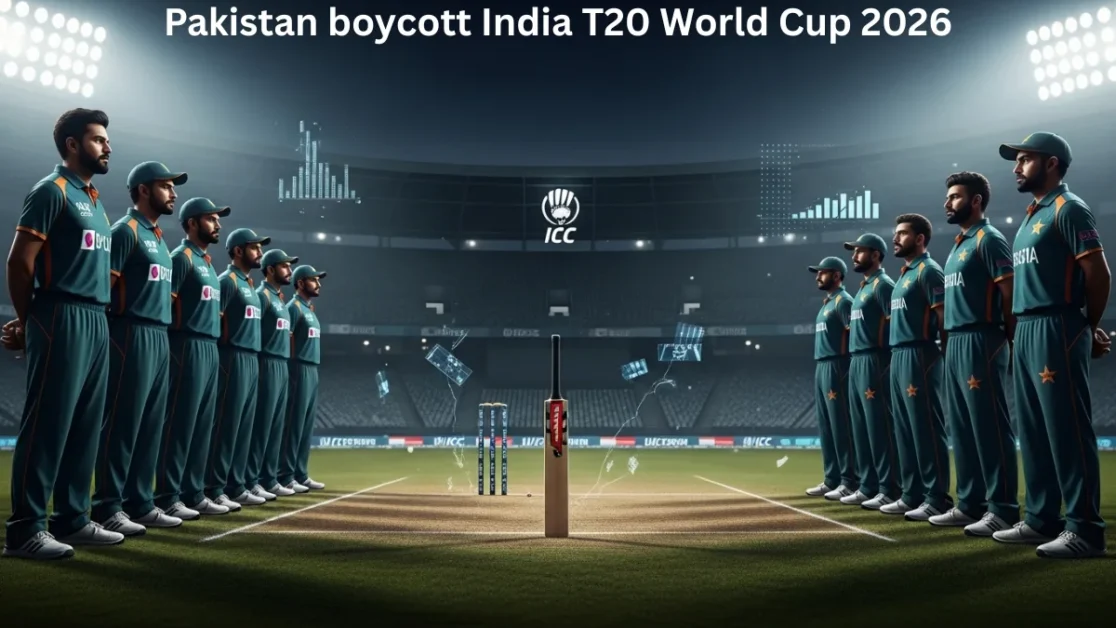
Pakistan boycott India T20 World Cup 2026 The decision by Pakistan to boycott its group-stage match against India in the ICC T20 World Cup 2026 has sent shockwaves far beyond the two cricketing rivals. While the move is being projected as a political statement—ostensibly in solidarity with Bangladesh—it has raised serious concerns within the global cricketing ecosystem, particularly for financially dependent boards like Bangladesh.
At the heart of the issue lies a match that is far more than just a contest on the field. An India–Pakistan clash is cricket’s biggest commercial driver, influencing broadcast revenues, sponsorship deals, and the financial health of the entire tournament.
Pakistan Government Steps In, PCB Stays Silent
What makes this situation more complex is that the boycott is not a decision taken by the Pakistan Cricket Board (PCB), but by the Pakistani government itself. In a social media post, the government confirmed that while Pakistan would participate in the T20 World Cup 2026, it would not play against India on February 15. No official explanation accompanied the announcement.
The silence from the PCB has only fueled speculation, leaving stakeholders uncertain about the future of the tournament schedule and its financial planning.
Why This Decision Affects More Than India and Pakistan
An India–Pakistan match is the single most valuable fixture in any ICC tournament. According to industry estimates, such a game alone can contribute a massive share of overall broadcast revenue. Losing it doesn’t just hurt the ICC—it impacts every member board that depends on revenue sharing.
This is precisely why the Bangladesh Cricket Board (BCB) is deeply worried.
Bangladesh’s Financial Fears
Bangladesh’s cricket economy is heavily reliant on funds distributed by the International Cricket Council. Domestic cricket generates limited income, and sponsorship and broadcasting revenues barely cover annual operational costs.
A senior BCB official, speaking anonymously to local media, admitted that while Pakistan’s decision might appear politically bold, the financial consequences could be severe.
“If the India–Pakistan match doesn’t happen, everyone loses money. Our ICC dividend will go down. We didn’t want this,” the official said.
Another BCB director expressed frustration over what he described as the ICC’s lack of attention to Bangladesh’s concerns, but still stopped short of supporting a boycott.
ICC Warns of Wider Damage
Following Pakistan’s announcement, the ICC made it clear that refusing to play scheduled matches could harm the entire cricket ecosystem. Smaller and emerging cricket nations—many of which survive almost entirely on ICC funding—stand to suffer the most.
Countries like Kenya or Uganda might manage with modest funding, but for boards like Bangladesh, which have invested heavily in infrastructure and player development, a reduction in ICC revenue could be devastating.
Rising Tensions in South Asian Cricket
This controversy also comes at a time when cricketing relations in South Asia are already strained. Bangladesh is not part of the upcoming T20 World Cup, and relations with Indian cricket authorities have reportedly cooled. The BCB fears that prolonged tensions could impact future bilateral tours and major tournaments such as the Asia Cup.
Despite this, there is still hope.
Mediation Efforts Underway
Recognising the gravity of the situation, the ICC has appointed its Deputy Chairman Imran Khwaja as a mediator to engage with Pakistani authorities. The aim is simple: persuade Pakistan to reconsider and ensure that the marquee match goes ahead.
A BCB director summed up the prevailing mood with cautious optimism:
“The door for dialogue is always open. Let’s see what happens.”
What Happens Next?
If Pakistan sticks to its decision, the fallout will extend well beyond one match—impacting tournament credibility, broadcaster confidence, and the financial stability of multiple cricket boards. For Bangladesh, the stakes are particularly high.
As talks continue behind closed doors, the cricketing world waits anxiously. One thing is certain: the absence of an India–Pakistan clash would leave a hole not just in the fixture list, but in the global cricket economy itself.
#T20WorldCup2026, #IndiaPakistanCricket, #PakistanBoycott, #ICCNews, #BangladeshCricket, #CricketPolitics, #GlobalCricket, #PCB, #BCB, #CricketControversy