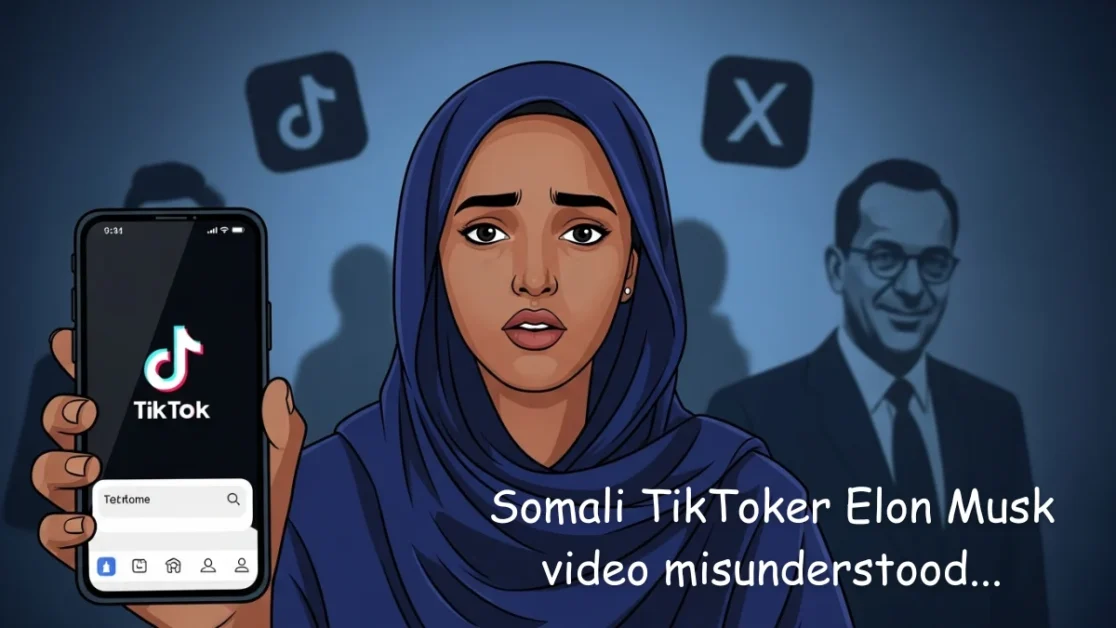
Somali TikToker Elon Musk video misunderstood
By Krishna Arya | NetworkBharat.com
Somali TikToker Elon Musk video misunderstood : What began as an ordinary TikTok livestream quickly spiraled into a global controversy, reminding the internet how fragile context can be in the age of viral clips. A Somali TikToker, Fardowsa Muhammad, has now come forward to clarify her remarks after facing intense backlash over a video that many believed contained a threat against billionaire entrepreneur Elon Musk.
Muhammad insists her words were misunderstood, taken out of context, and turned into something she never intended—leaving her fearful for her safety and future.
From Casual Livestream to Viral Storm
The controversy stems from a TikTok livestream where Muhammad was reacting—mostly in the Somali language—to images of Musk. Toward the end of the stream, she briefly switched to English and said a sentence that would soon be clipped and widely shared:
“I wouldn’t worry too much about him. He’s going to die.”
Once isolated from the rest of the livestream, the line was interpreted by many as a direct threat. The short clip spread rapidly across social media platforms, sparking outrage and heated debate.
Muhammad says the viral version removed crucial context and tone.
“I was not threatening anyone,” she later said in a response video. “I was misunderstood and misheard.”
Social Media Backlash and Escalation
As the clip gained traction, several influential accounts amplified it, framing the comment in the harshest possible light. Calls for investigation followed, and the situation escalated dramatically when Musk himself responded on X with a brief but ominous message: “So it is war.”
For Muhammad, that response marked a turning point.
“Elon Musk is one of the most powerful men in the world,” she said. “When someone like that responds, millions listen. I felt instantly overwhelmed.”
Soon after, she claims she began receiving hundreds of threatening messages. Personal details were allegedly shared online, deepening her fear.
“I Am Genuinely Afraid for My Future”
In a longer follow-up video, Muhammad appeared emotional as she described the impact of the controversy on her life.
“On December 31, 2025, my life changed in a way I never imagined,” she said. “My words were villainized, and my voice was taken away.”
She stressed again that violence or harm was never part of her thinking.
“I never intended to threaten Elon Musk’s life, nor would I ever think of doing so,” she said. “I am not a hateful person.”
According to Muhammad, the online backlash has made her fear for her physical safety, not just her reputation.
What She Says the Message Really Meant
Muhammad claims the original livestream was not about threatening Musk at all. Instead, she says her comments were part of a broader discussion about health, aging, and body positivity—ideas that did not translate well once clipped and shared without explanation.
“My message was about being kind to our bodies and to each other if we want to live long, fulfilling lives,” she explained. “That message was twisted into something dark.”
Supporters argue that this reflects a larger problem with short-form video culture, where nuance is often sacrificed for virality.
A Broader Political Context
The backlash also unfolded amid heightened political tension. In recent months, Musk has publicly criticized alleged fraud cases involving Somali-linked organizations in the United States, with investigations involving agencies like the Department of Homeland Security.
While there is no connection between Muhammad and those cases, some observers believe the charged atmosphere may have influenced how quickly her remarks were framed as hostile rather than careless or philosophical.
The Cost of Going Viral
Digital culture experts say Muhammad’s experience highlights the darker side of viral fame:
- Context collapses quickly
- Power imbalances shape narratives
- Online outrage can turn personal overnight
In this case, a single sentence placed a relatively unknown creator in the spotlight alongside one of the world’s most influential figures.
“My life and Elon Musk’s life are worlds apart,” Muhammad said. “This whole situation has put me in grave danger.”
A Call for Caution and Compassion
As the controversy continues to circulate online, Muhammad is asking viewers to slow down, reconsider the context, and recognize the human cost of viral outrage.
She has not been charged with any crime, and she maintains that her words were never meant as a threat. What remains is a sobering reminder of how easily narratives can form—and how difficult they are to undo.
In an era where clips travel faster than explanations, Muhammad’s story underscores a critical lesson: virality may last minutes, but its consequences can follow someone for a lifetime.
#SomaliTikToker, #ElonMusk, #ViralVideo, #TikTokNews, #SocialMediaBacklash, #OnlineHarassment, #DigitalSafety, #InternetCulture, #BreakingNews, #NetworkBharat
People Also Ask (PAA) – FAQs
Who is the Somali TikToker involved in the Elon Musk controversy?
The Somali TikToker is Fardowsa Muhammad, a content creator who went viral after a short clip of her livestream about Elon Musk was shared without full context.
What did the Somali TikToker say about Elon Musk?
In a clipped video, she said Elon Musk was “going to die,” which she later clarified was a philosophical remark taken out of context, not a threat.
Did Elon Musk respond to the viral video?
Yes. Elon Musk responded on X with the phrase “So it is war,” which intensified the backlash and public attention.
Why did the video spark backlash online?
The backlash occurred because a short edited clip removed the original context, leading many to interpret the remark as a threat rather than a general statement about mortality.
Is the Somali TikToker facing legal action?
No legal charges have been reported. However, she has stated that she received threats and fears for her safety due to the viral backlash.
What message did the TikToker say was misunderstood?
She says her message was about body positivity, health, and kindness, emphasizing that everyone is mortal and should take care of themselves.
Why is this controversy significant?
The incident highlights how viral clips, power imbalance, and lack of context on social media can lead to harassment and real-world safety concerns.
For more in-depth, human-centered digital culture and global news stories, stay connected with NetworkBharat.com