Timeless Indian Symbols
By Krishna Arya
Website: https://networkbharat.com
Timeless Indian Symbols : India is not merely a nation shaped by borders and timelines — it is a civilisation shaped by ideas. While empires rose and fell, languages evolved, and dynasties changed, Bharat’s soul remained intact. The reason lies not just in scriptures or monuments, but in symbols — quiet, powerful carriers of values that survived centuries of change.
Indian symbols are not decorative artefacts of the past. They are living philosophies. They influence how Indians understand justice, power, purity, spirituality, and hope. From governance to daily rituals, these icons continue to guide moral and social behaviour even in modern times.
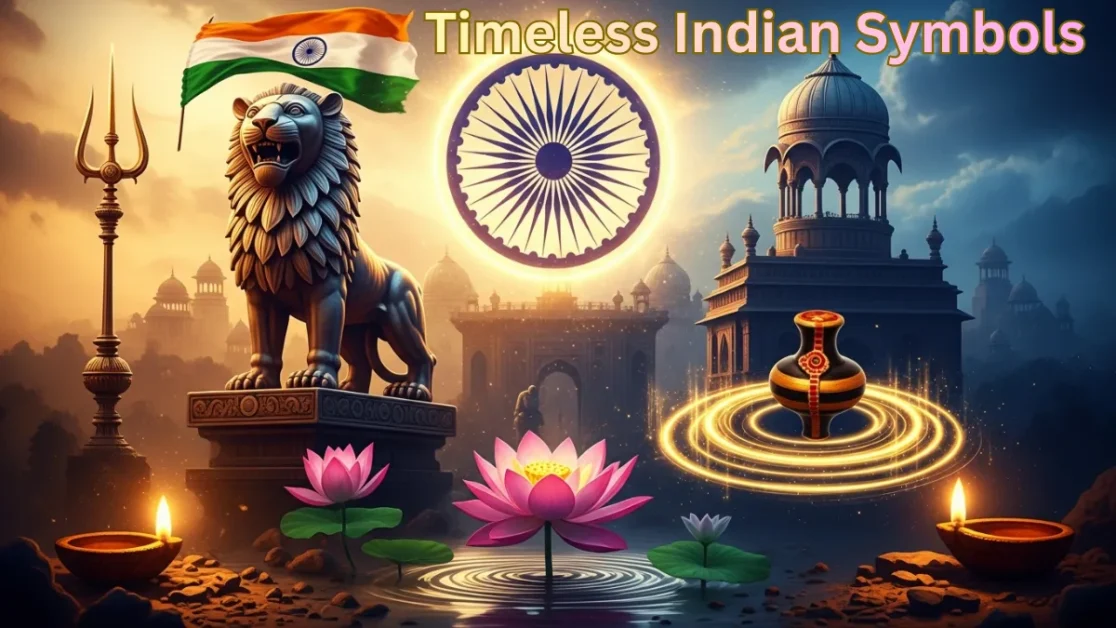
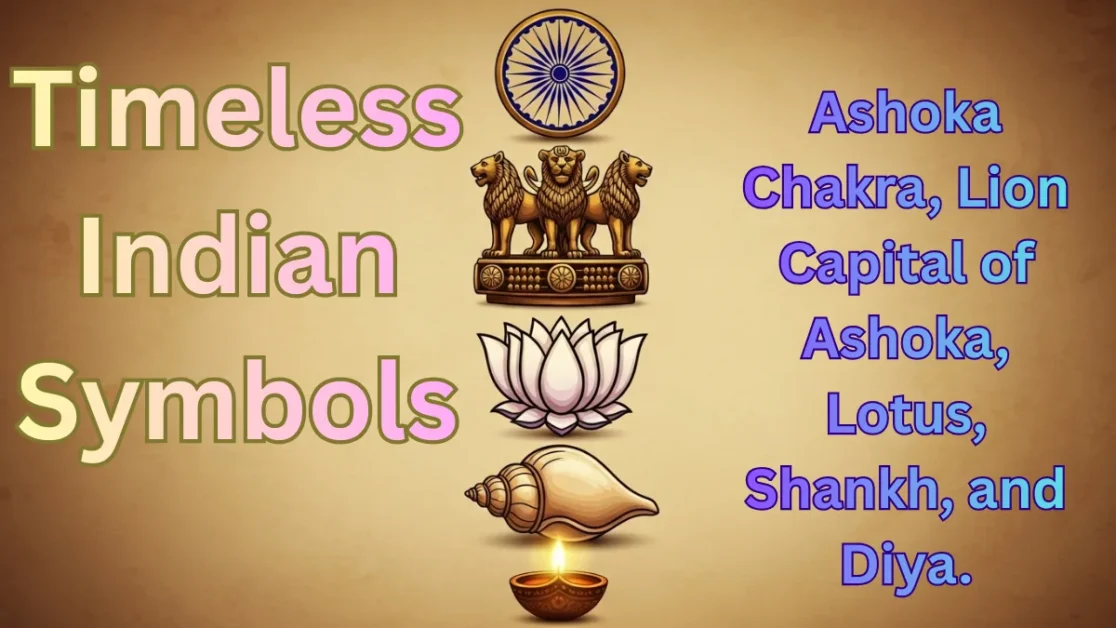
Among thousands of cultural representations, five timeless symbols stand out for shaping Bharat’s civilisational identity across generations: Ashoka Chakra, Lion Capital of Ashoka, Lotus, Shankh, and Diya.
Let us explore how these symbols forged an identity that remains unbreakable even today.
5 Timeless Indian Symbols That Forged Bharat’s Unbreakable Civilisational Identity
Ashoka Chakra: The Eternal Motion of Dharma
At the heart of India’s national flag lies the Ashoka Chakra, a wheel with 24 spokes that silently carries one of the deepest philosophies of Indian civilisation — Dharma.
Originating from the reign of Emperor Ashoka, the Chakra symbolises righteous conduct, justice, and ethical governance. After the devastating Kalinga War, Ashoka realised that true power does not lie in conquest, but in compassion. The wheel became his reminder that authority must always move in harmony with morality.
The Chakra teaches an essential civilisational lesson: life, society, and nations must keep moving forward on the path of righteousness. Stagnation, whether moral or social, leads to decay.
Each spoke represents values such as truth, courage, discipline, equality, patience, and duty. Placed at the centre of the national flag, it reminds every citizen and leader that the nation’s progress must be guided by justice — not force.
Even today, the Ashoka Chakra acts as India’s moral compass in democracy, law, and governance.
Lion Capital of Ashoka: Power Guided by Truth
The Lion Capital of Ashoka, India’s national emblem, is a symbol of authority — but not intimidation. The four Asiatic lions standing back-to-back, facing all directions, represent fearless strength, vigilance, and responsibility.
Originally carved atop Ashokan pillars, the emblem was meant to spread messages of Dharma across the empire. Unlike emblems that glorify domination, these lions reflect restraint and awareness. Their calm posture suggests confidence rooted in ethics, not aggression.
At the base of the lions lies the Ashoka Chakra, reinforcing the idea that true power must rest on justice. Beneath it, the national motto “Satyameva Jayate” (Truth Alone Triumphs) anchors Indian governance in moral integrity.
In modern India, the Lion Capital appears on currency, courts, passports, and official seals — constantly reminding the state that authority exists to protect citizens, not overpower them.
Lotus: Grace That Rises from Struggle
The lotus is perhaps one of the most poetic symbols of Indian thought. Growing in muddy waters yet blooming untouched and pure, it represents purity, resilience, and self-realisation.
Indian philosophy has long embraced the lotus as a metaphor for life. It teaches that one can live amid chaos, struggle, and hardship without losing inner balance. This symbolism mirrors Bharat’s own journey — surviving invasions, colonisation, and internal challenges while preserving its cultural essence.
Associated with deities like Lakshmi, Saraswati, and Brahma, the lotus symbolises prosperity, wisdom, and creation. As India’s national flower, it reflects the nation’s ability to rise gracefully despite adversity.
In today’s fast-paced and often turbulent world, the lotus continues to inspire Indians to remain rooted in values while striving for growth and transformation.
Shankh (Conch): The Sacred Call of Consciousness
The Shankh, or conch shell, carries a sound that has echoed through Indian civilisation for thousands of years. Its vibration is believed to purify spaces, awaken consciousness, and dispel negativity.
Mentioned in the Vedas, Puranas, and the Mahabharata, the Shankh was blown before prayers, sacred rituals, and even battles — symbolising the triumph of order over chaos. Lord Vishnu is often depicted holding a Shankh, representing divine protection and cosmic balance.
Beyond religion, the Shankh symbolises discipline, clarity, and awakening. Its spiral form reflects continuity and infinity, reminding humans of their connection to the eternal.
Even today, the sound of the conch in temples and homes bridges ancient wisdom with modern life — urging people to pause, reflect, and align with higher purpose.
Diya: A Flame That Defeats Darkness
The diya, a small oil lamp, holds one of the most profound messages of Indian civilisation — light always conquers darkness.
Lit during festivals, prayers, and life’s important moments, the diya symbolises knowledge, hope, and spiritual victory. In Indian philosophy, darkness represents ignorance and fear, while light signifies wisdom and truth.
The diya teaches a powerful civilisational lesson: even the smallest light can dispel immense darkness. It reinforces the idea that individual actions matter — morally, socially, and spiritually.
During Diwali, millions of diyas illuminate homes across India, creating a collective expression of renewal and optimism. The ritual goes beyond celebration; it renews faith in goodness and ethical living.
Why These Symbols Still Matter in Modern India
These symbols are not confined to textbooks or museums. They actively shape India’s national identity, governance, education, festivals, and everyday life.
In a rapidly modernising nation, they provide continuity — connecting ancient wisdom with contemporary aspirations. They remind Bharat that progress does not require abandoning values, and modernity does not mean cultural amnesia.
More importantly, these symbols offer universal lessons:
- Power must be guided by truth
- Purity can rise from struggle
- Light must always be protected
Conclusion: The Soul of Bharat Lives On
India’s timeless symbols tell a story far greater than history books can capture. They narrate a journey of resilience, morality, and spiritual depth that has endured for thousands of years.
As Bharat moves forward on the global stage, these symbols continue to whisper ancient truths — guiding the nation toward progress without losing its soul.
In understanding them, we do not just learn about India’s past — we rediscover the living heart of Bharat itself.
#TimelessIndianSymbols, #BharatIdentity, #IndianCivilisation, #AshokaChakra, #LionCapital, #IndianHeritage, #LotusSymbolism, #Shankh, #Diya, #CulturalPride, #AncientIndia, #IndianPhilosophy, #DiscoverIndia, #SanatanValues
Also Read This :
World Human Rights Day 2025: Why Justice and Equality Matter
India Remembers the 2001 Parliament Attack Heroes
Justice After 40 Years: Relief for 1984 Anti-Sikh Riot Victims
Important National and Global Observances in December 2025
External Sources
Official National Symbols of India – Government of India
Lion Capital of Ashoka – Archaeological Survey of India
Ashoka Chakra Meaning and History – Encyclopaedia Britannica