US House Rejects War Powers Resolution on Iran
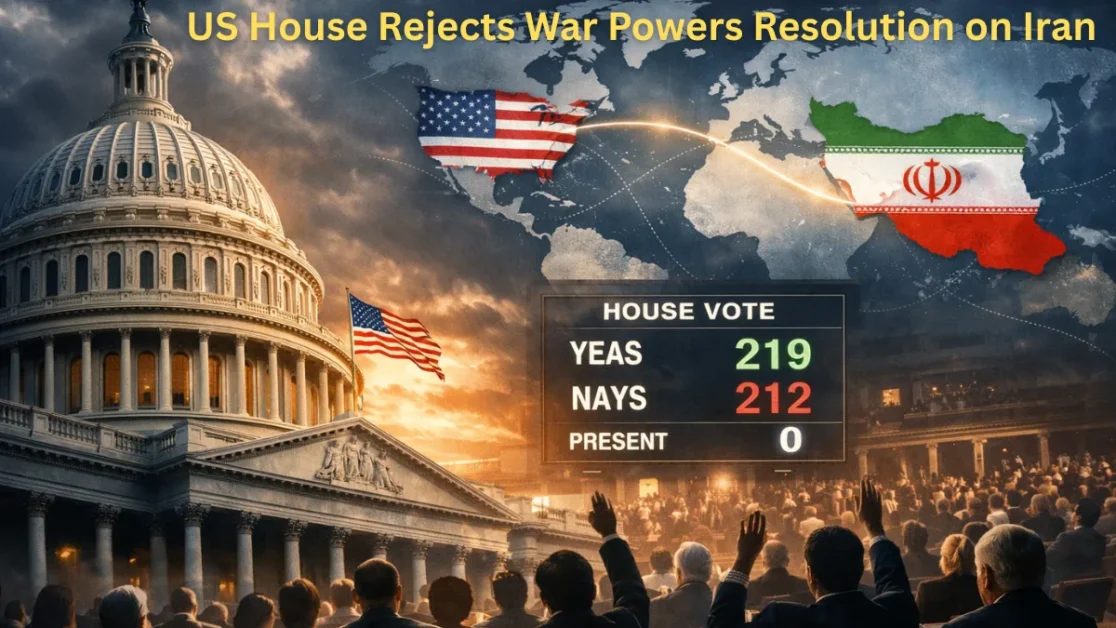
US House rejects war powers resolution on Iran : The political landscape in the United States witnessed a dramatic moment after the U.S. House of Representatives rejected a War Powers Resolution aimed at limiting President Donald Trump’s military actions against Iran. The decision has intensified debate in Washington and across the world about presidential authority, congressional oversight, and the growing tension in the Middle East.
The vote, which ended 219–212, showed a deeply divided Congress. Supporters of the resolution argued that military operations against Iran should require approval from lawmakers, while opponents insisted the president must retain flexibility to respond quickly to security threats.
What Was the War Powers Resolution About?
The War Powers Resolution was designed to restrict the president’s ability to conduct prolonged military operations without Congress’s approval. Lawmakers who backed the measure said it was necessary to ensure that decisions about war remain under congressional authority as outlined in the U.S. Constitution.
If passed, the resolution would have required the Trump administration to seek congressional authorization before continuing military actions against Iran. However, the proposal failed to gain enough support in the House.
Many supporters of the resolution warned that unchecked military power could lead the United States into another prolonged conflict in the Middle East.
Why the House Rejected the Resolution
The rejection largely followed party lines, with most Republicans opposing the measure and Democrats largely supporting it. Critics of the resolution argued that limiting the president’s authority during a tense geopolitical situation could weaken the United States’ ability to respond to threats.
Supporters of President Trump said the administration must have strategic flexibility when dealing with Iran, especially amid rising tensions in the region.
Meanwhile, several lawmakers expressed concern that the resolution could send a signal of division to U.S. allies and adversaries.
Growing US–Iran Tensions
The vote comes at a time when relations between the United States and Iran remain extremely fragile. Military incidents, political tensions, and regional conflicts have all contributed to the strained relationship between the two nations.
Experts say that any escalation between the two countries could have serious consequences for global security, oil markets, and diplomatic stability in the Middle East.
Some analysts believe the rejection of the resolution may allow the U.S. administration to continue its current strategy without additional congressional restrictions.
Political Reactions in Washington
The vote triggered strong reactions from both sides of the political spectrum.
Supporters of the resolution argued that Congress must play a stronger role in decisions related to war and military engagement. They warned that allowing presidents to act without oversight could create dangerous precedents.
On the other hand, opponents claimed that national security decisions require speed and flexibility, something that could be compromised if every military action required prior congressional approval.
What Happens Next?
Although the resolution failed in the House, the debate over presidential war powers is far from over. Legal experts and political analysts say the issue will likely remain a key topic in U.S. politics, especially as tensions with Iran continue.
The outcome also highlights the ongoing struggle between Congress and the presidency over control of military authority, a debate that has shaped American foreign policy for decades.
For now, the rejection of the War Powers Resolution signals that President Trump retains significant freedom to conduct military operations related to Iran without immediate congressional limits.
Global Impact
The decision is being closely watched by governments and political observers worldwide. Any change in U.S. policy toward Iran has the potential to influence international diplomacy, security alliances, and economic stability.
As the situation unfolds, the global community will be paying attention to how the United States manages its strategy in the region and whether diplomatic efforts can prevent further escalation.
Conclusion
The rejection of the War Powers Resolution marks a critical moment in the ongoing debate over U.S. military authority and foreign policy. While the vote gives President Trump greater freedom in dealing with Iran, it also raises important questions about the balance of power between Congress and the White House.
With tensions in the Middle East still high, the world will continue to watch how this political decision shapes the next phase of the U.S.–Iran relationship.
#USPolitics, #IranConflict, #TrumpIran, #WarPowersResolution, #USCongress, #MiddleEastCrisis, #BreakingNews, #GlobalPolitics, #USIranTensions, #WorldNews, #Geopolitics, #PoliticalNews
Published on: https://networkbharat.com
Author: Krishna Arya
Website: Network Bharat
US Congress Debate Over Trump’s Iran War Powers Explained
House Vote on Iran War Powers Resolution: What Happened
Why the US House Rejected the Iran War Powers Measure
War Powers Resolution: History and Constitutional Debate