By Krishna Arya | NetworkBharat.com
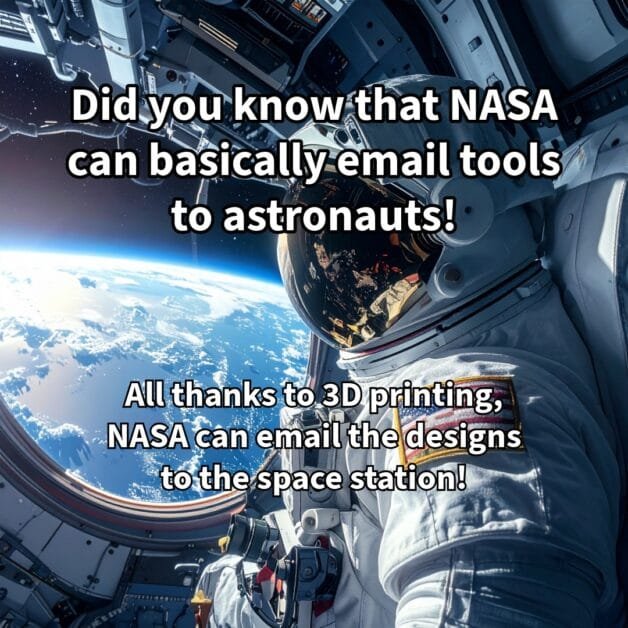
NASA emails tools to astronauts : Imagine needing a wrench in space — and instead of waiting months for a supply mission, you simply receive an email and print it.
This is not science fiction. This is NASA’s real-life innovation aboard the International Space Station (ISS).
In a groundbreaking leap for space technology, NASA has made it possible to “email” tools to astronauts, thanks to advanced 3D printing in microgravity. This development is quietly transforming how space missions operate — and it could shape the future of deep-space exploration.
How Can NASA “Email” Tools to Space?
NASA doesn’t send physical tools through email, of course. Instead, engineers on Earth email digital design files of tools to astronauts aboard the ISS.
Here’s how the process works:
- Engineers design a tool on Earth
- The digital file is emailed to the ISS
- Astronauts load the file into a 3D printer
- The printer creates the tool layer by layer — in space
Within hours, astronauts have a fully functional tool, made exactly when and where it’s needed.
Why This Innovation Is a Game Changer
Sending supplies to space is expensive, slow, and limited. A single launch can cost millions of dollars, and cargo missions happen only at scheduled intervals.
3D printing changes everything.
Key Benefits:
- 🚀 Instant problem-solving in orbit
- 📦 No need to store thousands of spare parts
- 💰 Massive cost savings on launches
- 🛠️ Customized tools for specific situations
Instead of guessing which tools might be needed months in advance, NASA can now create tools on demand.
Real Success Aboard the International Space Station
This isn’t just an experiment — it’s already working.
NASA successfully tested 3D printers aboard the ISS, where astronauts printed:
- Wrenches
- Brackets
- Clips
- Replacement parts
The printed tools performed just as well as Earth-made versions, proving that manufacturing in zero gravity is reliable.
Why 3D Printing Matters for Future Space Missions
As NASA prepares for missions to the Moon, Mars, and beyond, this technology becomes essential.
On a Mars mission:
- Supplies take months to arrive
- Emergency resupply is impossible
- Every kilogram matters
With onboard manufacturing, astronauts can:
- Print replacement parts
- Repair equipment instantly
- Adapt to unexpected challenges
This capability could mean the difference between mission success and failure.
Beyond Tools: What Could Be Printed Next?
NASA scientists believe this is just the beginning.
In the future, astronauts may be able to 3D print:
- Medical equipment
- Space habitat components
- Electronic parts
- Specialized research tools
Eventually, space stations and planetary bases could become self-sustaining factories in space.
Why This Story Is Capturing Global Attention
This innovation fascinates people because it combines:
- Cutting-edge technology
- Space exploration
- A simple, relatable idea — “emailing” tools
It shows how digital information can become physical reality, even hundreds of kilometers above Earth.
That’s why this story is perfect for Google Discover — it’s visual, surprising, educational, and future-focused.
The Bigger Picture: Redefining Human Presence in Space
NASA’s ability to email tools to astronauts proves one powerful idea:
The future of space exploration is not about carrying everything — it’s about creating what you need.
As humanity pushes deeper into space, technologies like 3D printing will allow astronauts to be builders, problem-solvers, and innovators, not just passengers.
Final Thoughts
NASA’s “email to space” innovation is a reminder that some of the most revolutionary ideas are also the simplest.
A digital file. A printer. And suddenly — a tool made in space.
The next giant leap for mankind may not arrive in a rocket —
It might arrive in an inbox.
#NASA innovation, #NASA 3D printing, #space technology breakthrough, #astronauts tools printing, #international space station tech, #future space missions, #space exploration technology, #zero gravity manufacturing, #science innovation news, #space facts
Published on: https://networkbharat.com
Written by: Krishna Arya