By Krishna Arya | Network Bharat
Union Budget 2026 tax relief
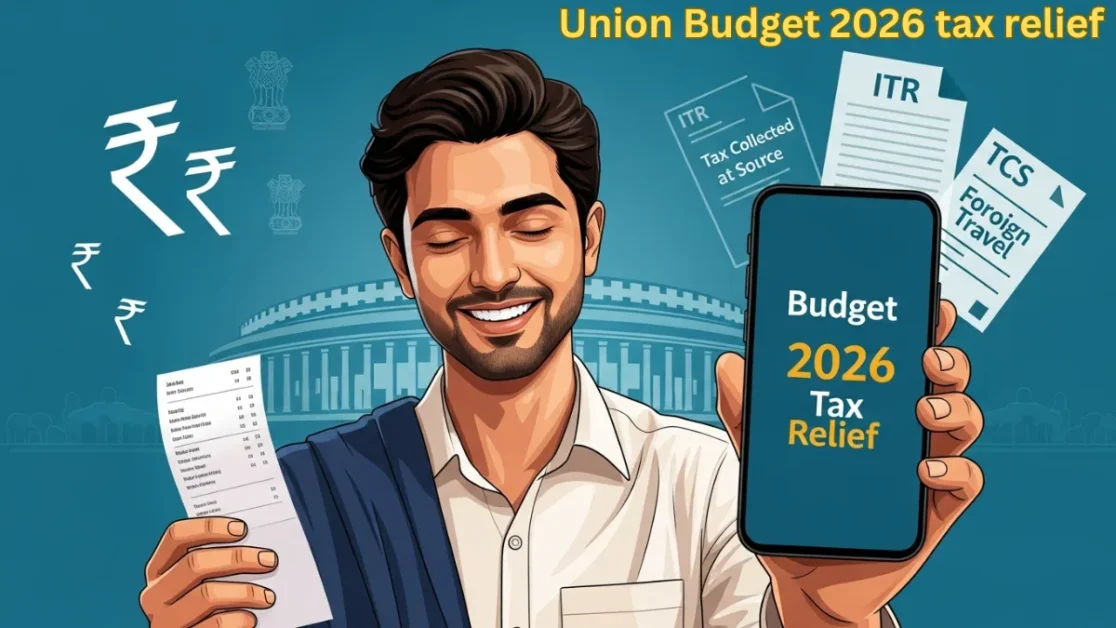
Union Budget 2026 tax relief When the Union Budget 2026 was presented on February 1, many salaried taxpayers were hoping for a big announcement on income tax slabs. While Finance Minister Nirmala Sitharaman did not announce any changes in tax rates or further reductions under the new tax regime, the budget still delivers meaningful relief—just in a smarter, more practical way.
Instead of headline-grabbing tax cuts, Budget 2026 focuses on simplifying compliance, easing cash-flow pressure, and reducing unnecessary tax burdens. These changes may not sound dramatic at first, but for middle-class families and salaried employees, they can make a real difference from April 1, 2026.
Here’s a clear and simple breakdown of what actually changes—and how it helps you.
No Change in Income Tax Slabs, But That’s Not the Full Story
Let’s address the big question first:
No, income tax slabs have not been changed.
However, the government has taken a different route this year. Instead of reducing tax rates, it has targeted problem areas that usually trouble honest taxpayers—missed deadlines, excess TCS deductions, long disputes, and delayed relief.
For many individuals, these reforms may prove more useful than a small slab tweak.
Revised ITR Filing Deadline Extended: More Time, Less Stress
One of the most taxpayer-friendly changes in Budget 2026 is the extension of the deadline for filing revised Income Tax Returns (ITRs).
Earlier, taxpayers could revise their returns only up to December 31 of the assessment year. This often caused panic for those who discovered errors late—such as missing income details, incorrect deductions, or reporting mistakes.
What’s new?
From April 1, taxpayers can now file revised ITRs up to March 31 of the assessment year.
Yes, a small additional fee will apply if you revise after December 31, but the flexibility itself is a huge relief. It gives taxpayers more breathing room and reduces the fear of harsh penalties for genuine mistakes.
Foreign Travel Becomes Cheaper With Lower TCS
If you enjoy travelling abroad—or plan to—this budget brings welcome news.
The Tax Collected at Source (TCS) on foreign tour packages has been reduced sharply to 2%, down from earlier rates of 5% and even 20% in some cases.
Why this matters:
- Lower upfront cost when booking international tour packages
- No monetary cap on this reduced rate
- Better cash flow for travellers
This change directly benefits middle-class families planning vacations, honeymoon trips, or group tours abroad.
Education and Medical Expenses Get TCS Relief
Budget 2026 also rationalises TCS under the Liberalised Remittance Scheme (LRS) for two essential needs—education and healthcare.
What has changed?
- TCS reduced from 5% to 2%
- Applicable up to ₹10 lakh
- Covers overseas education fees and medical treatment expenses
For families sending children abroad for studies or managing medical treatment overseas, this means less money blocked upfront and fewer refund delays later.
However, it’s important to note that for investments, luxury spending, or other foreign remittances under LRS, the 20% TCS rate still applies beyond ₹10 lakh.
Big Relief for Accident Victims: Interest Income Made Tax-Free
One of the most humane and impactful changes in Budget 2026 relates to motor accident compensation.
The government has proposed a full tax exemption on interest received on compensation awarded by Motor Accident Claims Tribunals.
Earlier, families who received such compensation often faced tax notices on the interest component—adding stress during already difficult times.
This exemption ensures that accident victims and their legal heirs receive the full benefit of compensation without worrying about tax liability. The change reflects a more compassionate approach to taxation.
No Interest on Penalty During Appeal Period
Tax disputes can take time, and until now, taxpayers often had to pay interest on penalties even while their appeal was pending.
Budget 2026 fixes this.
What’s the relief?
- No interest will be charged on penalty amounts during the appeal period before the first appellate authority
- This applies regardless of whether the appeal is eventually allowed or dismissed
This change discourages unnecessary financial pressure and promotes fair treatment during tax litigation.
Why Budget 2026 Still Matters for the Middle Class
Even without cutting income tax rates, Budget 2026 delivers targeted relief where it matters most:
- Less fear of missing deadlines
- Lower upfront tax deductions
- Better cash flow
- Reduced litigation stress
- Humane treatment in sensitive cases
For salaried employees, this is a budget that focuses on ease of living, not just numbers.
Final Word
Union Budget 2026 may not have delivered flashy tax cuts, but it quietly fixes long-standing pain points faced by individual taxpayers. From relaxed compliance rules to lower TCS and compassionate exemptions, the budget sends a clear message: honest taxpayers deserve simplicity and fairness.
As these changes come into effect from April 1, understanding them early can help you plan your finances better—and avoid unnecessary surprises.
#UnionBudget2026, #Budget2026, #IncomeTax2026, #TaxRelief, #SalariedEmployees, #MiddleClassBudget, #ITR2026, #TCSUpdate, #ForeignTravel, #EducationLoan, #MedicalExpenses, #PersonalFinanceIndia, #TaxNewsIndia
For more clear, trustworthy updates on tax, policy, and public interest news, stay connected with NetworkBharat.com.