By Krishna Arya | Network Bharat
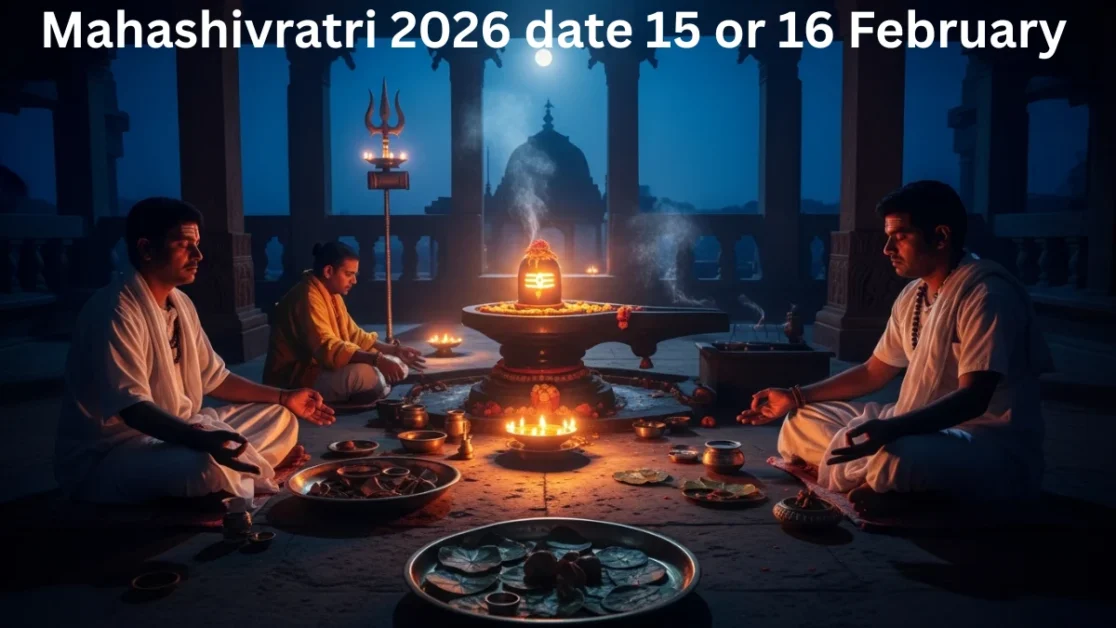
Mahashivratri 2026 date 15 or 16 February
Mahashivratri is not just a festival; it is an experience of devotion, silence, and inner awakening. Every year, millions of devotees stay awake through the night, chanting mantras and offering prayers to Lord Shiva. As Mahashivratri 2026 approaches, one question is trending everywhere: Will Mahashivratri be celebrated on 15 February or 16 February 2026?
Let’s clear the confusion once and for all, in simple and human language, while also understanding the deeper meaning of this sacred night.
Mahashivratri 2026: Correct Date Explained Clearly
According to the Hindu Panchang, Mahashivratri in 2026 will be observed on Sunday, 15 February.
The confusion arises because Shivratri worship is performed mainly during the night, and the most important puja time—Nishita Kaal (midnight)—falls after midnight, extending into the early hours of 16 February 2026.
👉 Key point to remember:
- Vrat (fasting) date: 15 February 2026
- Midnight puja: Night of 15 February (spilling into 16 February)
This overlap of dates is the main reason many people assume Mahashivratri could be on the 16th. However, as per traditional rules, the vrat date is decided by the Chaturdashi Tithi, which is present on 15 February.
Mahashivratri 2026 Puja Timings (Auspicious Muhurat)
While exact timings may slightly vary by location, here is a general idea devotees can follow:
- Chaturdashi Tithi begins: Morning of 15 February 2026
- Chaturdashi Tithi ends: Morning of 16 February 2026
- Nishita Kaal (Midnight Puja): Late night on 15 February to early hours of 16 February
- Vrat Parana (fast breaking): After sunrise on 16 February 2026
For the best results, devotees are advised to perform Shiva Puja during Nishita Kaal, as it is believed to be the most powerful time of the night.
Why Is Mahashivratri So Important?
Mahashivratri means “The Great Night of Shiva.” Spiritually, it symbolizes the victory of light over darkness and awareness over ignorance.
According to ancient beliefs:
- This is the night when Lord Shiva performed the Tandava, the cosmic dance.
- It is also considered the divine night of Shiva and Parvati’s marriage.
- Yogic traditions say that cosmic energies are at their peak on this night, making meditation more effective.
Many devotees believe that sincere prayers on Mahashivratri can wash away past sins and bring peace, strength, and clarity in life.
Mahashivratri Vrat Vidhi (Fasting Rituals)
Devotees observe Mahashivratri vrat with deep faith. Common practices include:
- Taking a holy bath early in the morning
- Wearing clean or white clothes
- Offering milk, water, honey, bael leaves, and fruits to the Shivling
- Chanting “Om Namah Shivaya” throughout the day and night
- Staying awake all night (Jagran) with bhajans and meditation
Some devotees observe a nirjala vrat (without water), while others take fruits and milk, depending on their capacity.
Spiritual Meaning of Staying Awake All Night
Staying awake on Mahashivratri is not just a ritual. It represents remaining conscious and alert in life, instead of being spiritually asleep. Even a few moments of true devotion during this night are believed to bring long-lasting inner peace.
Final Word: 15 or 16 February – What Should You Follow?
To put it simply:
- Mahashivratri Vrat: Sunday, 15 February 2026
- Night Puja & Nishita Kaal: Night of 15 February (into early 16 February)
- Fast Breaking: Morning of 16 February 2026
If you follow this, you will be completely aligned with traditional Panchang rules.
#Mahashivratri2026, #ShivratriDate, #15February2026, #16February2026, #LordShiva, #ShivratriVrat, #HinduFestival, #ShivratriPuja, #SpiritualIndia, #SanatanDharma
May this Mahashivratri bring strength, peace, and positive transformation into your life. Har Har Mahadev!
For more accurate festival dates, spiritual guides, and Hindu calendar updates, stay connected with NetworkBharat.com.