By Krishna Arya
Website: https://networkbharat.com
China Nuclear Expansion Near India 2026
China Nuclear Expansion Near India 2026 : A fresh wave of satellite imagery has triggered serious geopolitical debate. Reports based on commercial satellite analysis between 2022 and 2026 suggest that China is significantly expanding nuclear-related infrastructure in Sichuan province — a development that could reshape Asia’s strategic balance.
For India, the timing and location of this expansion matter deeply.
What the Satellite Images Reveal
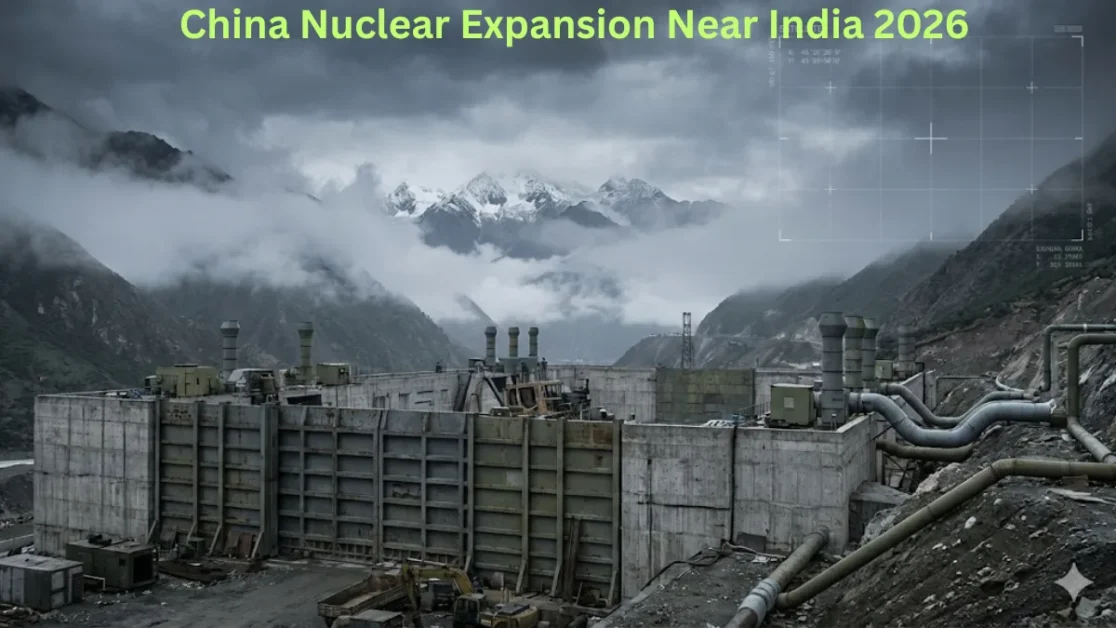
According to findings reviewed by international experts and cited in a report by The New York Times, geospatial analysis indicates new bunkers, reinforced perimeter walls, and upgraded ventilation systems at a site near Zitong in Sichuan province.
The complex reportedly includes:
- Newly constructed buildings with specialized piping systems
- Infrastructure suitable for handling hazardous materials
- Reinforced blast-resistant structures
- Advanced heat-dispersion features
Experts believe such infrastructure is consistent with high-explosive testing — a critical process used to refine the chemical detonators that compress nuclear material into warheads.
Hui Zhang, a physicist at Harvard Kennedy School who studies China’s nuclear program, reportedly explained that layered high explosives are required to generate symmetrical shockwaves for effective nuclear detonation systems.
If accurate, these upgrades signal not just routine maintenance — but modernization.
Why Sichuan’s Location Raises Eyebrows in India
Sichuan is geographically closer to India’s Himalayan frontier than many other major Chinese nuclear facilities. While it is not directly on the border, its strategic positioning shortens logistical and operational depth.
This development comes amid:
- Continued tensions in Ladakh
- Ongoing sensitivities in Arunachal Pradesh
- Diplomatic recalibrations after recent SCO-level engagements
While India and China have taken steps toward de-escalation, military infrastructure expansion tells a parallel story. Strategic planners in New Delhi cannot ignore the symbolism of nuclear upgrades in relative proximity to contested sectors.
Does This Shift the Strategic Balance?
China has long maintained a smaller nuclear arsenal compared to the United States and Russia. However, Western defense assessments suggest Beijing is aiming to expand its stockpile significantly by 2030.
If projections hold true, China could potentially approach 1,000 nuclear warheads within this decade — signaling a clear shift from minimum deterrence toward strategic parity ambitions.
Key implications include:
- Greater confidence in high-intensity deterrence
- Reduced willingness to engage in trilateral arms control talks
- Enhanced second-strike survivability
- Expansion across land, sea, and air delivery systems
For India, this evolution intersects with its own nuclear doctrine — particularly its “No First Use” policy and ongoing modernization of missile systems like the Agni-V.
A more capable and diversified Chinese nuclear force complicates deterrence calculations in South Asia.
Border Security: Immediate Threat or Long-Term Signal?
It is important to avoid alarmism. Nuclear facilities do not automatically translate into imminent aggression. However, infrastructure expansion often signals strategic intent.
Military analysts suggest that a more confident Beijing — backed by modernized nuclear capabilities — may take firmer diplomatic or military positions in future border negotiations.
That doesn’t necessarily mean conflict.
But it does mean leverage.
Global Nuclear Dynamics at a Turning Point
The broader context is equally critical.
With arms control frameworks like the New START treaty under strain, and the US-China rivalry intensifying across technology, trade, and security, nuclear modernization is becoming central to great power competition.
China’s expansion appears aligned with three strategic goals:
- Achieving parity with the United States
- Ensuring credible second-strike capability
- Expanding operational readiness across all domains
This evolution complicates Washington’s security umbrella commitments to Asian allies — and simultaneously forces regional powers like India to reassess their long-term deterrence posture.
What This Means for India Going Forward
India faces a delicate balance:
- Maintain credible deterrence
- Avoid escalation
- Strengthen diplomatic engagement
- Continue defense modernization
New Delhi’s strategic community will likely monitor further satellite developments closely. Intelligence-driven policymaking will become more important than rhetoric.
The core question is not whether China is expanding.
It is how India adapts.
Final Analysis
China’s reported nuclear expansion in Sichuan is not just about new bunkers or explosive testing facilities. It reflects a broader transformation — from a restrained nuclear posture to a more assertive and diversified one.
For India, this is less about immediate panic and more about long-term strategic recalibration.
As Asia’s power dynamics evolve, the coming decade could redefine deterrence, diplomacy, and defense preparedness across the region.
And the Himalayas may once again become the silent backdrop to a much larger global contest.
#ChinaNuclearExpansion, #IndiaChinaBorder, #BorderSecurity, #SichuanNuclearSite, #ZitongFacility, #NuclearArmsRace, #IndiaDefense, #LadakhTension, #ArunachalPradesh, #Geopolitics, #SatelliteImagery, #StrategicStability, #GlobalSecurity, #DefenseNews, #WorldAffairs