Buddhism in China
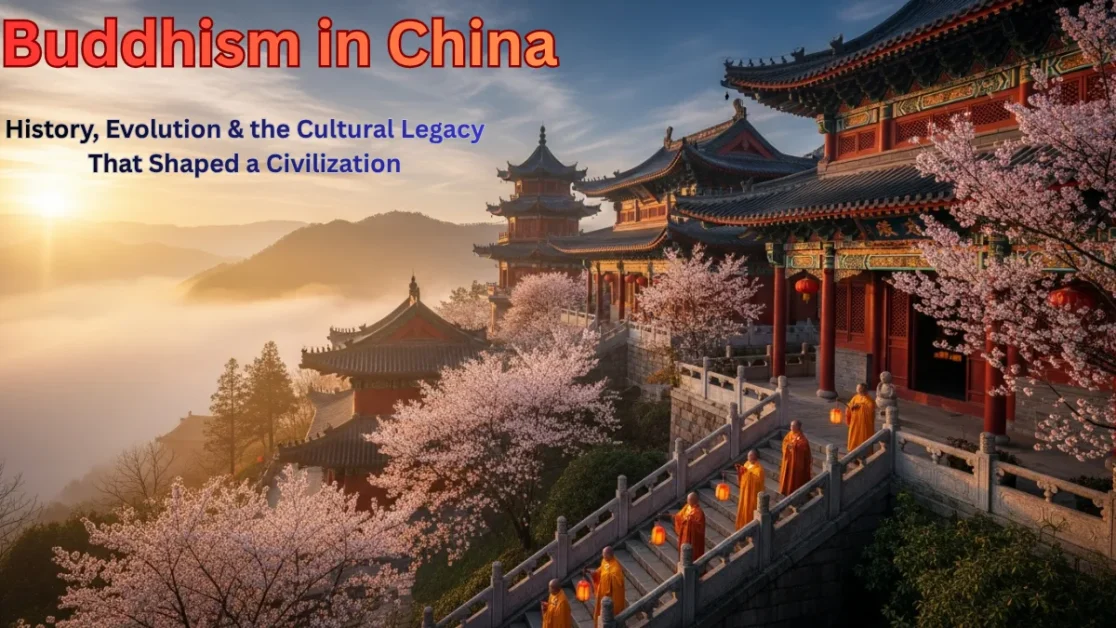
Buddhism in China : Buddhism is one of the most influential spiritual traditions in the world, and its impact on China is nothing short of transformative. Today, China has the world’s largest Buddhist population, and its landscape is dotted with ancient temples, sacred mountains, and centuries-old scriptures.
But the story of how Buddhism entered China, evolved across dynasties, and blended seamlessly with Chinese culture is a fascinating journey — one shaped by monks, emperors, traders, and philosophers over 2,000 years.
This article explores that remarkable journey, from the Silk Road to modern China.
Buddhism in China
✅ Origins: How Buddhism Entered China Through the Silk Road
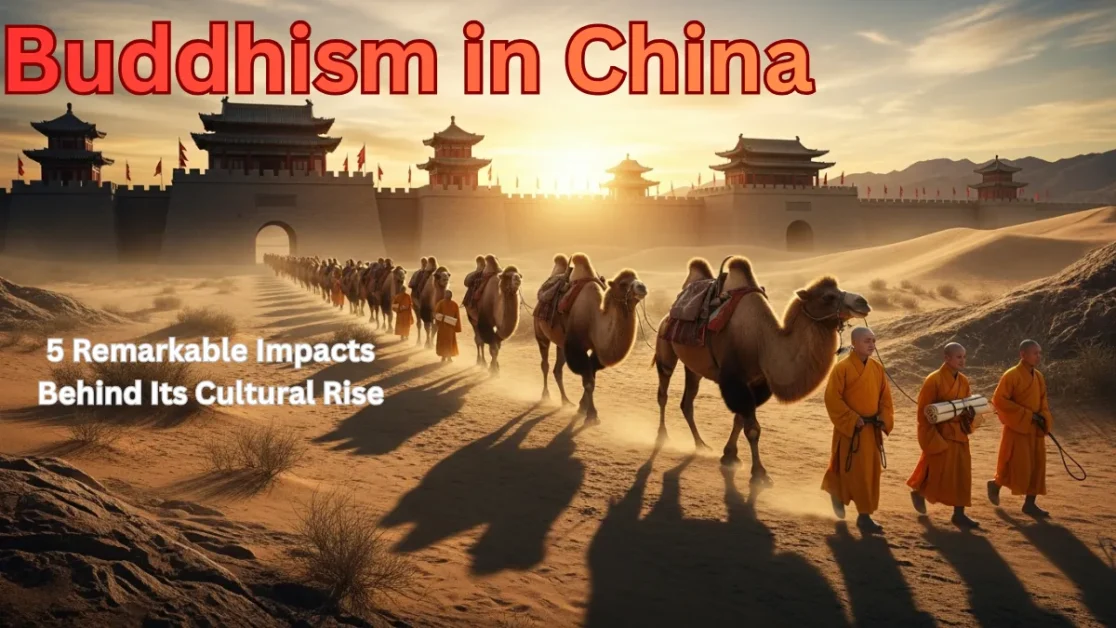
Buddhism originated in India, but its journey into China was made possible by the Silk Road, the vast network of trade routes connecting East and South Asia. Merchants, monks, and travelers carried not just goods, but also philosophies and spiritual teachings.
The Legend of Emperor Ming of Han
A popular Chinese legend says that Emperor Ming dreamed of a golden deity flying in the sky. His advisors revealed that it might be the Buddha. Inspired, the Emperor sent messengers to India, who returned with Buddhist scriptures and two monks riding white horses — leading to the creation of White Horse Temple in Luoyang, China’s first Buddhist temple.
Spread Through Trade & Translation
As Buddhism arrived, Chinese scholars began translating sutras from Sanskrit to Chinese. The early translations laid the foundation for China’s own Buddhist schools and interpretations.
Buddhism in China
✅ The Growth of Buddhism: Schools That Shaped Chinese Spiritual Life
China did not simply adopt Buddhism — it reshaped it. Over time, three major forms of Buddhism flourished.
1. Mahayana Buddhism – The Heart of Chinese Buddhism
Mahayana is the most widely practiced school in China. Its teachings of compassion, the Bodhisattva path, and universality resonated strongly with Chinese culture.
Key Mahayana texts translated in China include:
- Lotus Sutra
- Heart Sutra
- Diamond Sutra
- Avatamsaka Sutra
2. Theravada Buddhism – Preserved in South China
Although not widespread, Theravada found a home in Yunnan, practiced by ethnic Dai and other minority groups. Its emphasis on monastic discipline preserved early Buddhist traditions.
3. Vajrayana (Esoteric Buddhism) – Flourished Under Tang Dynasty
The Tang emperors supported Esoteric Buddhism, known for its:
- Mandalas
- Mantras
- Rituals
- Tantric practices
Although it declined later, its influence blends into many modern Chinese Buddhist rituals.
Buddhism in China
✅ Buddhism Across Chinese Dynasties: A Timeline of Transformation
China’s dynasties shaped Buddhism in unique ways. Here’s how the religion evolved under each period:
Han Dynasty (206 BCE – 220 CE): The Entry Point
- Buddhism first spread through Silk Road exchanges.
- Early temples and translation bureaus were established.
Three Kingdoms & Jin Dynasty: Rapid Translation Efforts
- Buddhist scholars translated hundreds of Sanskrit texts.
- Monasteries became centers of learning and philosophy.
Tang Dynasty (618–907): The Golden Age of Buddhism
Perhaps the most important period in Chinese Buddhist history.
Xuanzang’s Legendary Journey to India
The Chinese monk Xuanzang traveled thousands of kilometers to Nalanda University in India. He returned with:
- 657 Buddhist texts
- New interpretations of Yogachara philosophy
- An enriched understanding of Indian Buddhism
His story is immortalized in the Chinese classic Journey to the West.
Temple Construction Boom
Temples built during this era include:
- Leshan Giant Buddha
- Famen Temple Pagoda
- Mount Wutai monasteries
Song Dynasty (960–1279): Birth of Chan Buddhism
Chan (known as Zen in Japan) became the most important native form of Chinese Buddhism.
Chan’s Principles
- Meditation (Dhyana)
- Direct experience over scriptures
- Simplicity and mindfulness
Ming & Qing Dynasties: Decline and Revival
Although the state imposed control over temples, Buddhism continued:
- Monasteries preserved scriptures
- Pilgrimage traditions revived
- Artistic production flourished
✅ Chan Buddhism: China’s Greatest Contribution to the Buddhist World
Chan Buddhism emerged as a uniquely Chinese spiritual tradition.
The Story of Bodhidharma
According to legend, Bodhidharma, an Indian monk, arrived at Shaolin Temple around the 5th century and taught:
- Wall-gazing meditation
- Physical exercises that evolved into Shaolin martial arts
The Spirit of Chan
Chan emphasizes:
- Silent meditation (Zazen / Zuochan)
- Mindfulness
- The belief that enlightenment is found within
Chan later spread to Korea (Seon), Vietnam (Thiền), and Japan (Zen).
Buddhism in China
✅ Famous Buddhist Temples & Sacred Sites in China
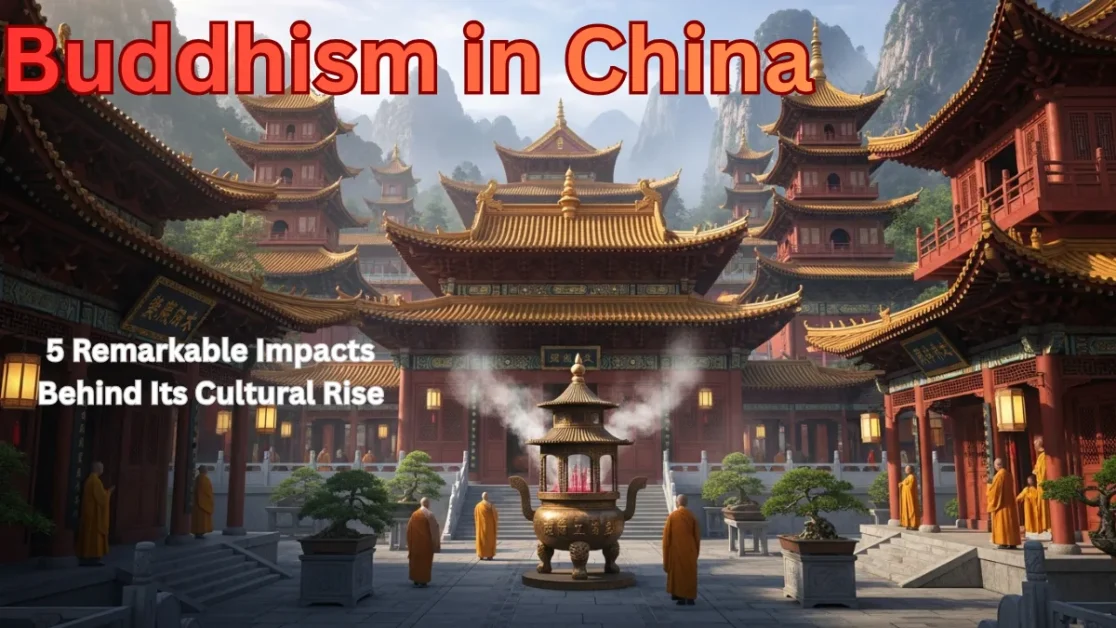
China’s Buddhist architecture is among the most majestic in the world. Here are the most iconic sites:
1. Shaolin Temple (Henan)
- Birthplace of Chan Buddhism
- Famous for Shaolin martial arts
- UNESCO-listed heritage area
2. Leshan Giant Buddha (Sichuan)
- 71-meter-high stone statue
- Largest ancient Buddha carving
- Carved into a cliff overlooking rivers
3. Lingyin Temple (Hangzhou)
- Known as the “Temple of the Soul’s Retreat”
- Houses ancient scripts and carvings
4. White Horse Temple (Luoyang)
- China’s first Buddhist temple
- Established in 68 AD
5. Sacred Mountains of Chinese Buddhism
- Mount Wutai – Manjushri’s seat
- Mount Emei – Samantabhadra’s seat
- Mount Putuo – Avalokiteshvara’s seat
- Mount Jiuhua – Ksitigarbha’s seat
These pilgrimage sites attract millions every year.
Buddhism in China
✅ Literary & Philosophical Impact: How Buddhism Changed Chinese Thought
Buddhism reshaped Chinese civilization in profound ways:
1. Philosophy & Ethics
Teachings such as:
- Karma
- Compassion
- Eightfold Path
- Middle Way
merged with Confucian values like morality and Taoist teachings on harmony.
2. Art & Architecture
- Cave temples like Longmen, Yungang, and Mogao
- Pagodas replacing traditional Indian stupas
- Golden Buddha statues & wall frescoes
3. Festivals
- Vesak (Buddha Purnima)
- Ullambana / Ghost Festival
- Laba Festival
4. Everyday Language
Common Chinese phrases like:
- “因果” (karma)
- “悟” (enlightenment)
- “禅” (Zen)
show Buddhism’s deep cultural integration.
Buddhism in China
✅ Modern Buddhism in China: A Dynamic Revival
After the 1980s, Buddhism experienced a strong revival in China:
- Restoration of ancient temples
- Boom in pilgrimages
- Growth of Buddhist education
- Global spread of Chinese Zen
Today, China plays a key role in preserving Buddhist heritage and scholarship.
✅ How Chinese Buddhism Differs from Indian Buddhism
| Feature | Indian Buddhism | Chinese Buddhism |
|---|---|---|
| Most common school | Theravada (in South Asia) | Mahayana + Chan |
| Focus | Monastic discipline | Compassion, meditation |
| Texts | Pali canon | Chinese Tripitaka |
| Practices | More traditional | Mixed with Confucian & Taoist values |
✅ Frequently Asked Questions
1. When did Buddhism arrive in China?
Around the 1st century CE via Silk Road trade routes.
2. What is the biggest Buddhist tradition in China?
Mahayana Buddhism, followed by Chan (Zen).
3. What are the most famous Buddhist temples in China?
Shaolin Temple, Lingyin, Leshan Giant Buddha, White Horse Temple, and Mount Wutai.
4. What dynasty supported Buddhism the most?
The Tang Dynasty, known as the Golden Age of Buddhism.
5. How is Chinese Buddhism different from Indian Buddhism?
Chinese Buddhism integrates Confucian and Taoist concepts and emphasizes Mahayana and Chan teachings.
Also Read This :
Buddhism and Its Origins in IndiaHistory of the Silk RoadChinese Culture and TraditionsRise of Chan (Zen) BuddhismFamous Ancient Temples in AsiaExternal Links:
Britannica – Buddhism in ChinaUNESCO – Buddhist World Heritage Sites in ChinaHistory.com – Overview of BuddhismSmithsonian – Buddhist Art of ChinaThe Met Museum – Buddhism and Buddhist ArtAbout.com – Buddhism in China OverviewCambridge Journal of Asian Studies – Research on Chinese BuddhismOfficial Website – Leshan Giant BuddhaShaolin Temple Official WebsiteUNESCO – Mount Wutai (Sacred Buddhist Mountain)BuddhismInChina #ChineseHistory #ChineseCulture #MahayanaBuddhism #ZenBuddhism #SilkRoadHistory #AsianHistory #WorldReligion #ChinaTravel