Author: Krishna Arya
Website: https://networkbharat.com
NBW BW Summons difference under BNSS
NBW BW Summons difference under BNSS : In India, words like NBW (Non-Bailable Warrant), BW (Bailable Warrant) and Court Summons often create fear and confusion among common people. Many believe that receiving a summons means immediate arrest, while others assume a warrant always lands someone in jail.
The truth is very different.
With the introduction of the Bharatiya Nagarik Suraksha Sanhita (BNSS), which replaces the old CrPC, it has become even more important for citizens to understand how these legal tools work, when they are issued, and what rights an accused person actually has.
This article explains NBW, BW and Summons in simple language, highlights 7 crucial legal differences, and helps you stay legally informed—without legal jargon.
What Is a Summons in a Criminal Case?
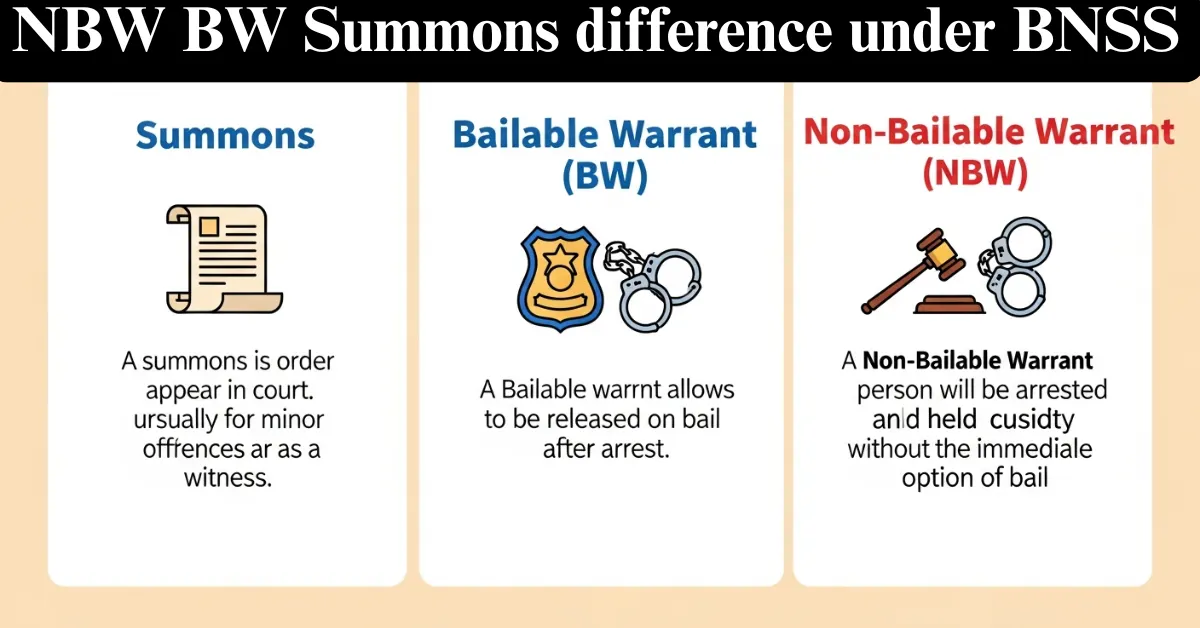
A summons is the first and least serious legal notice issued by a court. It simply orders a person to appear before the court on a specific date and time.
Key Features of a Summons:
- Issued in less serious or initial-stage offences
- Does not authorise arrest
- Assumes the accused will cooperate voluntarily
- Delivered personally, by post, or through police
Under BNSS Sections 63–66, courts usually prefer issuing a summons first instead of a warrant. This reflects a rights-based and citizen-friendly approach.
👉 Important: If you appear in court as directed, no arrest takes place.
What Is a Bailable Warrant (BW)?
A Bailable Warrant is issued when:
- A person ignores a summons, or
- The court feels presence cannot be ensured otherwise
A BW authorises police arrest, but with an important safeguard.
Why Is It Called “Bailable”?
Because the accused has the right to be released on bail immediately after arrest, usually by:
- Furnishing a bond, or
- Providing a surety
Key Points About BW:
- Arrest is allowed, but detention is avoidable
- Bail can be granted by police itself
- Covered under BNSS Section 71
This ensures a balance between court authority and personal liberty.
What Is a Non-Bailable Warrant (NBW)?
A Non-Bailable Warrant is the most serious legal instrument among the three.
It is issued when:
- The accused repeatedly ignores court orders
- The offence is serious in nature
- The court believes the accused may abscond or tamper with evidence
What Makes NBW Serious?
- Police can arrest and produce the accused before court
- Bail is NOT a matter of right
- Only a judge can grant bail
Under BNSS Sections 72–73, NBW is used as a last resort, not the first step.
7 Crucial Differences Between NBW, BW & Summons
1️⃣ Nature of Legal Action
- Summons: Request to appear
- BW: Conditional arrest
- NBW: Mandatory arrest
2️⃣ Arrest Authority
- Summons: No arrest
- BW: Arrest possible
- NBW: Arrest compulsory
3️⃣ Bail Rights
- Summons: Bail not required
- BW: Bail is a right
- NBW: Bail is discretionary
4️⃣ Severity of Offence
- Summons: Minor or procedural cases
- BW: Moderate seriousness
- NBW: Serious criminal cases
5️⃣ Issuing Authority
- All three are issued by a Magistrate or Judge, but NBW requires stronger justification.
6️⃣ Legal Sections (BNSS vs CrPC)
- Summons: BNSS 63–66 | CrPC 61–64
- BW: BNSS 71 | CrPC 71
- NBW: BNSS 72–73 | CrPC 70–73
7️⃣ Impact on Personal Liberty
- Summons: No restriction
- BW: Temporary restriction
- NBW: Severe restriction
Execution Process Explained Simply
Once issued:
- If a summons is obeyed → case proceeds normally
- If a BW is issued → arrest + immediate bail
- If an NBW is issued and ignored → police can arrest anytime
Under BNSS Sections 67–74, courts also have the power to:
- Convert a summons into a warrant
- Withdraw or cancel warrants
- Issue BW and NBW simultaneously, if required
Can Courts Issue NBW, BW and Summons Together?
Yes. Indian courts have wide discretionary powers.
A court may:
- Issue a summons first
- Then escalate to BW
- Finally issue NBW if compliance fails
This step-by-step approach ensures natural justice and prevents misuse of arrest powers.
Why This Knowledge Matters for Common Citizens
Many people panic due to half-knowledge from social media or WhatsApp forwards. Understanding the real legal meaning helps you:
- Avoid unnecessary fear
- Respond correctly to court notices
- Protect your constitutional rights
- Prevent arrest by timely compliance
Legal awareness is no longer optional—it is essential.
#NBW, #BW, #Summons, #BNSS, #CrPC, #IndianLaw, #CriminalProcedure, #LegalAwareness, #CourtWarrant, #NonBailableWarrant, #BailableWarrant, #LawExplained, #IndianJudiciary, #LegalRights, #PoliceProcedure
Final Words
With the introduction of BNSS, India’s criminal justice system aims to become more transparent, citizen-centric and accountable. Knowing the difference between NBW, BW and Summons empowers you to face the law with confidence, not fear.
At Network Bharat, we believe law should be understood by everyone—not just lawyers.
✍️ Written by: Krishna Arya
🌐 Published on: https://networkbharat.com