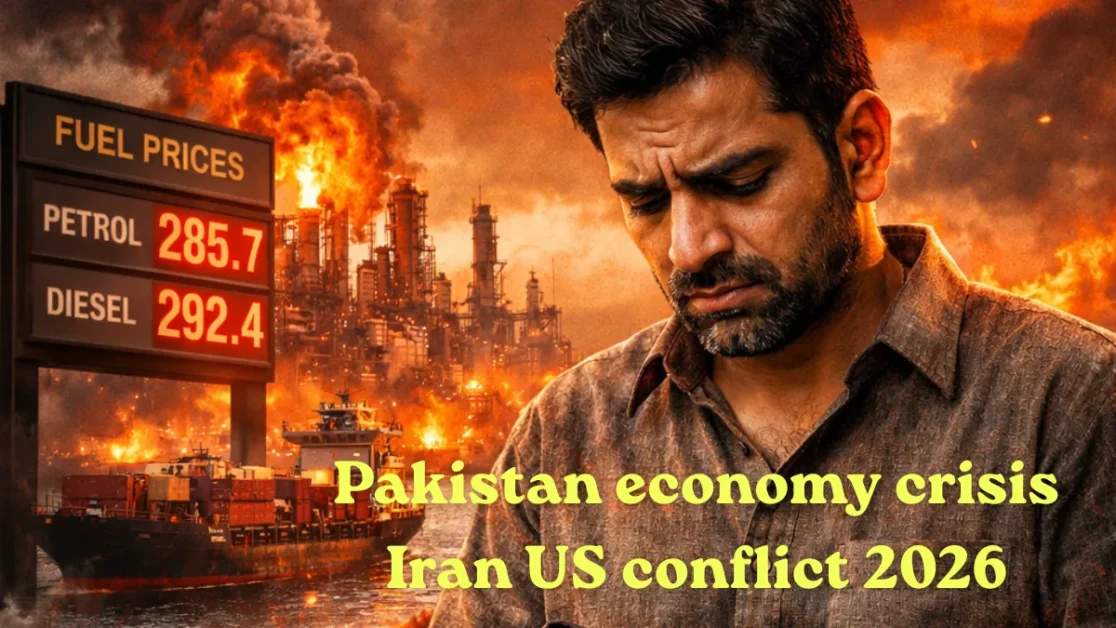
Pakistan economy crisis Iran US conflict 2026
✍️ By Krishna Arya | Network Bharat
🌍 A Crisis Without Opportunity
Pakistan economy crisis Iran US conflict 2026 : In past global conflicts like the Cold War or even after 9/11, countries like Pakistan often found strategic or financial leverage. But 2026 tells a very different story.
As tensions between the United States and Iran spiral into a dangerous geopolitical crisis, Pakistan is not benefiting—it is bleeding economically, politically, and strategically.
This time, there is no windfall, no aid surge, and no geopolitical advantage—only rising uncertainty.
⛽ Oil Shock Hits Pakistan Hard
The biggest blow comes from energy disruption.
With the Strait of Hormuz under threat, global oil prices have surged sharply. Pakistan, which heavily relies on imported fuel, is facing:
- 🚨 Skyrocketing petrol and diesel prices
- ⚡ Power shortages across major cities
- 🏭 Industrial slowdown due to rising costs
For a country already struggling with inflation, this crisis is pushing everyday life into deeper distress.
📉 Economy on the Edge
Pakistan’s fragile economy was already under pressure—but the Iran–US conflict has intensified the situation.
Key impacts include:
- 📊 Rupee depreciation against the dollar
- 💸 Rising inflation hitting food and essentials
- 📉 Foreign reserves under stress
- 🏦 Increased dependence on IMF and external loans
Unlike past conflicts, there is no major foreign funding influx to cushion the shock.
🌐 Strategic Isolation Growing
Pakistan finds itself in a tight diplomatic spot.
- Maintaining neutrality is becoming harder
- Relations with Western allies remain cautious
- Regional instability limits trade routes and partnerships
This balancing act is costly and risky, leaving Pakistan with fewer global options.
🚢 Trade Routes & Supply Chain Disruptions
The conflict has also disrupted critical maritime trade routes.
- Shipping costs have surged
- Delays in imports of essential goods
- Export competitiveness declining
Pakistan’s already struggling export sector is facing another major setback.
⚠️ No Repeat of History
Historically, Pakistan gained from geopolitical alignments:
- During the Cold War → Strategic US ally
- After 9/11 → Billions in aid and military support
But in 2026, the global environment has changed:
👉 The world is more economically cautious
👉 Aid is more conditional
👉 Strategic importance alone is not enough
Pakistan is now bearing the cost of conflict without reaping any rewards.
🧠 What Lies Ahead?
Experts believe Pakistan must act quickly to avoid deeper economic damage:
- Diversify energy sources (renewables, local production)
- Strengthen regional trade partnerships
- Stabilize currency and control inflation
- Reduce dependency on volatile global markets
Without bold reforms, the crisis could turn into a long-term economic slowdown.
📊 Final Thoughts
The Iran–US conflict is reshaping global geopolitics—but for Pakistan, it’s a crisis without opportunity.
In a world where wars no longer guarantee strategic benefits, Pakistan faces a harsh reality:
👉 Survival now depends on internal strength, not external conflicts.
🔥 Stay Updated
For more such deep insights on global affairs and India-focused analysis, visit:
👉 https://networkbharat.com
#PakistanCrisis #IranUSWar #MiddleEastConflict #GlobalOilCrisis #EconomicCrisis #BreakingNews #Geopolitics #EnergyCrisis #WorldNews #PakistanEconomy #StraitOfHormuz #InflationCrisis #WarImpact #GlobalTensions #NewsUpdate
External Links
IMF Reports on Pakistan EconomyWorld Bank Global Economic Outlook
Global Oil Market Updates – U.S. Energy Information Administration