Trump Expands US Travel Ban to 39 Countries
By Krishna Arya
Website: https://networkbharat.com
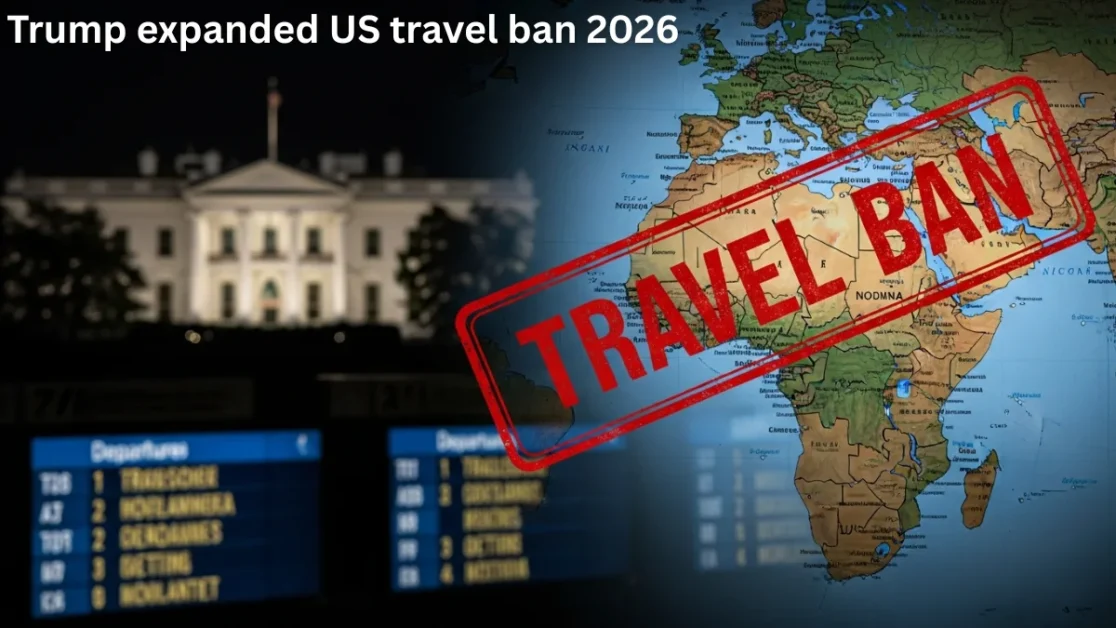
Trump Expands US Travel Ban to 39 Countries : In a move that has once again placed US immigration policy at the centre of global debate, President Donald Trump on Wednesday signed a proclamation significantly expanding the US travel ban, increasing the total number of affected countries from 19 to 39. The new restrictions, which include both complete bans and partial entry limitations, are scheduled to take effect from January 1.
The White House said the decision was taken in the interest of US national security, citing serious concerns over inadequate screening systems, weak identity verification, high visa overstay rates, and poor cooperation by some governments in accepting deported citizens.
The announcement has sparked reactions across diplomatic circles, immigrant communities, and global travel sectors, as millions of people may now face new barriers to entering the United States.
What Changed in Trump’s New Travel Ban?
Under the latest proclamation, seven new countries have been added to the list of nations facing a complete entry ban, while 15 additional countries are now subject to partial restrictions.
According to US officials, the expansion reflects an updated security assessment carried out by federal agencies, focusing on how foreign governments manage identity documents, share intelligence, and cooperate with US immigration authorities.
“This is about protecting Americans,” the White House said, adding that the restrictions are not permanent and may be lifted if countries demonstrate “credible improvements.”
Why Trump Expanded the US Travel Ban to 39 Countries — Full List Explained
Countries Facing a Complete US Travel Ban
Travel to the United States is now fully restricted for citizens of the following countries:
- Afghanistan
- Burkina Faso
- Burma (Myanmar)
- Chad
- Equatorial Guinea
- Eritrea
- Haiti
- Iran
- Laos
- Libya
- Mali
- Niger
- Republic of Congo
- Sierra Leone
- Somalia
- South Sudan
- Sudan
- Syria
- Yemen
In addition, individuals holding travel documents issued by the Palestinian Authority are also subject to a complete entry ban.
Countries Under Partial Travel Restrictions
The proclamation also places partial restrictions on travelers from the following countries:
- Angola
- Antigua and Barbuda
- Benin
- Burundi
- Côte d’Ivoire
- Cuba
- Dominica
- Gabon
- Gambia
- Malawi
- Mauritania
- Nigeria
- Senegal
- Tanzania
- Togo
- Tonga
- Venezuela
- Zambia
- Zimbabwe
Partial restrictions may include limits on specific visa categories, additional screening requirements, or reduced eligibility for certain types of entry.
Special Case: Turkmenistan
Turkmenistan has been treated as a special case under the new policy. While immigrant visa restrictions remain in place, the US has lifted limits on non-immigrant visas, allowing temporary travel such as tourism, business, or education under stricter screening norms.
Who Is Exempt From the Travel Ban?
Despite the sweeping scope of the restrictions, the US government has clarified that several categories of travelers will remain exempt, including:
- US legal permanent residents (Green Card holders)
- Individuals holding valid US visas
- Diplomats and official representatives
- Certain humanitarian and special visa categories
- Travelers whose entry is deemed essential to US national interests
Additionally, case-by-case waivers will be available, offering limited relief to individuals with compelling reasons for travel.
Why Did the US Expand the Travel Ban?
The White House listed multiple factors behind the decision, including:
- High rates of visa overstays
- Unreliable civil and identity records
- Government corruption
- Terrorist activity or security risks
- Lack of cooperation in accepting deported nationals
Officials emphasized that the policy is country-based, not religion-based, a claim that continues to be debated by civil rights groups.
A Familiar Policy With a Long History
This marks the third major travel ban issued by Donald Trump. A similar executive order in 2017 triggered mass protests at US airports and legal challenges across the country. Although parts of that ban were initially blocked, a revised version was eventually upheld by the US Supreme Court.
The latest expansion suggests that immigration and border security will remain a central theme of Trump’s governance, particularly as global instability and migration pressures continue to rise.
Global Reaction and What Happens Next
The expanded ban has drawn criticism from human rights organizations, while some US lawmakers have raised concerns about its humanitarian impact. On the other hand, supporters argue that the move strengthens national security and restores confidence in border controls.
For now, the administration has made it clear that the restrictions will remain in force until affected countries meet US security benchmarks, including improved identity management and intelligence sharing.
As January 1 approaches, airlines, embassies, and travelers worldwide are bracing for the real-world impact of one of the most extensive US travel bans in recent history.
🔎 Why This Matters
The expanded travel ban is not just a policy decision — it affects families, students, workers, refugees, and international relations. Its long-term consequences will depend on diplomatic responses and whether affected nations can meet US demands for reform.
#TrumpTravelBan, #USTravelBan, #USImmigrationNews, #VisaRestrictions, #GlobalTravel, #NationalSecurity, #BreakingNews, #USPolicy, #TravelUpdate, #ImmigrationLaw
Stay informed with trusted global news and in-depth analysis — only on Network Bharat.
❓ People Also Ask (PAA)
1. Why did Trump expand the US travel ban?
The Trump administration said the travel ban was expanded due to national security concerns, citing poor identity verification systems, high visa overstay rates, corruption, terrorism risks, and lack of cooperation in accepting deported citizens.
2. How many countries are affected by the new US travel ban?
A total of 39 countries are affected by the expanded US travel ban, including 19 countries under a complete ban and 20 facing partial travel restrictions.
3. When does the expanded US travel ban take effect?
The expanded US travel ban will take effect on January 1, according to the White House proclamation signed by President Donald Trump.
4. Who is exempt from the US travel ban?
Exemptions apply to US green card holders, current visa holders, diplomats, certain visa categories, and individuals whose entry is deemed in the national interest of the United States. Case-by-case waivers are also available.
5. Are Palestinian Authority passport holders affected?
Yes. Individuals holding travel documents issued by the Palestinian Authority are subject to a complete entry ban under the expanded proclamation.
6. Is Nigeria under a full US travel ban?
No. Nigeria is subject to partial travel restrictions, not a complete ban, under the expanded US travel policy.
7. Will the travel ban be permanent?
No. The White House said the restrictions will remain in place until affected countries demonstrate credible improvements in screening, identity management, information sharing, and cooperation with US immigration authorities.
Also ReadThis :
- UK Citizenship Crisis Explained: Who Is at Risk and Why It Matters Globally
- Why Mexico Imposed a 50% Tariff on Indian Goods: Full Analysis
- PM Modi’s Jordan Visit 2025: Strategic Ties and Global Impact
- Global Immigration Policies Tighten: What It Means for Migrants