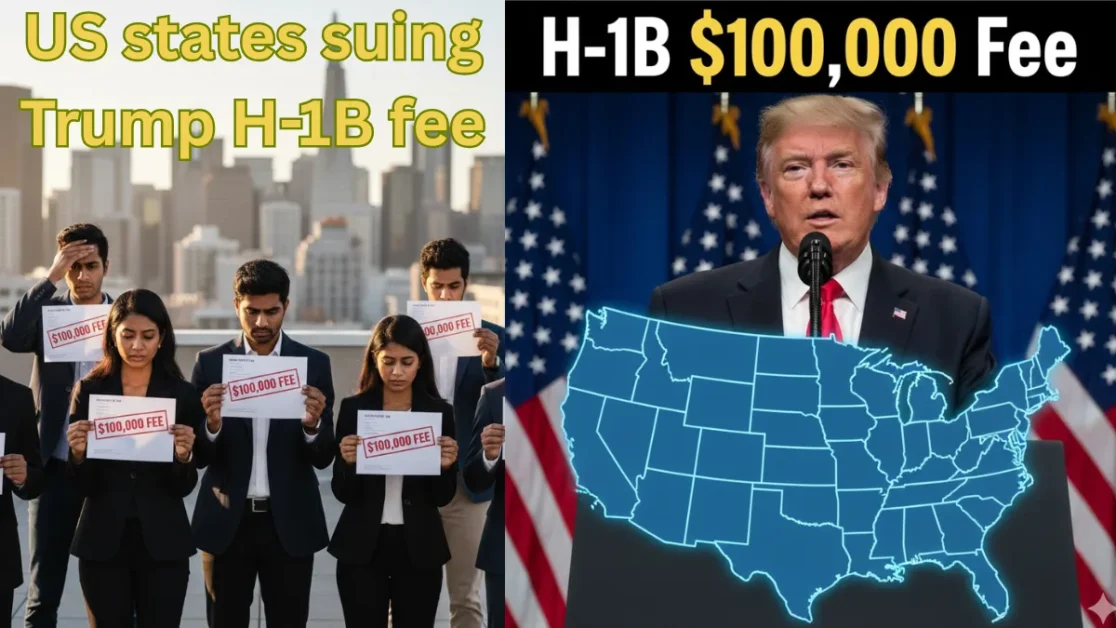
US states suing Trump H-1B fee
By Krishna Arya | Network Bharat
Website: https://networkbharat.com
US states suing Trump H-1B fee : The United States is once again at the centre of a heated immigration debate — and this time, the spotlight is firmly on the H-1B visa, a lifeline for thousands of skilled professionals, especially from India.
Several US states have taken the extraordinary step of suing the Donald Trump administration over a proposed $100,000 annual fee on new H-1B visa applications, calling it illegal, unconstitutional, and harmful to essential public services.
But why exactly are these states pushing back so strongly? And what does this legal battle mean for Indian professionals, tech companies, and the future of US immigration policy?
Let’s break it down clearly.
What Is the $100,000 H-1B Visa Fee?
In September, the Trump administration announced a dramatic policy shift — proposing a $100,000 yearly fee for employers filing new H-1B visa applications.
The move was framed as part of a broader effort to:
- Prioritise American workers
- Prevent misuse of the H-1B system
- Discourage companies from hiring foreign talent over US citizens
However, critics argue the fee is unprecedented, excessive, and legally questionable, effectively turning the H-1B visa into a luxury option only a few can afford.
Which States Are Suing the Trump Administration?
The lawsuit is being led by California, joined by:
- New York
- Massachusetts
- Illinois
- New Jersey
- Washington
All six states are represented by Democratic attorneys general, reflecting growing resistance from states that rely heavily on skilled immigrant labour.
These states together form the backbone of America’s:
- Technology sector
- Healthcare system
- Higher education institutions
- Public research facilities
Why Do the States Say the Fee Is Illegal?
1. Lack of Legal Authority
California Attorney General Rob Bonta, who is spearheading the case, has made one thing clear:
“No presidential administration can rewrite immigration law.”
According to the states:
- Immigration fees must be authorised by Congress
- The executive branch cannot unilaterally impose such massive financial burdens
- The $100,000 fee goes far beyond administrative costs, violating existing immigration statutes
In simple terms, the states argue the administration is overstepping its constitutional authority.
2. Threat to Essential Public Services
One of the strongest arguments in the lawsuit is the impact on public employers, including:
- Public hospitals
- Universities
- Research institutions
- State-funded healthcare systems
Many of these organisations depend on H-1B professionals — doctors, engineers, researchers, and professors — to function effectively.
Rob Bonta warned that the fee would:
- Worsen labour shortages
- Increase costs for taxpayers
- Disrupt healthcare and education services
3. Damage to State Economies
California alone hosts the highest number of H-1B workers in the US.
Calling California the world’s fourth-largest economy, Bonta stated that global talent has been crucial to the state’s innovation and growth.
The states argue the fee could:
- Push companies to move operations overseas
- Reduce innovation and startup growth
- Hurt local economies dependent on tech and research
Why Are Indian Professionals Most Affected?
For Indian professionals, the H-1B visa is more than a document — it is a career pathway and family lifeline.
India has consistently been the largest beneficiary of H-1B visas, with Indian nationals dominating:
- IT services
- Software development
- Data science
- Engineering and research
The proposed fee triggered widespread anxiety and fear among Indian workers, many of whom worry about:
- Job security
- Visa renewals
- Long-term settlement in the US
A $100,000 fee could discourage even large employers from hiring or retaining foreign workers, indirectly threatening thousands of livelihoods.
Corporate Impact: Who Uses H-1B the Most?
The H-1B programme is heavily utilised by top US and global companies.
This year, companies receiving the most H-1B visas included:
- Amazon (over 10,000 approvals)
- Tata Consultancy Services (TCS)
- Microsoft
- Apple
Tech hubs like Silicon Valley, Seattle, and New York depend on these professionals to remain globally competitive.
States argue that penalising employers with such a steep fee could undermine America’s leadership in technology and innovation.
What Does the White House Say?
The Trump administration has strongly defended the fee.
White House spokeswoman Taylor Rogers described it as:
“A necessary, initial, incremental step toward needed reforms in the H-1B program.”
According to the administration:
- The fee prevents companies from “gaming the system”
- It protects American wages
- It ensures employers hire foreign workers only when absolutely necessary
The administration insists the policy is legal and aligned with Trump’s promise to “put American workers first.”
Why Is This Lawsuit So Important?
This case goes beyond just visas.
It raises fundamental questions about:
- Separation of powers between Congress and the President
- The future of US immigration governance
- America’s openness to global talent
Legal experts say this is the third major lawsuit challenging visa fee hikes under the Trump administration — indicating a growing judicial pushback.
What Happens Next?
If the states succeed:
- The $100,000 fee could be blocked or scrapped
- The administration may be forced to seek congressional approval
- Employers and visa holders would gain temporary relief
If the administration wins:
- The H-1B system could become significantly more expensive
- Hiring foreign talent may drop sharply
- Long-term changes to US immigration policy could follow
Either way, the outcome will shape the future of skilled migration to the United States.
The Bigger Picture
The H-1B visa has long been America’s gateway to global talent.
While reforming the system is widely seen as necessary, critics argue that sudden, extreme financial barriers risk harming the very economy the policy aims to protect.
As Rob Bonta put it:
“When skilled talent from around the world joins our workforce, it propels our state forward.”
For now, Indian professionals, US employers, and state governments are watching closely — because the decision could redefine what the American Dream looks like for global workers.
#H1BVisa, #TrumpNews, #USStates, #VisaLawsuit, #USImmigration, #IndianProfessionals, #WorkVisaUSA, #TechWorkers, #BreakingNews, #ImmigrationExplained, #GlobalTalent
Also Read This :
- Trump Targets Ilhan Omar Again: Deportation Claims Explained
- World Human Rights Day 2025: Why December 10 Matters for Justice & Equality
- Dr. S. Muralidhar Appointed Chairman of UN Gaza Commission
- China Visa Goes Online in India: What Travellers Should Know
External Sources
- USCIS Official Guide to the H-1B Visa Program
- Bloomberg: US Immigration and Visa Policy Coverage
- US Department of Justice – Federal Legal Challenges
- White House Statements on Immigration Policy
- Cato Institute: Analysis on US Immigration & Work Visas