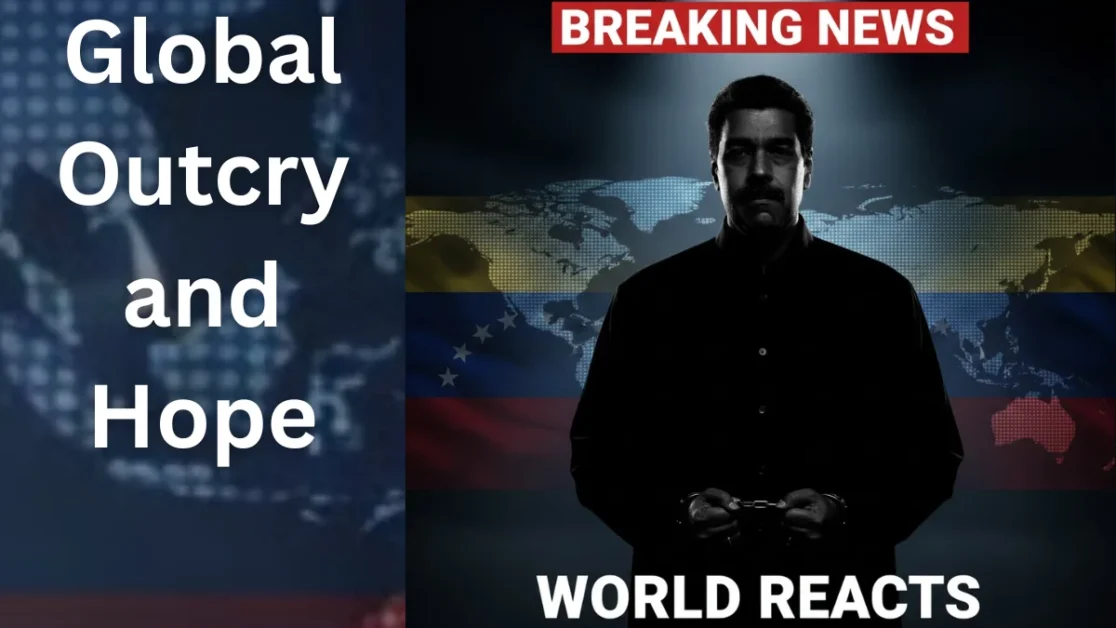
Global Outcry and Hope
Website:https://networkbharat.com
Writer:Krishna Arya
World leaders react to the U.S. capture of Nicolás Maduro : The sudden news of Venezuelan leader Nicolás Maduro being captured by the United States sent shockwaves across the world, instantly becoming one of the most talked-about geopolitical developments in recent years. From Washington to Beijing, Moscow to Latin America, global leaders reacted with a mix of shock, condemnation, cautious support, and urgent calls for diplomacy.
What makes this moment historic is not just the event itself, but the way it has exposed deep divisions in global politics, international law, and the future of power balance in the Western Hemisphere.
What Happened and Why It Matters
According to international media reports, the United States confirmed that Maduro had been taken into custody following a high-risk operation linked to long-standing criminal allegations against him. Washington has accused the Venezuelan leader of involvement in drug trafficking, corruption, and undermining democratic institutions.
The announcement immediately raised serious questions:
- Can one country capture a sitting head of state?
- Does this set a new precedent in global politics?
- Will this stabilize or further destabilize Latin America?
United States: Strong Justification, Strong Debate
U.S. officials defended the move as a law-enforcement action, not an invasion, arguing that Maduro must face justice for international crimes. Supporters of the decision believe it could open the door to democratic change in Venezuela after years of economic collapse and humanitarian crisis.
However, critics — including several legal experts — warned that such actions risk violating international norms and could trigger long-term diplomatic fallout.
China and Russia React: Sovereignty Comes First
China responded sharply, stating that no nation has the right to act as a “global judge.” Beijing emphasized respect for national sovereignty and warned against the normalization of unilateral military or legal actions.
Russia echoed similar concerns, calling the capture a dangerous precedent that undermines international law and global stability. Moscow accused Washington of using power politics instead of diplomacy.
Latin America: A Region Divided
Reactions within Latin America revealed deep fractures:
- Some governments condemned the move, calling it foreign interference.
- Others quietly welcomed the development, viewing Maduro’s removal as a chance for Venezuela to recover economically and politically.
- Several leaders urged calm, stressing that Venezuela’s future should be decided by its own people — not foreign powers.
For ordinary Venezuelans, emotions ranged from hope to fear, with many uncertain about what comes next.
Europe and Global Institutions Call for Restraint
European leaders largely avoided taking sides but emphasized one clear message: peace and international law must prevail. Calls grew for the United Nations to step in, assess the legality of the situation, and help prevent further escalation.
Human rights organizations also urged transparency, due process, and protection of civilians amid rising tensions.
Why This Story Is Bigger Than Venezuela
This is not just about one country or one leader. The capture of Nicolás Maduro has reopened global debates on:
- The limits of U.S. power
- The future of international law
- How the world handles authoritarian leaders
- Whether justice can cross borders without war
For emerging economies and smaller nations, the incident has triggered concerns about safety, sovereignty, and global fairness.
What Happens Next? Key Scenarios
Experts suggest several possible outcomes:
- International legal battles over jurisdiction and legality
- Economic shifts, especially in global oil markets
- Political transition in Venezuela, either peaceful or chaotic
- Long-term impact on U.S.–Latin America relations
At this stage, uncertainty remains the only certainty.
#MaduroCapture #WorldLeadersReact #USVenezuelaOperation #InternationalLaw #GlobalPolitics #VenezuelaCrisis #Geopolitics
Conclusion
The U.S. capture of Nicolás Maduro has become a defining moment in modern geopolitics. It has challenged long-standing norms, exposed global power divides, and placed Venezuela’s future under an intense international spotlight.
Whether this event leads to justice and stability — or deeper global tension — will depend on what world leaders do next, not just what they say today.
✅ People Also Ask (PAA)
Q1. Why did the United States capture Nicolás Maduro?
The U.S. says the capture of Nicolás Maduro is linked to long-standing criminal charges including drug trafficking, corruption, and undermining democratic institutions.
Q2. How did world leaders react to Maduro’s capture by the U.S.?
World leaders were divided—some supported accountability, while others condemned the move as a violation of sovereignty and international law.
Q3. Did China and Russia support the U.S. action against Maduro?
No. China and Russia strongly criticized the action, calling it unlawful and dangerous for global stability.
Q4. What is the reaction in Latin America to Maduro’s capture?
Latin America is split. Some governments welcomed the development as a chance for change, while others condemned it as foreign interference.
Q5. Can a sitting president be legally captured by another country?
International law experts say such actions are highly controversial and usually require multilateral approval or international court involvement.
Q6. Will the United Nations intervene in the Maduro case?
There are growing calls for the United Nations to review the legality of the operation and help prevent escalation.
Q7. What impact could this have on Venezuela’s future?
The capture could lead to political transition, economic shifts, or increased instability—depending on international diplomacy and internal developments.
Stay with NetworkBharat.com for fact-checked, human-centric global news that explains not just what happened — but why it matters.