By Krishna Arya | NetworkBharat.com
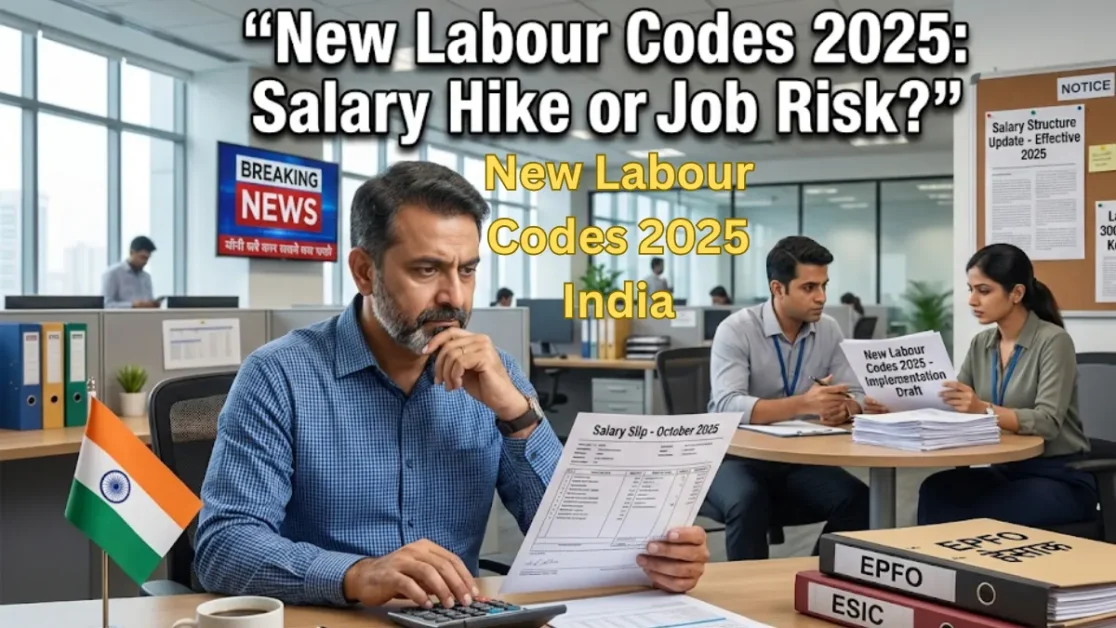
New Labour Codes 2025 India
New Labour Codes 2025 India : India’s labour landscape has entered a new era. From November 21, 2025, the country officially transitioned to a simplified framework under four consolidated labour codes. For crores of salaried employees and thousands of companies, the big question is simple:
👉 Will salaries increase?
👉 Will it become easier to fire employees?
👉 What new compliance rules must companies follow?
Let’s break it down in clear, practical terms.
What Are the New Labour Codes?
The government replaced 29 central labour laws with four streamlined codes:
- Code on Wages
- Industrial Relations Code
- Code on Social Security
- Occupational Safety, Health and Working Conditions Code
The objective? Reduce legal complexity, improve transparency, and create a uniform compliance structure across industries.
The Ministry of Labour and Employment has now released a detailed compliance checklist to guide employers during the transition.
Will You Get a Salary Hike Under the New Rules?
The most discussed change relates to the wage structure.
Under the new wage code:
- Basic salary must be at least 50% of total CTC
- Allowances cannot exceed 50% of total compensation
- Overtime rules are standardized
- Minimum wage framework is unified nationally
What This Means for Employees
✔ Your basic salary may increase
✔ EPFO contributions may increase
✔ Gratuity amount may rise
✔ Take-home salary could slightly reduce in some cases
In short, long-term retirement and social security benefits may improve, even if immediate take-home pay does not dramatically rise.
Can You Be Fired More Easily Now?
The Industrial Relations Code has introduced a significant change.
Companies with 300 or more workers must seek government approval before:
- Mass layoffs
- Retrenchment
- Closure of establishment
Previously, this threshold was 100 workers in many cases.
What This Means
- Small and medium businesses (below 300 workers) may find restructuring easier
- Larger companies face stricter regulatory oversight
- Employees in large establishments gain additional protection
The code also strengthens grievance redressal mechanisms and mandates work committees in certain establishments.
Seven Immediate Compliance Steps for Employers
From day one of operations, employers must:
- Register the establishment
- Obtain required licenses
- Maintain attendance & wage records
- Fix salary schedules
- Enroll eligible workers in EPFO & ESIC
- Ensure workplace safety standards
- Establish grievance redressal mechanisms
This creates clearer accountability and reduces legal ambiguity.
Monthly, Annual & Event-Based Obligations
The compliance checklist divides responsibilities into timelines.
Monthly Responsibilities
- Timely salary payments
- EPFO & ESIC contributions
- Issuing salary slips
Annual Responsibilities
- Filing uniform returns
- Updating minimum wages
- Safety audits
- Health check-ups for employees aged 40+ (in specified roles)
Event-Based Responsibilities
- Report accidents within 24–72 hours
- Pay final dues within 2 days of exit
- Pay gratuity within 30 days
- Provide maternity benefits
- Issue notices before strikes or lockouts
This structured framework aims to prevent disputes and ensure smoother enforcement.
How Will This Impact Businesses?
For companies, the biggest impact lies in:
- Digitized compliance systems
- Reduced overlapping inspections
- Clear timelines
- Stronger documentation requirements
While compliance may initially seem heavier, experts believe clarity will reduce litigation and long-term regulatory friction.
What Should Employees Watch For?
If you are a salaried employee in 2026, keep an eye on:
- Revised salary structure
- Updated offer letters
- EPF contribution changes
- Revised HR policies
- Grievance redressal mechanisms
Understanding these changes ensures you don’t miss out on enhanced benefits.
Why This Matters for India’s Workforce
India’s workforce is undergoing rapid transformation with growing formal employment and digital compliance systems.
The new labour codes aim to:
- Strengthen worker protections
- Simplify employer obligations
- Encourage formal job creation
- Improve ease of doing business
However, implementation and enforcement will determine how effective these reforms truly become.
Final Verdict: Salary Boost or Job Risk?
The answer isn’t black and white.
✔ Long-term social security benefits likely increase
✔ Wage structure becomes standardized
✔ Larger establishments face stricter layoff controls
✔ Compliance transparency improves
For employees, awareness is power. For businesses, compliance is non-negotiable.
The real impact of India’s New Labour Codes 2025 will unfold in the coming months as companies fully align with the framework.
Stay informed. Stay aware. Your job security and financial future depend on it.
#NewLabourCodes #LabourLawIndia #SalaryHike2025 #JobSecurity #EmploymentNews #EPFOUpdate #ESIC #IndustrialRelations #WageCode #IndianEconomy #HRCompliance #WorkersRights #IndiaNews #GovernmentPolicy #GoogleDiscover


