By Krishna Arya | Network Bharat
UAE leaving OPEC impact on oil prices
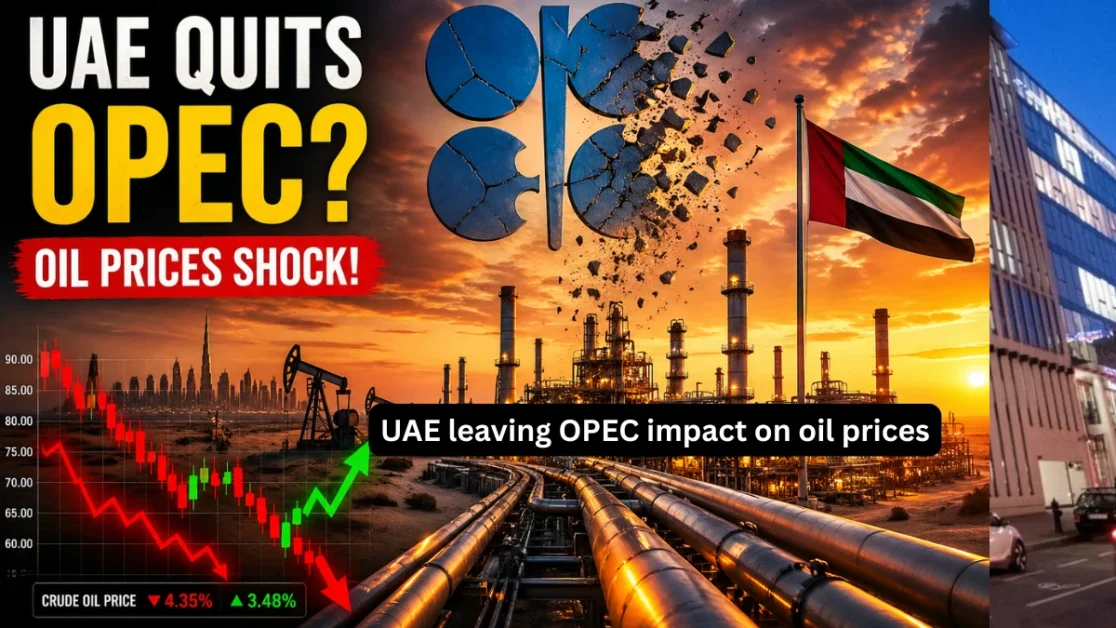
UAE leaving OPEC impact on oil prices : The global oil market rarely witnesses moments that can truly shift its balance—but this could be one of them. Buzz around the United Arab Emirates potentially stepping away from the Organization of the Petroleum Exporting Countries has triggered intense debate among economists, policymakers, and investors alike.
If this move materialises, it won’t just be a geopolitical headline—it could directly impact petrol prices, inflation, and economic stability across the world, including India.
🔍 Why the UAE’s Move Matters More Than It Seems
For decades, OPEC has functioned as a powerful oil alliance, managing production levels to stabilise global prices. The UAE has been a key player in this system. So why consider leaving now?
At the heart of this shift lies ambition.
The UAE has invested heavily in expanding its oil production capacity. But OPEC’s quota system restricts how much each country can pump. For a nation looking to maximise revenue and strengthen its global energy position, those limits can feel like a ceiling.
There’s also a strategic angle. The UAE is positioning itself as a flexible, forward-looking energy powerhouse—one that wants autonomy in decision-making rather than collective constraints.
📊 Oil Prices: Crash, Surge, or Chaos?
The million-dollar question: what happens to oil prices?
There isn’t a single answer—and that’s exactly what makes this story so important.
If the UAE ramps up production independently, global supply could increase. In simple terms, more oil usually means lower prices. That could bring relief to consumers, especially in countries heavily dependent on imports.
But there’s another side.
If OPEC’s unity weakens, the market could lose a key stabilising force. Without coordinated production cuts or increases, price swings could become sharper and more unpredictable. Traders hate uncertainty—and volatility often pushes prices upward in the short term.
In reality, the world may see a mix of both: initial volatility followed by a new pricing equilibrium.
India in Focus: Why You Should Care
For India, this development is more than distant geopolitics—it’s personal.
India imports over 80% of its crude oil needs. Even small fluctuations in global prices ripple through the economy:
- Lower oil prices → cheaper fuel, reduced inflation, stronger rupee sentiment
- Higher oil prices → costlier petrol/diesel, rising inflation, pressure on household budgets
A UAE exit could therefore directly affect everything from your daily commute to grocery bills.
🌍 A Bigger Shift in Global Energy Power
Zoom out, and this story becomes even more significant.
The possible move signals a broader transformation in how oil-producing nations think:
- Countries are prioritising national interest over collective control
- Energy markets are becoming more competitive and less predictable
- The traditional dominance of OPEC may be slowly eroding
Even if the UAE maintains informal coordination with major producers like Saudi Arabia, the symbolic impact of stepping away from OPEC could inspire others to rethink their positions.
⚠️ Is This the Beginning of an Oil Market Reset?
It’s too early to call it a complete shift—but the signs are hard to ignore.
If more countries start acting independently, the oil market could move toward a more fragmented system. That means:
- Less control over prices
- More competition among producers
- Greater exposure to geopolitical shocks
At the same time, such instability could accelerate investments in renewable energy, as countries look for alternatives to reduce dependence on volatile oil markets.
🧠 What Experts Are Saying
Energy analysts suggest that even if the UAE exits, it won’t act recklessly. Flooding the market with oil could hurt its own revenues.
Instead, the UAE is likely to strike a balance—boosting production while keeping an eye on global price stability.
But one thing is certain: the psychological impact on markets could be immediate and significant.
🔗 Related Stories on Network Bharat
- India Digital Census 2027: How It Will Transform Governance
- India’s Economy Growth 2026: Key Drivers & Future Outlook
- Iran–US Peace Talks 2026: Global Impact Explained
🏁 Final Take
The UAE potentially leaving OPEC is not just about one country changing strategy—it’s about the future of global energy power.
Will oil become cheaper? Possibly.
Will markets become more volatile? Very likely.
For India and the rest of the world, this is a story worth watching closely.
Because when oil moves, the world moves with it.
#UAEOPECExit #OilPrices #GlobalMarkets #EnergyCrisis #CrudeOil #OPEC #BreakingNews #IndiaEconomy #OilMarket #Geopolitics #BusinessNews #MiddleEast #OilSupply #EconomicImpact
❓ FAQs
Q1. Has the UAE officially left OPEC?
No official confirmation yet, but discussions and signals have sparked global attention.
Q2. Will petrol prices in India drop?
They could, if increased supply pushes global oil prices down—but volatility remains a key risk.
Q3. Why is this news important globally?
Oil prices influence inflation, transportation, and overall economic stability worldwide.
Q4. Could other countries leave OPEC too?
It’s possible. If one major player exits successfully, others may reconsider their membership.