✍️ By Krishna Arya | Network Bharat
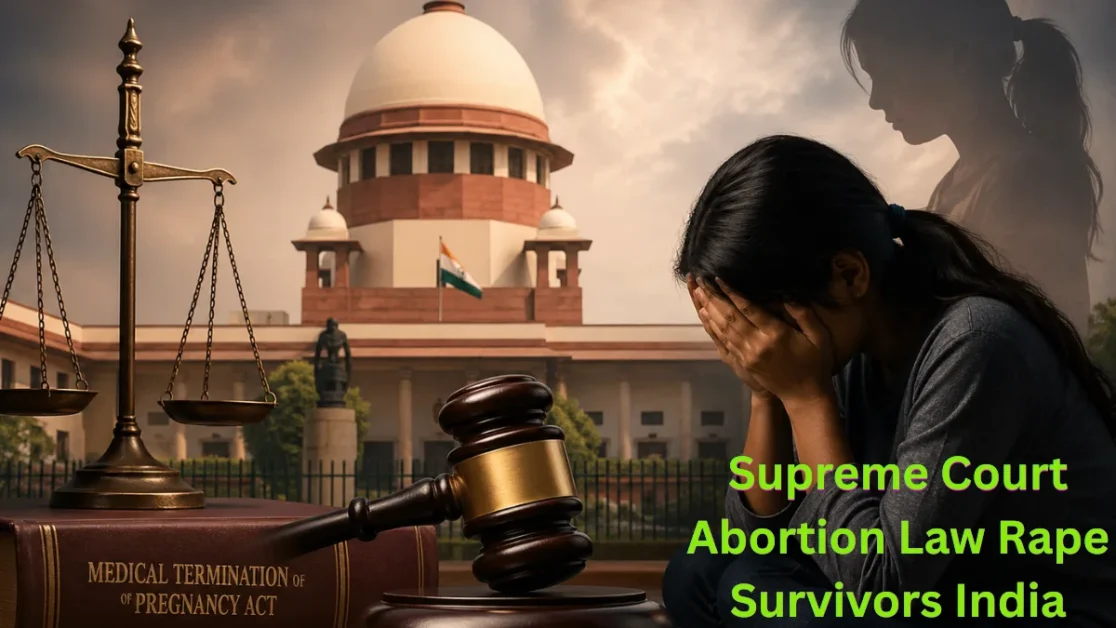
Supreme Court Abortion Law Rape Survivors India
🔴 A Moment That Could Redefine Women’s Rights in India
In a powerful and deeply human observation, the Supreme Court of India has urged the Central government to reconsider how the law treats one of the most sensitive issues—pregnancy resulting from rape.
At the heart of the matter lies a painful question:
Should a survivor of sexual assault be bound by rigid legal timelines when deciding her future?
This question is no longer just emotional—it is now a legal and constitutional debate shaping the future of India’s abortion laws.
⚖️ What Did the Supreme Court Say?
While hearing a case involving a minor rape survivor, the court highlighted the harsh reality of existing legal limits under the Medical Termination of Pregnancy Act.
Currently:
- Abortions are generally allowed up to 20 weeks
- In special cases (like rape survivors), it may extend to 24 weeks
- Beyond that, termination is allowed only under exceptional circumstances with court approval
However, the bench made a strong observation—there should be no rigid time limit in cases of rape, especially when continuing the pregnancy causes immense trauma.
The court reportedly emphasized that forcing a survivor to carry such a pregnancy could be cruel and unjust.
💔 The Case That Sparked This Debate
The issue gained urgency during a case involving a minor girl with a pregnancy beyond 30 weeks—a result of sexual assault.
Medical complexities, legal delays, and procedural hurdles created a situation where:
- The survivor’s mental and physical health were at risk
- The law appeared too rigid to respond to real human suffering
This case became a turning point, pushing the judiciary to call for a broader reform.
🔗 Related Articles on Network Bharat
- India Digital Census 2027: Everything You Need to Know
- India’s Economy Growth 2026: Key Insights & Future Outlook
- Ajit Doval Saudi Arabia Visit 2026: Strategic Impact Explained
📜 Understanding India’s Current Abortion Law
India’s abortion framework is governed by the Medical Termination of Pregnancy (MTP) Act, which has been amended over time to become more inclusive. Yet, gaps remain.
Key Provisions:
- Up to 20 weeks: Allowed with one doctor’s opinion
- 20–24 weeks: Requires two doctors’ approval (for special categories like rape survivors)
- Beyond 24 weeks: Needs court intervention
While the law aims to protect both mother and unborn child, critics argue it often fails to account for trauma, delayed reporting, and social stigma faced by rape survivors.
🔍 Why the Supreme Court’s Observation Matters
This is not just a legal suggestion—it’s a signal of changing judicial thinking.
🚨 Key Implications:
- May lead to removal of strict gestational limits in rape cases
- Could reduce the need for survivors to approach courts repeatedly
- Reinforces the idea that mental health is as important as physical health
In essence, the court is pushing for a system where compassion meets law.
🧠 The Human Side Often Ignored
Legal frameworks often deal in timelines and conditions. But trauma does not follow a calendar.
Many survivors:
- Realize pregnancy late due to shock or lack of awareness
- Face family and societal pressure
- Struggle to access timely medical care
By the time they seek help, the legal window may already be closing.
The court’s message is clear:
👉 The law must adapt to human realities—not the other way around.
🏛️ What Happens Next?
The Supreme Court has asked the Centre to consider amending the law. While no immediate change has been made yet, this could trigger:
- Parliamentary discussions
- Policy-level reviews
- Possible amendments to the MTP Act
If implemented, this reform could become one of the most significant steps toward reproductive justice in India.
🌍 A Larger Conversation on Rights and Dignity
This issue goes beyond legality—it touches upon:
- Women’s autonomy over their bodies
- The right to dignity after trauma
- The role of the state in sensitive personal decisions
India stands at a crossroads where it must decide:
Should the law remain rigid, or should it evolve with empathy?
✨ Final Thoughts
The Supreme Court’s intervention is more than a legal observation—it is a call for humanity within the system.
For countless survivors across the country, this could mean:
- Faster decisions
- Less suffering
- And most importantly, the power to choose
As the nation watches closely, one thing is certain—
this debate is far from over, but change may finally be on the horizon.
❓ Frequently Asked Questions (FAQs)
🔹 What did the Supreme Court of India say about abortion law for rape survivors?
The court suggested that rigid time limits may not be appropriate in rape cases and asked the government to consider amending the law to allow more flexibility for survivors.
🔹 What is the current abortion time limit under the Medical Termination of Pregnancy Act?
Currently, abortion is permitted:
- Up to 20 weeks with one doctor’s approval
- Up to 24 weeks for special categories like rape survivors
Beyond this, court approval is usually required.
🔹 Can abortion be allowed after 24 weeks in India?
Yes, but only in exceptional cases. It typically requires:
- Approval from a medical board
- Permission from the court
🔹 Why is there a demand to remove time limits for rape survivors?
Many survivors report pregnancies late due to trauma, stigma, or lack of awareness. Strict timelines can deny them safe and legal abortion options.
🔹 How could this Supreme Court observation impact women’s rights in India?
If the law is amended, it could:
- Give survivors more control over their bodies
- Reduce legal delays and trauma
- Strengthen reproductive rights and dignity
🔹 What happens next after the Supreme Court’s suggestion?
The Central government may review and possibly amend the law. Any change would likely involve:
- Policy discussions
- Parliamentary approval
🔹 Is abortion legal in India overall?
Yes, abortion is legal under specific conditions defined by the MTP Act, making India one of the countries with relatively progressive abortion laws—though with certain restrictions.
🌍 External References
- Supreme Court of India Official Website
- Ministry of Health and Family Welfare
- Abortion Laws in India Explained
#SupremeCourt, #AbortionLawIndia, #WomensRights, #BreakingNewsIndia, #RapeSurvivorJustice, #MTPAct, #LegalReformsIndia, #IndiaNews, #HumanRights, #JusticeForWomen