By Krishna Arya | Published on Network Bharat
Pakistan Sheltered Iranian Aircraft
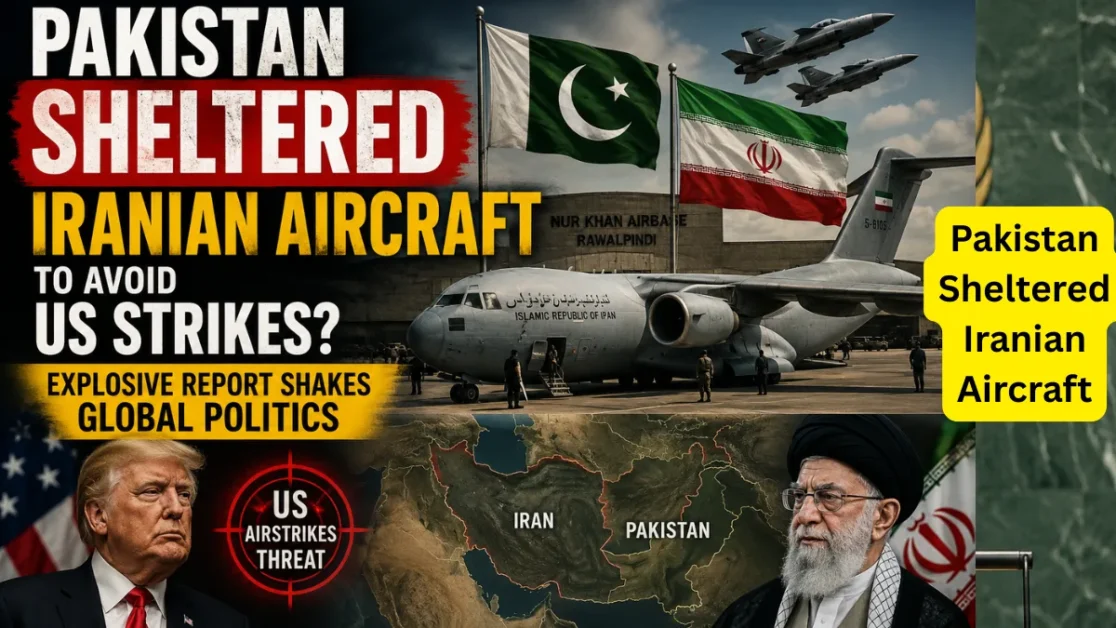
Pakistan Sheltered Iranian Aircraft : In a revelation that could shake global diplomacy and military alliances, reports have emerged claiming that Pakistan allowed Iranian aircraft to be stationed at its airbases during a period of heightened tensions with the United States. The alleged move, reportedly aimed at protecting Iranian planes from possible US airstrikes, has triggered intense debate across diplomatic and defense circles worldwide.
While no official confirmation has been issued by Islamabad or Tehran, the report has already fueled speculation about secret military coordination in the region and Pakistan’s evolving geopolitical strategy amid growing instability in the Middle East.
Why The Report Is Creating Global Shockwaves
The claim comes at a time when tensions between the United States and Iran remain dangerously high. In recent months, fears of direct military escalation have repeatedly surfaced following attacks, proxy conflicts, and threats exchanged between both sides.
According to emerging international reports, Iranian aircraft were allegedly moved to Pakistani airbases as a precautionary measure during a period when Tehran feared possible US military strikes. If proven true, the development would represent one of the most sensitive regional security collaborations in recent years.
Security analysts believe such a move could significantly impact:
- US-Pakistan diplomatic relations
- Iran’s regional military strategy
- Middle East security calculations
- India’s strategic concerns in South Asia
- China’s influence over regional defense alignments
The possibility of a nuclear-armed nation quietly assisting Iran during a volatile geopolitical crisis has naturally attracted worldwide attention.
Pakistan’s Strategic Balancing Act
Pakistan has long maintained a delicate balance between multiple global powers. On one side, it has historically relied on military and economic cooperation with the United States. On the other, Islamabad has strengthened ties with China and maintained close cultural and border relations with Iran.
Experts say Pakistan is increasingly trying to position itself as a regional power capable of maintaining influence across competing blocs.
The alleged sheltering of Iranian aircraft — if accurate — may indicate that Islamabad is quietly redefining its foreign policy priorities in response to changing global power equations.
Political observers also point out that Pakistan faces internal pressure due to economic instability, border tensions, and shifting alliances in the Muslim world. Supporting Iran discreetly could have been seen as a strategic calculation to maintain regional leverage.
Why Iranian Aircraft Would Need Protection
Military experts suggest that Iran’s concerns about potential US airstrikes are not unrealistic. The United States maintains a strong military presence across the Middle East, including naval assets, airbases, and strategic partnerships with several Gulf nations.
During periods of heightened confrontation, relocating aircraft outside Iranian territory could serve several strategic purposes:
- Prevent destruction of valuable military assets
- Reduce vulnerability to surprise attacks
- Preserve operational capability
- Send a political signal to adversaries
- Strengthen regional military cooperation
If Iranian planes were indeed moved to Pakistan, it would demonstrate the level of fear surrounding possible escalation in the region.
The Nur Khan Airbase Speculation
Several defense discussions online have linked the controversy to Pakistan’s strategically important Nur Khan Airbase near Rawalpindi. The airbase has historically played a major role in military operations and international coordination.
Although there is no verified evidence publicly available confirming the exact location of any Iranian aircraft, speculation surrounding sensitive military facilities has intensified across social media and geopolitical forums.
Defense analysts caution against drawing conclusions without official confirmation, but they also acknowledge that such reports rarely emerge without some level of intelligence-based discussion behind the scenes.
Impact On India And South Asia
For India, the development carries serious strategic implications.
Any deeper military coordination between Pakistan and Iran could alter regional security dynamics, especially at a time when South Asia already faces multiple geopolitical flashpoints.
Indian security experts may closely monitor:
- Pakistan-Iran defense cooperation
- Chinese involvement in regional military strategy
- Potential intelligence-sharing arrangements
- Increased instability near strategic maritime routes
- Changes in US military posture in South Asia
The issue could also become part of broader discussions involving regional counterterrorism, border security, and energy diplomacy.
Could This Damage US-Pakistan Relations?
Relations between Washington and Islamabad have experienced several ups and downs over the last two decades.
While both countries continue to cooperate in certain strategic areas, mutual trust has often been fragile. Allegations of Pakistan assisting Iran during a sensitive military period could create fresh diplomatic complications.
US policymakers may seek clarification if the claims gain further international traction. However, experts believe Washington would likely avoid immediate escalation unless concrete evidence emerges publicly.
Social Media Explosion And Information Warfare
The story has already sparked massive reactions online, with hashtags related to Pakistan, Iran, and US airstrikes trending across platforms.
Some users have accused international media of exaggeration, while others believe the report highlights secret geopolitical realities that rarely become public.
Information warfare has become a major part of modern conflicts, and analysts warn that unverified military stories can rapidly influence public opinion, diplomatic narratives, and even stock markets.
The Bigger Geopolitical Picture
The alleged movement of Iranian aircraft into Pakistan reflects a much larger transformation happening in global politics.
Traditional alliances are shifting. Countries are increasingly adopting flexible strategic partnerships instead of fixed camps. The growing role of China, the weakening trust between global powers, and rising instability in the Middle East are all reshaping international diplomacy.
Whether the report is fully accurate or not, it has already succeeded in drawing attention to one crucial reality — geopolitical tensions in Asia and the Middle East are entering a new and unpredictable phase.
Conclusion
The claims surrounding Pakistan allegedly sheltering Iranian aircraft from potential US airstrikes have added another layer of complexity to already volatile global politics.
Without official confirmation, many questions remain unanswered. Yet the story has ignited worldwide curiosity because it touches upon military secrecy, shifting alliances, and fears of a wider regional conflict.
As governments remain cautious and analysts continue examining the situation, one thing is clear: the balance of power across South Asia and the Middle East is evolving rapidly — and the world is watching closely.
#Pakistan,#Iran,#USIranWar,#MiddleEast,#BreakingNews,#DonaldTrump,#Airstrikes,#PakistanAirForce,#IranNews,#WorldNews,#Geopolitics,#USPolitics,#MilitaryNews,#InternationalNews,#GlobalConflict,#NurKhanAirbase,#ChinaPakistan,#IsraelIran,#TrendingNews,#GoogleDiscover
FAQs
Did Pakistan officially confirm sheltering Iranian aircraft?
No. As of now, there has been no official confirmation from Pakistan or Iran regarding the reports.
Why would Iran move aircraft outside its territory?
Military experts say relocating aircraft can protect strategic assets during periods of possible military escalation.
How could this affect India?
The development may influence regional security calculations and military monitoring in South Asia.
Could US-Pakistan relations worsen?
Potentially, but experts believe Washington would wait for verified evidence before taking any major diplomatic steps.
Why is this story trending globally?
Because it involves sensitive issues related to Iran, Pakistan, the United States, military strategy, and possible regional conflict.