By Krishna Arya | Network Bharat
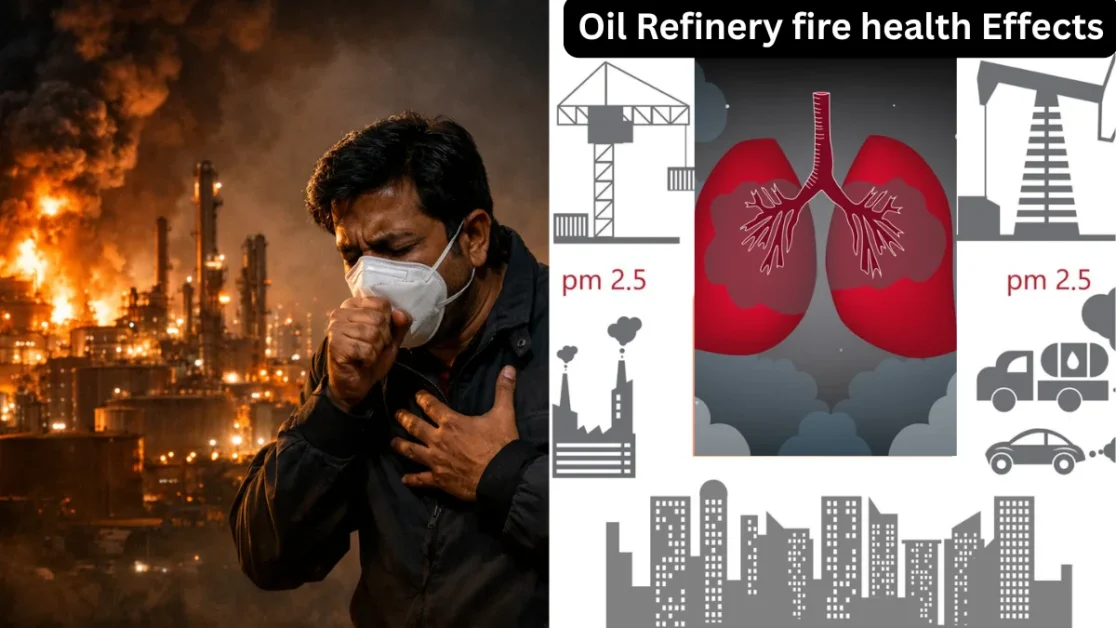
Oil Refinery fire health Effects
🔥 When Fire Ends, The Real Danger Begins
Oil refinery fires often make headlines because of towering flames and thick black smoke. But what many people don’t realize is this — the biggest threat begins after the fire spreads into the air you breathe.
The smoke released from refinery accidents carries microscopic toxins that can travel across cities, silently affecting thousands. You may not see the danger clearly, but your body feels it almost instantly.
🌫️ What Makes Refinery Smoke So Dangerous?
Refinery fires don’t produce ordinary smoke. They release a hazardous mix of pollutants such as:
- Fine particles (PM2.5 and PM10)
- Toxic gases like sulfur dioxide and carbon monoxide
- Harmful chemicals including benzene
These particles are so tiny that they bypass your body’s natural defenses and settle deep inside your lungs — and even enter your bloodstream.
🫁 How Your Lungs React to Toxic Smoke
Your lungs are the first line of impact.
Within minutes of exposure, you may experience:
- Constant coughing
- Shortness of breath
- Chest discomfort
- Irritation in throat and eyes
For people already dealing with asthma or respiratory issues, refinery smoke can quickly escalate into a serious health emergency.
❤️ The Lesser-Known Danger: Your Heart
What’s even more alarming is how air pollution affects your heart.
Once fine particles enter your bloodstream, they can:
- Increase blood pressure
- Trigger irregular heart rhythms
- Raise the risk of heart attacks
This is why experts call polluted air a “silent killer” — it affects vital organs without immediate warning signs.
⚠️ Who Needs to Be Extra Careful?
Not everyone is affected equally. The most vulnerable groups include:
- Children (developing lungs are highly sensitive)
- Elderly individuals
- People with heart or lung diseases
- Pregnant women
Even short exposure can have long-lasting consequences for these groups.
🚨 Warning Signs You Shouldn’t Ignore
If a refinery fire occurs nearby, watch out for:
- Difficulty breathing
- Persistent coughing
- Chest pain
- Fatigue or dizziness
- Burning sensation in eyes or throat
👉 Ignoring these symptoms can worsen the impact.
🛡️ Simple Steps to Protect Yourself
During such incidents, small actions can make a big difference:
- Stay indoors and seal windows/doors
- Use air purifiers if available
- Wear an N95 mask outdoors
- Avoid physical activity outside
- Follow official health updates
🌍 A Growing Environmental and Health Crisis
Industrial growth has increased the frequency and scale of such incidents. Refinery fires are no longer isolated events — they are becoming a serious public health concern worldwide.
Air pollution is already linked to millions of premature deaths each year, and events like these only intensify the risk.
#OilRefineryFire #AirPollution #HealthAlert #LungHealth #HeartHealth #ToxicSmoke #BreakingNews #EnvironmentalHealth #PollutionEffects #StaySafe #PublicHealth #AirQuality #HealthRisks #SmokeDanger #GlobalNews
💡 Final Words
Oil refinery fires don’t just burn infrastructure — they release an invisible threat that can harm your lungs, weaken your heart, and affect your long-term health.
Staying aware and prepared is the only way to protect yourself and your loved ones.
👉 Because sometimes, the most dangerous threats are the ones you cannot see.
Internal Sources
Silent Eye Warning Signs You Should Never Ignore
Artemis II Mission: Stunning Space Photography Insights
India-US Relations 2026: A Powerful Strategic Shift
External Sources
WHO: Air Pollution and Health Effects