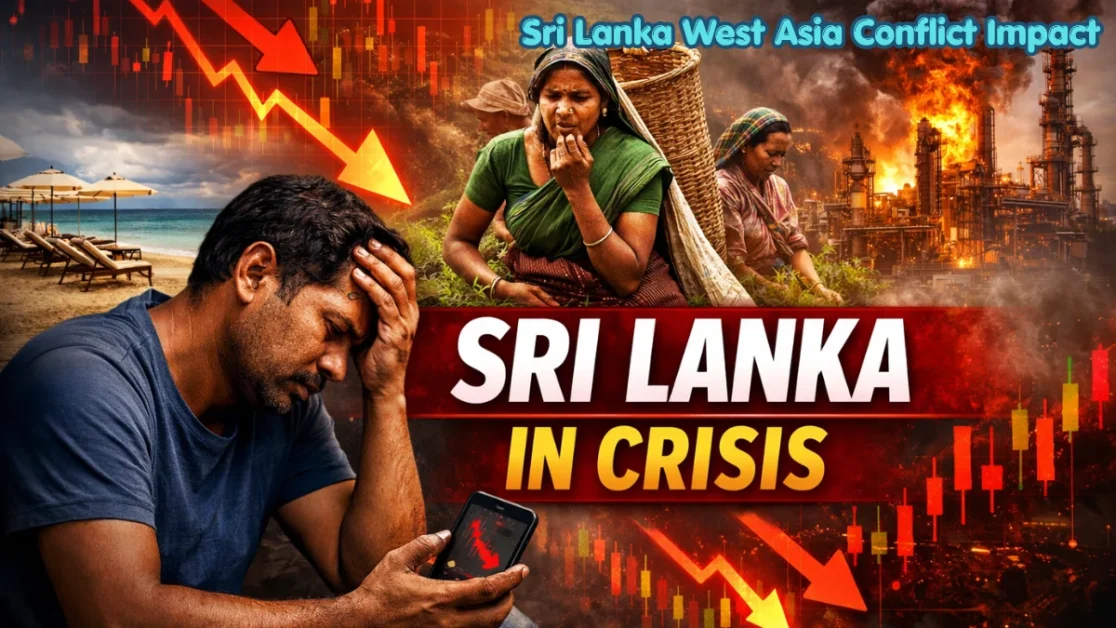
Sri Lanka West Asia Conflict Impact
By Krishna Arya | Network Bharat
Sri Lanka, a nation still recovering from its recent economic crisis, is now facing a fresh wave of uncertainty. According to a recent United Nations report, the ongoing West Asia conflict has delivered a severe economic shock to the island nation—impacting tourism, exports, and employment at a critical time.
This new global disruption is not just a distant geopolitical issue. For Sri Lanka, it is a direct economic threat that could slow recovery and push millions closer to poverty.
Tourism Sector Takes a Major Hit
Tourism, one of Sri Lanka’s strongest economic pillars, is witnessing a sharp decline. The West Asia conflict has reduced international travel confidence, especially from key markets.
Hotels that were once seeing a steady return of tourists are now reporting cancellations and reduced bookings. Industry experts estimate that tourism could drop significantly if the conflict continues, affecting thousands of jobs linked to hospitality, transport, and local businesses.
For a country relying heavily on foreign exchange from tourism, this downturn is alarming.
Exports Under Pressure, Especially Tea Industry
Sri Lanka’s export sector is also under strain. The country’s globally renowned tea industry is facing disruptions due to weakened demand and logistical challenges linked to the conflict.
West Asia remains a crucial market for Sri Lankan tea exports. With instability in the region, trade flows are slowing, and exporters are experiencing financial losses.
This decline is not just about revenue—it impacts farmers, workers, and entire rural communities dependent on the tea economy.
Migrant Workers and Job Risks Rising
Another major concern highlighted in the UN report is the vulnerability of Sri Lankan migrant workers in West Asia.
A large portion of Sri Lanka’s workforce is employed in Middle Eastern countries. These workers send vital remittances back home, supporting families and contributing significantly to the national economy.
However, rising tensions in the region could threaten job security, reduce remittances, and create economic instability for thousands of households in Sri Lanka.
Millions at Risk of Falling into Poverty
Perhaps the most worrying aspect of the report is the growing risk of poverty. Millions of Sri Lankans who were just beginning to recover from past economic hardships are now at risk again.
With declining income sources—from tourism, exports, and remittances—the financial pressure on families is increasing. Rising costs of living combined with reduced earnings could deepen economic inequality across the country.
Why Sri Lanka is Highly Vulnerable
Sri Lanka’s vulnerability lies in its economic structure:
- Heavy dependence on tourism
- Strong reliance on tea exports
- Significant workforce in West Asia
- Ongoing recovery from previous financial crisis
These factors make the country highly sensitive to external shocks like geopolitical conflicts.
Global Conflict, Local Consequences
The West Asia conflict highlights how interconnected today’s world is. A crisis thousands of kilometers away can directly impact livelihoods, businesses, and economies elsewhere.
For Sri Lanka, this is a reminder that economic recovery is fragile and requires global stability as much as domestic reform.
What Lies Ahead?
While the situation remains uncertain, experts suggest that Sri Lanka must focus on diversifying its economy, strengthening domestic industries, and reducing overdependence on specific regions.
Government intervention, policy support, and global cooperation will play a crucial role in minimizing the damage.
Conclusion
Sri Lanka stands at a critical crossroads. Just as the nation was regaining its footing, the West Asia conflict has introduced new challenges that cannot be ignored.
The coming months will be crucial in determining whether the country can withstand this external shock or face another economic setback.
SriLankaCrisis #WestAsiaConflict #UNReport #GlobalEconomy #TourismCrisis #TeaExports #BreakingNews #EconomicShock #AsiaPacific #NetworkBharat