By Krishna Arya
Website: Network Bharat
Rajya Sabha Elections 2026
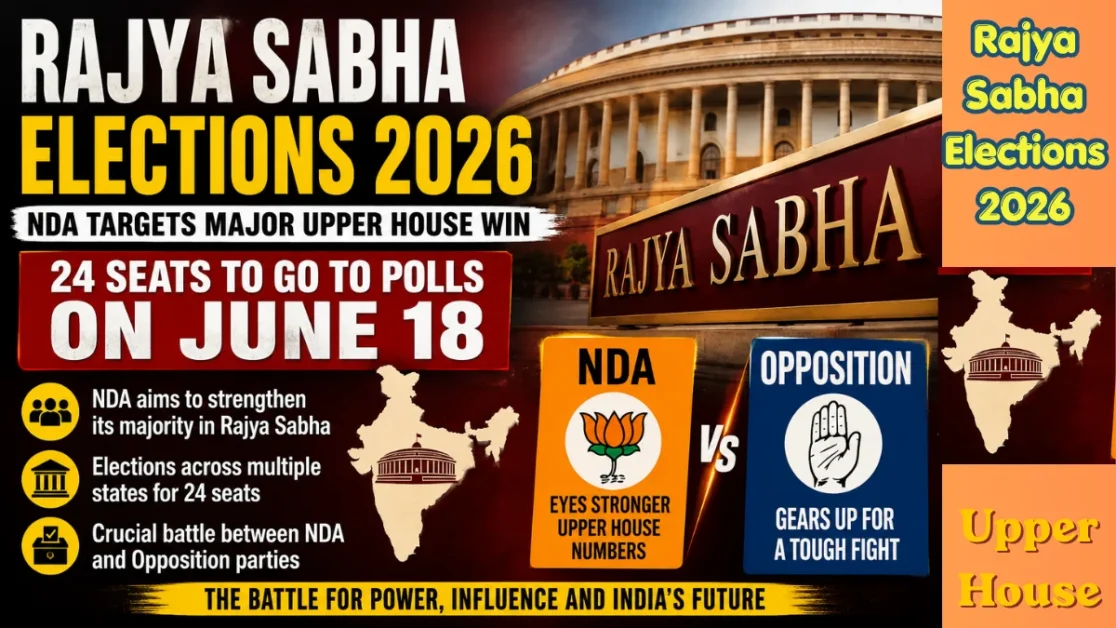
India’s political landscape is set for another major shift as elections for 24 Rajya Sabha seats will be held on June 18, 2026. With the ruling NDA looking to further strengthen its position in the Upper House, these elections are being closely watched by political parties, analysts, and voters across the country.
The upcoming Rajya Sabha polls are expected to influence the balance of power in Parliament, especially at a time when several crucial bills and policy decisions are likely to come up during the next session.
Why the Rajya Sabha Polls Matter in 2026
The Rajya Sabha, also known as the Council of States, plays a key role in India’s parliamentary system. Unlike the Lok Sabha, members of the Rajya Sabha are elected indirectly by MLAs from different states.
This year’s election has gained attention because the NDA alliance is aiming to improve its numbers significantly in the Upper House. A stronger presence in the Rajya Sabha would make it easier for the government to pass important legislation without facing major opposition hurdles.
Political observers believe the results could shape India’s legislative direction for the next few years.
Elections Scheduled for 24 Seats Across States
The Election Commission has announced polling for 24 Rajya Sabha seats spread across several states. These seats are becoming vacant due to the retirement of sitting members whose terms are ending.
Several prominent leaders are among those retiring, making the elections even more significant. Parties have already started internal discussions regarding candidate selection and alliance strategies.
The voting process will follow the proportional representation system through a single transferable vote, which is commonly used in Rajya Sabha elections.
NDA Looking to Strengthen Upper House Numbers
The BJP-led NDA has steadily improved its position in the Rajya Sabha over the past few years. However, it still faces challenges in securing complete dominance in the Upper House.
With strong performances in recent state assembly elections, the alliance is expected to gain an advantage in several states during the June 18 polls.
Sources within political circles suggest the NDA may secure additional seats in states where the opposition’s numbers have weakened after recent political developments.
If the alliance succeeds in improving its tally, it could reduce dependence on regional parties during crucial parliamentary voting.
Opposition Preparing Strategy to Counter NDA
Opposition parties under the INDIA bloc are also preparing aggressively for the Rajya Sabha elections. Leaders from Congress and several regional parties are holding discussions to avoid vote division and maximize seat-sharing opportunities.
The opposition understands that losing more seats in the Rajya Sabha could weaken its ability to challenge government policies effectively.
Political experts believe cross-voting and independent MLAs may play an important role in tightly contested states.
Key Leaders Retiring This Year
Several veteran politicians are set to retire from the Rajya Sabha this year, including senior leaders who have played important roles in national politics.
The retirement of experienced parliamentarians could open doors for new political faces and emerging leaders from different parties.
At the same time, some parties may renominate influential leaders to maintain continuity and strengthen their parliamentary presence.
What Happens Next?
The nomination process is expected to begin soon, followed by scrutiny and withdrawal of candidates before voting takes place on June 18.
Results are likely to be declared on the same day, giving a clear picture of how the political equations in the Rajya Sabha may change.
The elections will also serve as an indirect political test ahead of upcoming state elections and future parliamentary strategies.
Can the Rajya Sabha Power Balance Change?
While the NDA already holds a strong position nationally, improving its Rajya Sabha numbers would provide an additional political advantage.
A stronger Upper House presence can help the government pass reforms faster, especially on subjects requiring broader parliamentary approval.
However, opposition parties still remain influential in many states, making several contests highly competitive.
The June 18 Rajya Sabha elections are therefore expected to become one of the most closely watched political events of 2026.
Conclusion
As India prepares for the Rajya Sabha Elections 2026, all eyes are on whether the NDA can strengthen its grip on the Upper House or if the opposition can hold its ground.
With 24 seats up for grabs and major political implications involved, the outcome could shape the future of parliamentary politics in the country.
The battle for the Rajya Sabha is no longer just about numbers — it is about influence, legislation, and political momentum heading into the next phase of Indian politics.
#RajyaSabhaElections #RajyaSabhaPolls #NDA #BJP #Parliament #IndianPolitics #UpperHouse #ElectionCommission #MallikarjunKharge #HDDeveGowda #IndiaNews #PoliticalNews #RajyaSabha2026 #BreakingNews #NetworkBharat