Sinking Nation Tuvalu
By Krishna Arya | NetworkBharat
Sinking Nation Tuvalu: Imagine living in a country where the land beneath your feet rises no higher than a two-storey building—and the ocean is slowly but relentlessly climbing toward it. This is not a future scenario. It is the present reality for Tuvalu, one of the world’s smallest and lowest-lying island nations.
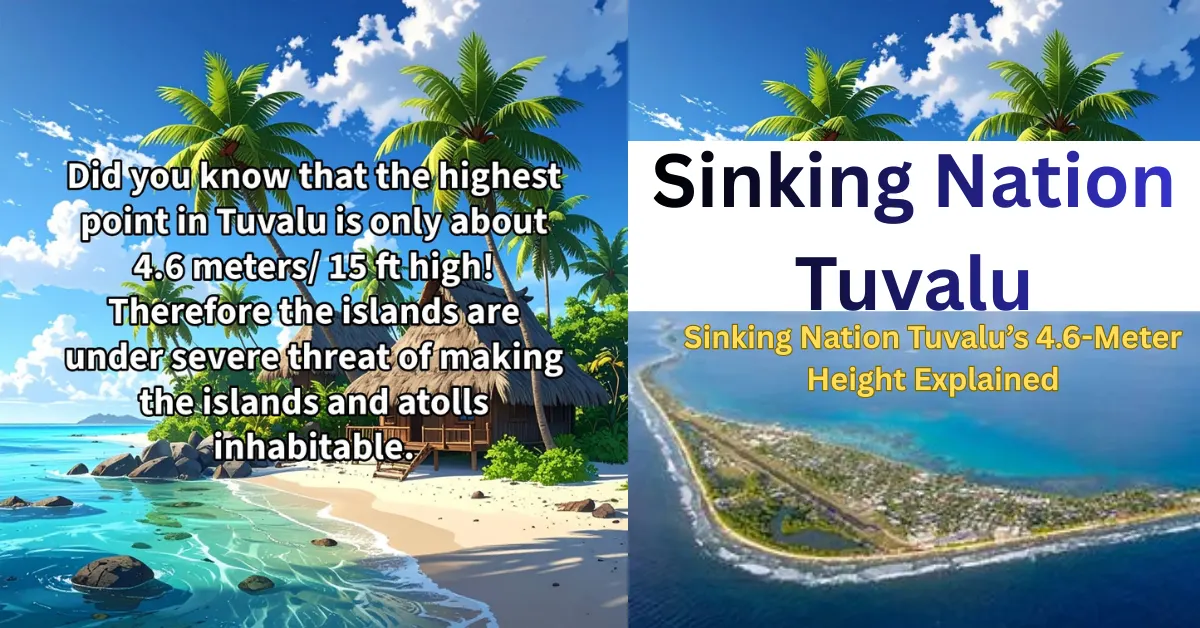
With its highest natural point measuring only around 4.6 meters (15 feet) above sea level, Tuvalu today stands on the frontline of the global climate crisis. What is happening here is not just an environmental issue—it is a human story of survival, identity, and an uncertain tomorrow.
Why Tuvalu’s Height Matters More Than You Think
Tuvalu is made up of nine small islands and coral atolls scattered across the Pacific Ocean. Unlike mountainous countries that can retreat inland or upward, Tuvalu has nowhere to go.
A rise in sea level of even a few centimeters can mean:
- Saltwater seeping into freshwater sources
- Farmland becoming unusable
- Homes flooding during high tides
- Roads disappearing under seawater
In many parts of Tuvalu, king tides already flood villages, forcing residents to walk through seawater where streets once existed. For locals, climate change is not a debate—it is something they live with every single day.
Rising Seas, Shrinking Land
Global sea levels are rising due to melting glaciers and warming oceans. For low-lying island nations like Tuvalu, this rise is happening faster than their ability to adapt.
Scientists warn that if current trends continue:
- Large parts of Tuvalu could become uninhabitable within decades
- Storm surges will become more destructive
- Coastal erosion will permanently reshape the islands
What makes the situation more alarming is that Tuvalu contributes almost nothing to global carbon emissions—yet it faces some of the harshest consequences.
The Human Cost of a Sinking Nation
For the people of Tuvalu, land is not just property—it is culture, ancestry, and identity. Cemeteries, ancestral homes, and sacred spaces are all tied to the islands themselves.
As conditions worsen, many families are forced to consider migration. But leaving is not easy. It means:
- Losing language and traditions
- Becoming climate refugees in foreign lands
- Watching an entire nation’s heritage slowly disappear
Tuvalu’s leaders have repeatedly raised this issue on the global stage, warning that their country may be among the first to vanish due to climate change.
A Global Wake-Up Call
Tuvalu highest point and sea level rise
Tuvalu’s struggle is a warning to the world. What happens here today could happen to many other coastal regions tomorrow. From island nations to major coastal cities, rising seas threaten millions of lives globally.
The story of Tuvalu challenges the world with difficult questions:
- Who is responsible for protecting nations at risk?
- Can development exist without environmental destruction?
- What happens when a country loses its land but not its people?
Hope, Action, and the Fight for Survival
Despite the odds, Tuvalu has not given up. The nation is investing in:
- Coastal protection projects
- International climate advocacy
- Digital preservation of culture and history
Tuvalu’s message is clear: saving the planet is not optional—it is necessary for survival.
Final Thoughts
Tuvalu’s highest point being just 4.6 meters above sea level is more than a geographic fact. It is a symbol of how fragile our world has become—and how urgently collective action is needed.
As seas continue to rise, Tuvalu stands as both a victim of climate injustice and a powerful voice reminding humanity that the fight against climate change is ultimately a fight for people, cultures, and futures.
Stay informed with impactful global stories. Read more at NetworkBharat.com