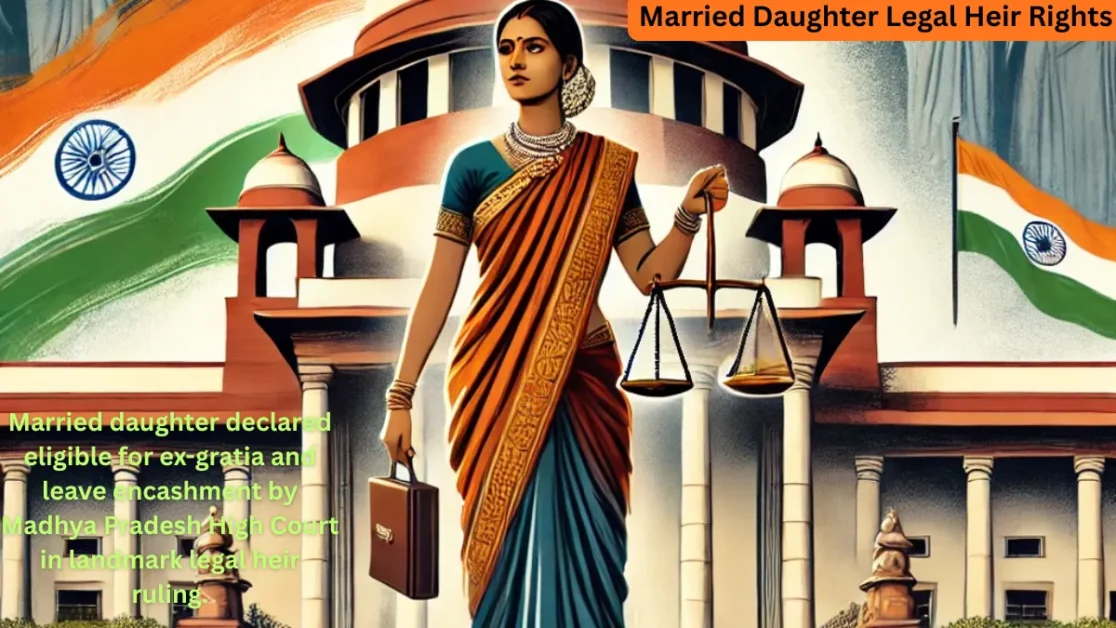
Married Daughter Legal Heir Rights
By Krishna Arya | Network Bharat
Married daughter legal heir rights High Court verdict : In a powerful judgment that strengthens gender equality in service law, the Madhya Pradesh High Court has ruled that a married daughter cannot be denied ex-gratia and leave encashment benefits if she is the sole legal heir of a deceased government employee.
The decision is being seen as a significant step toward eliminating outdated assumptions that marriage severs a daughter’s financial and legal connection with her parental family.
Here are the 7 key takeaways from this landmark verdict that every government employee’s family should understand.
1. Marriage Does Not Cancel Legal Heir Status
The Court made it clear: a daughter remains a legal heir even after marriage.
Authorities cannot deny financial benefits solely on the ground that she is married. Legal heirship is determined by law—not marital status.
This reinforces constitutional principles of equality under Article 14.
2. Sole Legal Heir Means Full Entitlement
If the married daughter is the only surviving legal heir, she is fully entitled to receive:
- Ex-gratia payment
- Leave encashment dues
- Other admissible service benefits
The Court emphasized that benefits cannot be withheld merely due to administrative interpretation or outdated departmental practices.
3. Administrative Rules Cannot Override Equality
One of the most important aspects of the ruling is that departmental circulars or internal guidelines cannot override constitutional guarantees.
If a rule indirectly discriminates against married daughters, it can be challenged and set aside.
This sends a strong signal to government departments across India.
4. Ex-Gratia Is a Financial Relief — Not a Favor
The Court clarified that ex-gratia payment is meant to provide financial relief to the family of a deceased employee.
It is not charity, and certainly not something that can be denied arbitrarily.
If a married daughter is the rightful heir, she stands on equal footing with a son.
5. Leave Encashment Is a Vested Right
Leave encashment represents earned leave accumulated by the employee during service.
The Court viewed it as a legitimate financial entitlement, not a discretionary benefit. Therefore, denying it to a legally recognized heir would be unjust.
6. Gender Equality Is Central to the Judgment
At the heart of the verdict lies a broader message — gender cannot be a ground for discrimination.
For decades, sons were often presumed to be primary beneficiaries. This ruling challenges that mindset and aligns with modern interpretations of equality and inheritance law.
It reflects a continuing judicial trend toward strengthening women’s property and succession rights in India.
7. A Precedent That Could Influence Other States
Although the ruling comes from the Madhya Pradesh High Court, its reasoning may influence other High Courts and service tribunals.
Families facing similar denial of benefits may now cite this judgment while challenging administrative decisions.
Legal experts believe this could reshape how departments interpret service benefit rules across the country.
Why This Judgment Matters
This decision is more than just a service law clarification — it is a social statement.
In many families, daughters continue to support parents financially and emotionally even after marriage. The assumption that marriage cuts off responsibility is outdated.
By recognizing the rights of a married daughter as a sole legal heir, the Court has reinforced three key principles:
- Equality before law
- Non-discrimination
- Protection of rightful financial entitlements
What Families Should Do in Similar Cases
If a married daughter is denied ex-gratia or leave encashment:
- Obtain a legal heir certificate.
- Submit a formal representation to the department.
- Seek legal remedy if benefits are rejected without valid legal grounds.
Documentation and proper legal guidance are crucial.
Final Thoughts
The Madhya Pradesh High Court’s ruling marks a progressive shift in how service benefits are interpreted. It ensures that marriage does not erase a daughter’s legal identity within her parental family.
For thousands of families across India, this verdict brings clarity — and hope.
As courts continue to uphold gender equality in financial and succession matters, such judgments strengthen public trust in the justice system.
Frequently Asked Questions (FAQs)
1. Can a married daughter legally claim ex-gratia payment after her father’s death?
Yes. As clarified by the Madhya Pradesh High Court, if a married daughter is the sole legal heir, she cannot be denied ex-gratia payment merely because of her marital status. Marriage does not terminate her legal heirship rights.
2. Does this judgment apply only in Madhya Pradesh?
Technically, the ruling is binding within Madhya Pradesh. However, its legal reasoning — based on constitutional equality — can be cited in other High Courts across India in similar cases.
3. What is the difference between ex-gratia and leave encashment?
- Ex-gratia: A financial relief amount granted to the family after the employee’s death.
- Leave encashment: Payment for earned leave accumulated by the employee during service.
Both are considered legitimate financial entitlements of the deceased employee’s legal heirs.
4. Can a department deny benefits if service rules mention “family” differently?
No department can apply rules in a way that violates constitutional equality. If a rule indirectly discriminates against married daughters, it can be legally challenged.
5. What documents are required for a married daughter to claim benefits?
Typically required documents include:
- Legal heir certificate
- Death certificate of the employee
- Service records
- Identity proof
- Bank details
Departments may request additional documents depending on service rules.
6. Does this ruling affect property inheritance laws too?
This judgment specifically deals with service benefits, not private property inheritance. However, it reinforces the broader legal principle that daughters have equal rights under Indian law.
7. What should families do if benefits are denied?
If a married daughter is denied rightful benefits:
- File a written representation to the department.
- Seek clarification under applicable service rules.
- Approach the High Court if rejection appears discriminatory.
Legal remedy remains available.
8. Is a son automatically given priority over a daughter?
No. The Court made it clear that gender cannot be the basis for preference. Legal heirship depends on succession law — not outdated assumptions.
9. Could this judgment influence future Supreme Court decisions?
While each case depends on its facts, progressive High Court rulings often shape broader judicial interpretation. If similar matters reach higher courts, this reasoning could be considered.
10. Why is this judgment being called a landmark decision?
Because it:
- Strengthens gender equality
- Prevents administrative discrimination
- Clarifies entitlement to financial service benefits
- Protects daughters from arbitrary exclusion
It marks a shift toward modern, constitutional interpretation of family rights.
#MPHighCourt #LegalHeirRights #MarriedDaughter #ExGratia #LeaveEncashment #HighCourtVerdict #IndianLaw #EmployeeBenefits #CourtJudgment #ServiceLaw
Written by Krishna Arya
Network Bharat – Delivering Law, Policy & Public Interest News with Clarity


