By Krishna Arya | Network Bharat
Silent eye warning signs serious disease
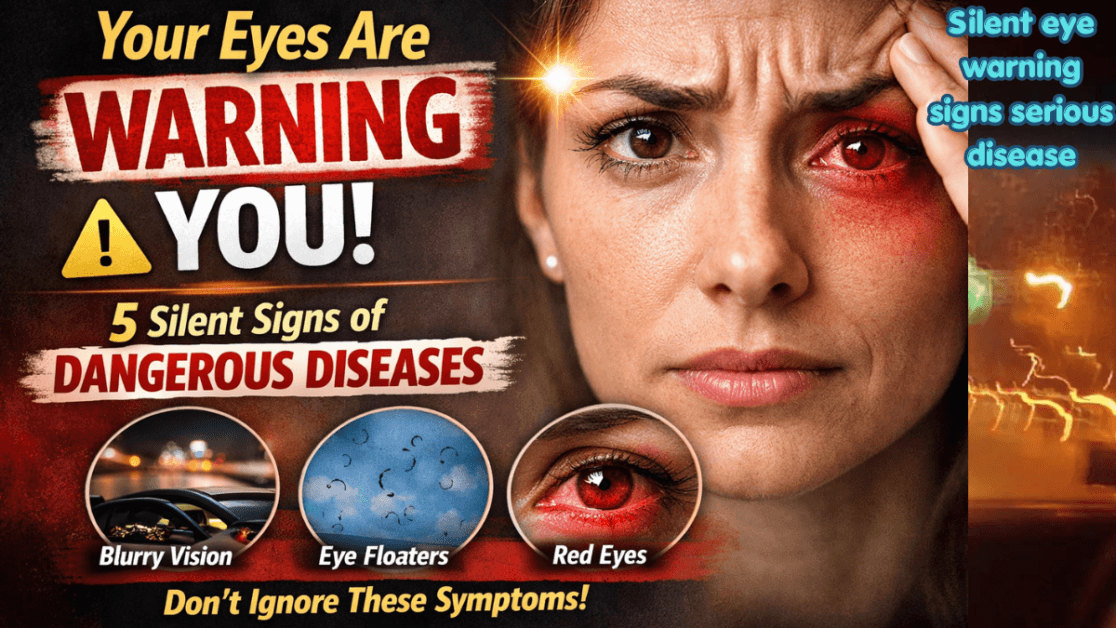
Silent eye warning signs serious disease : Your eyes do much more than help you see the world—they quietly reflect what’s happening inside your body. Sometimes, long before you feel unwell, your eyes start showing subtle warning signs of deeper health issues.
Most people ignore these signals, thinking they’re caused by stress, screen time, or lack of sleep. But in reality, these “minor” eye problems could be early indicators of serious diseases.
Let’s uncover the 5 silent eye warning signs you should never ignore—and what they might mean for your health.
👁️ 1. Sudden Blurry Vision
If your vision suddenly becomes blurry without any obvious reason, don’t brush it off.
⚠️ What it could mean:
- Early signs of diabetes
- High blood pressure affecting eye vessels
- Beginning of glaucoma or retinal damage
Blurry vision isn’t always about needing new glasses—it can be your body’s first alarm bell.
✨ 2. Floaters or Flashing Lights
Seeing tiny floating dots or sudden flashes of light? This isn’t always harmless.
⚠️ What it could mean:
- Retinal detachment (medical emergency)
- Eye injury or internal bleeding
- Age-related eye degeneration
If floaters appear suddenly or increase rapidly, seek medical help immediately.
🔴 3. Persistent Red Eyes
Occasional redness is normal, but constant red eyes are not.
⚠️ What it could mean:
- Eye infections or allergies
- Dry eye syndrome
- Serious conditions like uveitis or glaucoma
If redness doesn’t go away in a few days, it’s time to consult a doctor.
🌞 4. Sensitivity to Light (Photophobia)
Do bright lights suddenly feel unbearable? That’s your eyes signaling discomfort.
⚠️ What it could mean:
- Migraines
- Corneal damage or infections
- Early cataracts
Ignoring light sensitivity can worsen underlying conditions over time.
🌙 5. Difficulty Seeing at Night
Struggling to see clearly in dim light or while driving at night?
⚠️ What it could mean:
- Vitamin A deficiency
- Cataracts
- Progressive vision disorders
Night vision problems often develop slowly—making them easy to overlook.
🚨 When Should You See a Doctor?
Don’t wait for things to get worse. Seek medical help if you experience:
- Sudden vision loss
- Frequent flashes or floaters
- Persistent eye pain or redness
- Vision changes lasting more than 2–3 days
Early diagnosis can prevent permanent damage.
🧠 Who Is at Higher Risk?
You should be extra cautious if you:
- Spend long hours on screens 📱
- Have diabetes or high blood pressure
- Are above 40 years of age
- Ignore regular eye check-ups
🛡️ How to Protect Your Eyes Naturally
Simple habits can make a big difference:
- Follow the 20-20-20 rule (every 20 minutes, look 20 feet away for 20 seconds)
- Eat foods rich in Vitamin A, Omega-3, and antioxidants
- Stay hydrated
- Get your eyes checked regularly
💬 Final Words
Your eyes don’t just show you the world—they warn you about hidden dangers within your body.
Ignoring these silent signals could lead to serious consequences, including permanent vision loss. But the good news? Most of these conditions are treatable if caught early.
So the next time your eyes feel “off,” don’t ignore it. It might just be your body trying to protect you.
#EyeWarningSigns, #EyeHealth, #HealthAlert, #VisionCare, #HiddenDiseases, #HealthTips, #MedicalAwareness, #StayHealthy, #PreventBlindness, #Wellness, #DoctorAdvice, #HealthyLifestyle, #HealthEducation
🌐 Source & Credits
Original insights inspired by health awareness trends.
Read more on: https://networkbharat.com