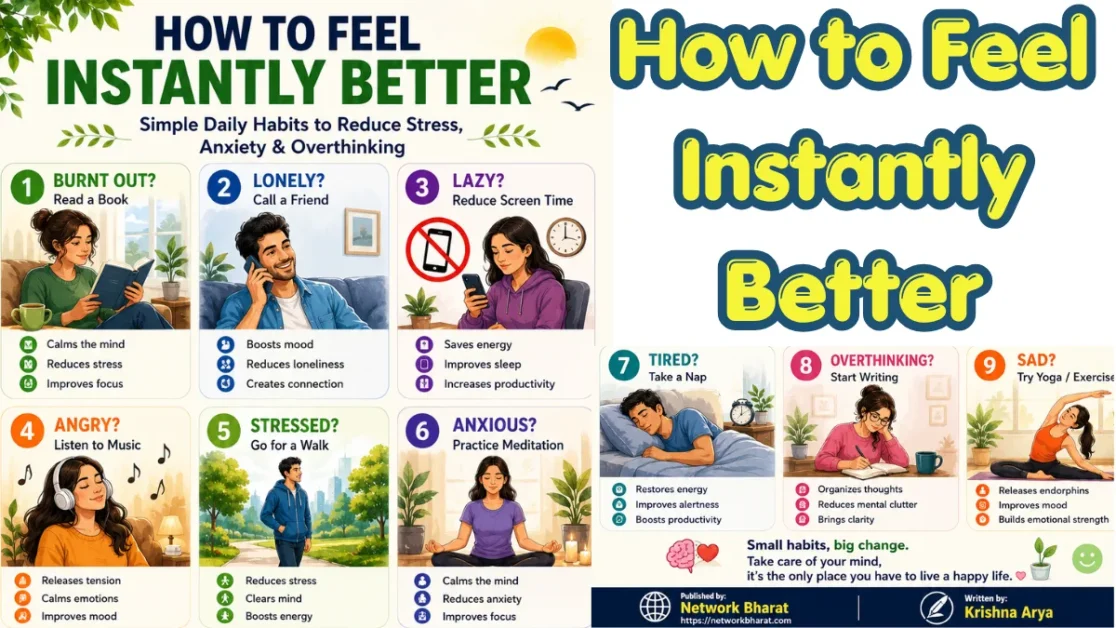
How to Feel Instantly Better
In today’s fast-moving world, stress, anxiety, burnout, and overthinking have quietly become a part of daily life. Whether it’s work pressure, endless screen time, emotional exhaustion, or loneliness, almost everyone experiences moments when they simply want to feel better instantly.
The good news is that small daily habits can make a huge difference. You do not always need expensive therapy sessions or long vacations to improve your mood. Sometimes, simple activities like reading a book, taking a walk, listening to music, or practicing yoga can quickly refresh your mind and body.
Here are some easy and effective ways to feel instantly better naturally.
How to Feel Instantly Better
1. Feeling Burnt Out? Start Reading
Burnout often happens when your mind is overloaded with stress and responsibilities. Reading can act like a mental escape. A good book helps your brain relax, improves focus, and reduces emotional fatigue.
Reading also slows down racing thoughts and creates a sense of calmness. Even reading for just 15 to 20 minutes daily can improve mental clarity and emotional balance.
Best Reading Choices for Relaxation:
- Self-help books
- Inspirational stories
- Spiritual books
- Light fiction and novels
2. Feeling Lonely? Call a Friend
Human connection is one of the most powerful emotional healers. When loneliness starts affecting your mood, talking to someone you trust can instantly make you feel lighter.
A simple phone call with a friend or family member can reduce stress hormones and improve emotional comfort. Sharing feelings often helps people feel understood and supported.
Why Social Connection Matters:
- Reduces emotional stress
- Improves mood instantly
- Helps fight depression and anxiety
- Creates emotional security
3. Feeling Lazy? Reduce Screen Time
Too much screen time can drain energy without people even realizing it. Endless scrolling on mobile phones and social media often increases mental fatigue and decreases productivity.
Reducing screen exposure for even a few hours can refresh the brain and improve focus.
Simple Tips to Cut Screen Time:
- Keep your phone away during meals
- Avoid social media before sleep
- Take digital detox breaks
- Spend more time outdoors
4. Feeling Angry? Listen to Music
Music has a direct connection with emotions. Calm and soothing music can lower stress levels, relax muscles, and improve mood almost instantly.
Whether it is classical music, instrumental sounds, or your favorite songs, music therapy is one of the easiest ways to release anger and frustration.
Benefits of Listening to Music:
- Relaxes the mind
- Reduces anger and tension
- Improves emotional stability
- Boosts happiness hormones
5. Feeling Stressed? Go for a Walk
Walking is one of the most underrated stress-relief activities. A short walk in fresh air improves blood circulation, clears the mind, and reduces anxiety naturally.
Nature walks are especially effective because green surroundings help the brain feel calm and refreshed.
How Walking Helps:
- Reduces stress hormones
- Improves heart health
- Increases positive thinking
- Refreshes mental energy
Even a 20-minute walk can completely change your mood.
6. Feeling Anxious? Practice Meditation
Meditation trains the mind to stay calm and focused. Deep breathing and mindfulness exercises can reduce anxiety and bring emotional stability.
You do not need hours of meditation. Just sitting quietly for 5 to 10 minutes daily can make a noticeable difference.
Easy Meditation Tips:
- Focus on your breathing
- Sit in a peaceful place
- Close your eyes and relax
- Avoid distractions
Meditation helps improve concentration and emotional control over time.
7. Feeling Tired? Take a Nap
Sometimes the body simply needs rest. Lack of sleep affects mood, focus, and emotional health. A short power nap can recharge your brain and restore energy levels quickly.
Ideal Nap Duration:
- 15 to 30 minutes for best results
Long naps may cause laziness, but short naps improve alertness and productivity.
8. Overthinking? Start Writing
Writing your thoughts on paper helps organize emotions and reduce mental clutter. Journaling is a simple but powerful habit that helps people understand their feelings better.
When thoughts are written down, the brain feels lighter and calmer.
Things You Can Write About:
- Daily gratitude
- Personal goals
- Thoughts and emotions
- Positive experiences
Writing regularly improves emotional awareness and mental peace.
9. Feeling Sad? Try Yoga or Exercise
Physical movement naturally boosts happiness hormones like endorphins and serotonin. Yoga and exercise help release emotional stress stored in the body.
Even light stretching or home workouts can improve emotional health significantly.
Benefits of Yoga and Exercise:
- Reduces sadness and anxiety
- Improves sleep quality
- Boosts confidence
- Enhances mental strength
Yoga also improves breathing and inner calmness.
Final Thoughts
Feeling stressed, anxious, lonely, or emotionally tired is completely normal in modern life. The important thing is learning healthy ways to manage these emotions naturally.
Small daily habits like reading, walking, meditation, music, journaling, and exercise can create a powerful positive impact on mental well-being. You do not need to change your entire life overnight. Start with one small habit today, and gradually your mind and body will begin to feel healthier, calmer, and happier.
True wellness comes from taking care of yourself consistently, even in simple ways.
#MentalHealth #SelfCare #StressRelief #AnxietyRelief #Mindfulness #Meditation #HealthyLifestyle #PositiveMindset #YogaLife #WellnessTips #MentalWellness #Overthinking #BurnoutRecovery #Happiness #EmotionalHealth #SelfImprovement #StressFree #DailyMotivation #HealthyMind #InnerPeace
Published by: Network Bharat
Written by: Krishna Arya